
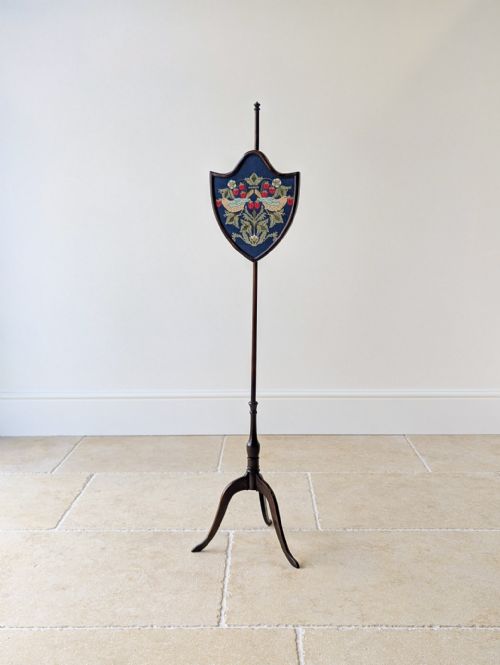


Adjustable Fireplace Screen
An adjustable fireplace screen offers a clever way to shield your face from the hearth's blaze while displaying exquisite needlework.
Adjustable Fireplace Screen
An adjustable fireplace screen, commonly referred to as a pole screen in the historical record, combines a vertical stand with a movable panel. These pieces serve to deflect the intense heat of an open fire while adding a decorative focal point to a room.
The versions most frequently encountered on this page date from the Georgian, Regency, and Victorian periods. They typically utilise a tripod base supporting a slender pole upon which an embroidered panel, glass shield, or poker work screen slides up and down.
Makers of these screens utilised rich timbers such as mahogany, rosewood, and satinwood to construct the stands. The adjustable mechanism allows the decorative panel to be positioned at the precise height needed to block the radiant heat.
How they were made
Cabinetmakers turned dense hardwoods like mahogany, rosewood, and goncalo alves on a lathe to create the slender central poles and carved tripod bases. These sturdy timber frames support the movable panels, ensuring the screen remains balanced when adjusted.
The decorative panels themselves showcase traditional textile and decorative techniques including needlework, floral tapestry, embroidery, and poker work on wood. Some specialised examples incorporate etched glass and bronze elements mounted in adjustable doors.
Victorian ladies used these screens to keep the fireplace heat from melting the heavy wax makeup on their faces.
What varies in quality
The refinement of the carving on the tripod base and the choice of timber set the foundation for the piece. Solid walnut, finely figured mahogany, and richly grained rosewood indicate higher craftsmanship than simpler utility pieces.
The complexity and execution of the panel work elevate the standard of the screen. Intricate needlepoint tapestries, detailed floral embroidery, and delicate poker work demand greater artisan skill than plain textile panels.
The Adjustable Fireplace Screen Glossary
- Pole screen
- A type of fireplace screen featuring a sliding panel mounted on a vertical wooden pole. This design allows the user to raise or lower the shield depending on where the heat strikes.
- Tripod base
- A three-legged support structure commonly found beneath the central shaft of these screens. It provides stable footing on uneven floorboards.
- Needlework
- Hand-stitched decorative panels executed in wool, silk, or tapestry threads. These panels form the visual centrepiece of many historical screens.
- Poker work
- A decorative technique using heated metal tools to burn designs into a wooden surface. This method creates shaded, sepia-toned imagery on the adjustable panel.
- Goncalo alves
- A dense exotic hardwood with striking contrasting grain patterns. Furniture makers utilised this timber for pieces of substantial visual weight.
Adjustable Fireplace Screen: Frequently Asked Questions
How do you adjust the panel height?
The movable panel typically rests on a small friction collar or brass thumb screw attached to the central pole. Loosening this mechanism allows you to slide the screen up or down before securing it at the desired level.
Historically, this adjustability protected the user's face from the direct heat of the coal or wood fire while seated in a parlour or drawing room.
What rooms suit a pole screen best?
These screens sit naturally beside a functioning fireplace or hearth in a living room, study, or drawing room. Their vertical profile makes them well suited to fill awkward corners or empty wall spaces.
Beyond the hearth, collectors often place them in hallways or bedrooms simply to display the antique tapestry and woodwork.
How do you clean the textile panels?
Antique tapestries and embroidered panels require gentle care, typically limited to very careful surface dusting with a soft brush. Moisture and harsh cleaning agents can damage aged wool, silk, and thread.
If the fabric requires deeper attention, consult a professional textile conservator rather than attempting wet cleaning at home.
Can you burn a fire behind them?
While originally designed to block the intense radiant heat of an open hearth, modern safety standards suggest caution with historical materials. The dry old timbers and delicate textiles are sensitive to stray sparks and excessive heat.
Most people today enjoy them as decorative objects of interior design rather than active heat shields.