


Regency Adjustable Pole Screen
A regency adjustable pole screen protects the face from an open hearth while allowing height control of the panel.
Regency Adjustable Pole Screen
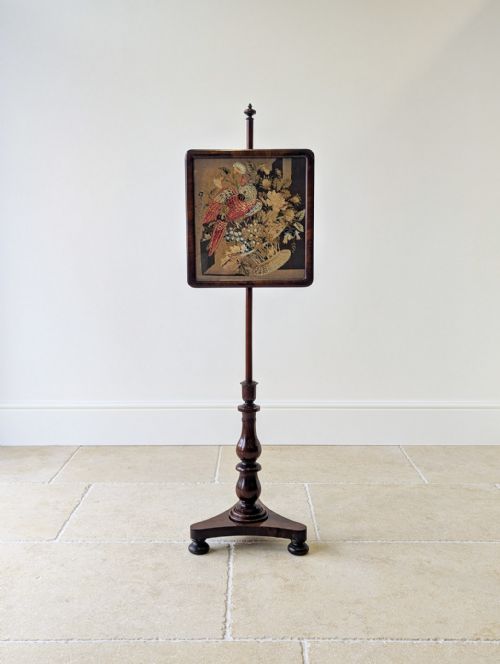
A regency adjustable pole screen stands on a slender vertical shaft supported by a tripod or weighted base, carrying a sliding screen. The primary form met here spans the Regency, George III, and William IV periods, alongside broader nineteenth century examples.
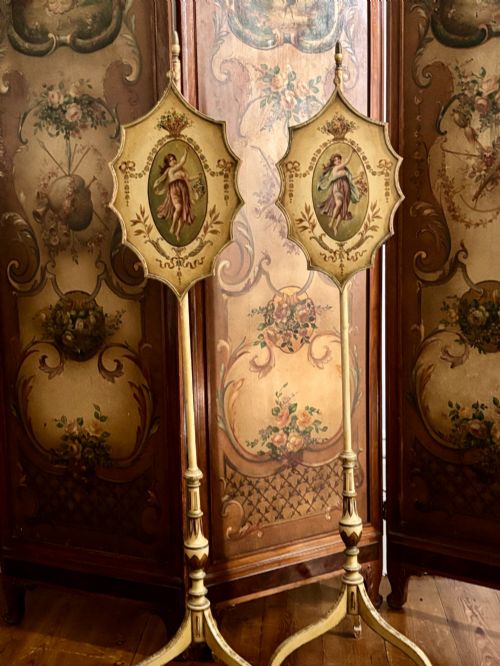
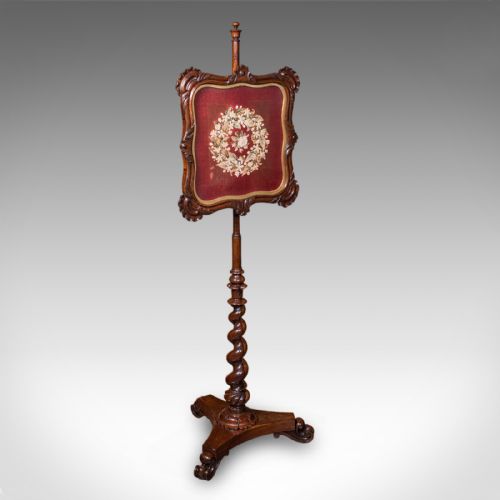
Makers shaped these stands from dense timbers like mahogany, rosewood, and walnut, frequently mounting them with needlepoint, tapestry, or painted shields. Buyers find single screens and matched pairs designed to deflect the fierce heat of coal or wood fires.
Materials and construction
Cabinetmakers turned solid hardwoods such as mahogany and rosewood into slender poles and sturdy bases, incorporating brass mechanisms to hold the sliding screens at chosen heights. Walnut, giltwood, and papier mache also appear among the surviving examples.
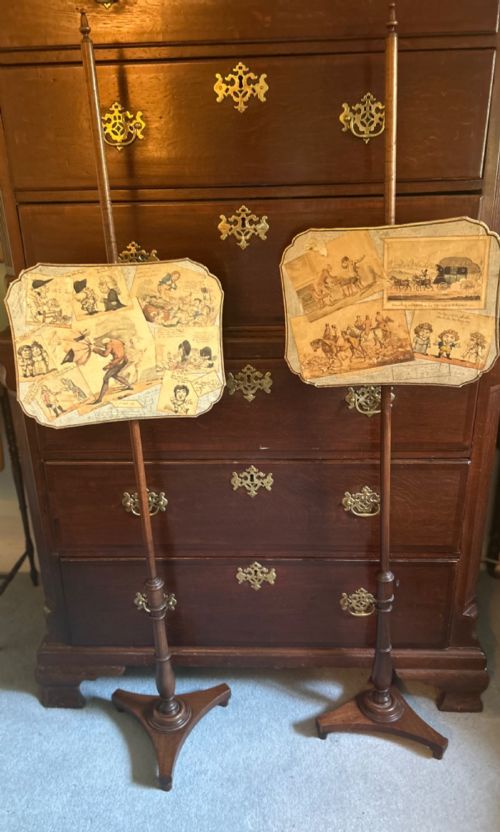
The suspended panels often display intricate needlework, wool tapestry, or printed scenes framed within shaped wooden or brass borders. Makers joined these components using traditional carpentry to ensure stable balance upon the floor.
Distinctions in quality
Superior examples demonstrate refined turning on the central column and crisp carving on the feet, whereas lesser pieces rely on plain, heavy turnings. The complexity of the base design, from simple tripod legs to elaborate spade feet, separates standard utility items from more ambitious commissions.
The artistry within the central panel dictates much of the visual merit, distinguishing finely worked needlepoint or satirical prints from simpler textile inserts. The smoothness of the brass adjustment mechanism also marks the care taken during initial production.
The Regency Adjustable Pole Screen Glossary
- Pole screen
- A freestanding fireside accessory comprising a vertical upright, a base, and a movable shield. It was positioned to protect the complexion from open flames.
- Needlepoint
- Stitched canvas embroidery using wool or silk yarns. These panels often depict floral or pastoral motifs.
- Tapestry
- Woven textile art used historically to insulate rooms and decorate screen panels. It differs from embroidered needlework by being formed on a loom.
- Tripod base
- A three-legged support providing stability to the vertical pole. Many nineteenth century examples utilise splayed legs for balance.
- Giltwood
- Timber treated with gold leaf or metallic paint. This finish provided a bright reflective quality suited to formal drawing rooms.
Regency Adjustable Pole Screen: Frequently Asked Questions
What is a pole screen used for?
These screens served to shield a person's face from the intense heat of an open fireplace, preventing cosmetics containing lead from melting or discolouring.
Today, they function primarily as decorative vertical accents in traditional interiors, drawing the eye upward.
How do you adjust the height?
A concealed screw, brass collar, or internal friction mechanism grips the central pole and allows the panel to slide up or down.
Users set the shield at eye level relative to their seating position near the hearth.
Are they found in pairs?
Makers occasionally produced matched pairs to flank a fireplace symmetrically in larger reception rooms.
Single examples remain far more common across surviving inventories.
What woods were used?
Mahogany and rosewood dominate the surviving pieces, valued for their deep grain and strength when turned into slender shafts.
Walnut, giltwood, and papier mache also occur among nineteenth century variants.