

Antique Fireplace Accessories
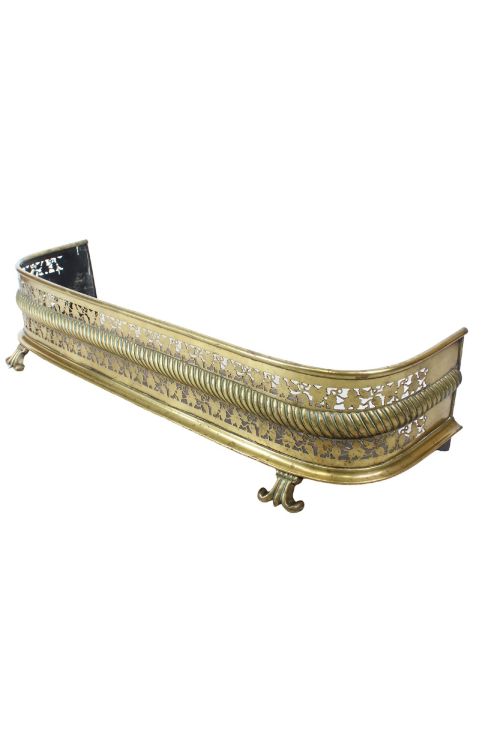
Hearth-side metalwork and fuel containers: scuttles and hods to carry coal to the room, andirons to hold burning logs, irons to tend the fire, fenders and screens to keep embers off the floor.

Antique Fireplace Accessories
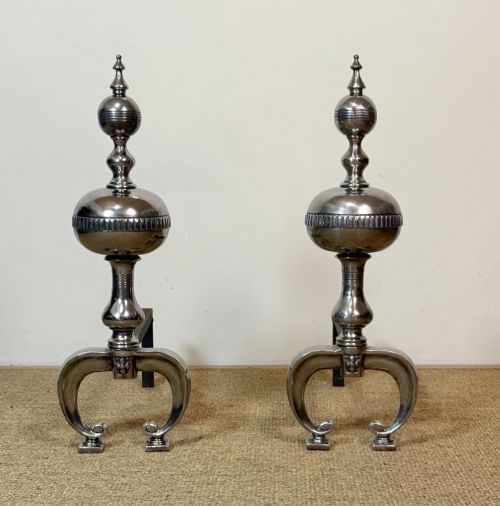
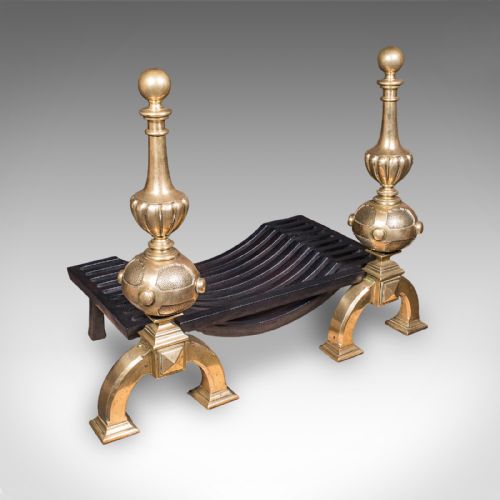
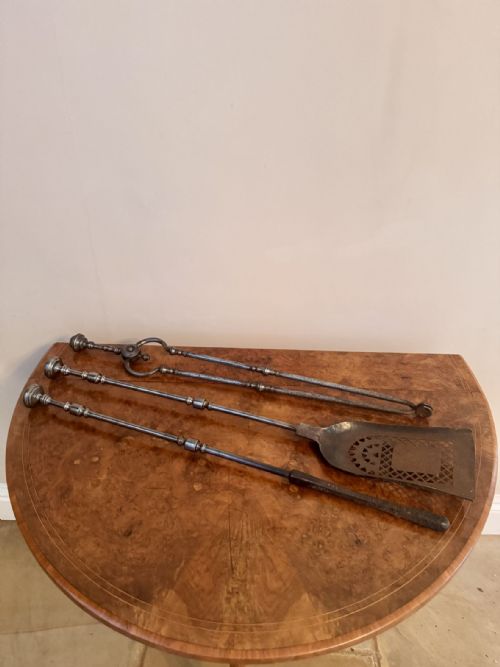
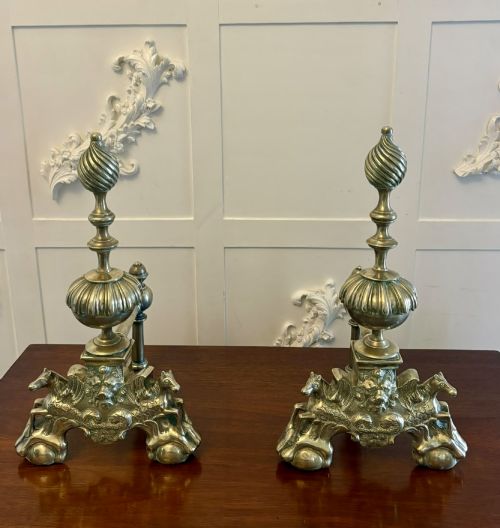
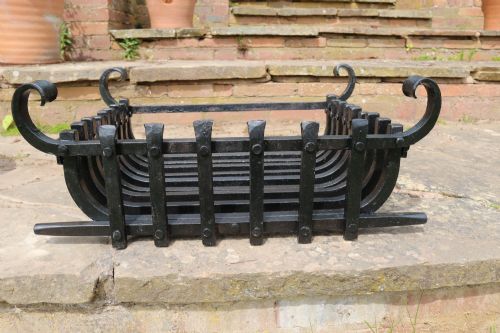
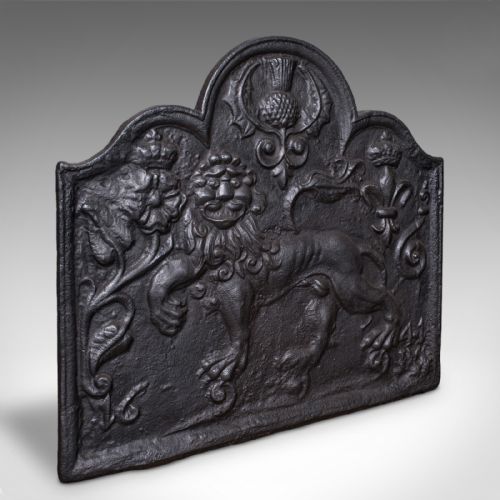
The heading covers several object types rather than one. Coal containers of every shape, pairs of andirons or fire dogs, sets of fire irons and companion tools, fenders and curbs, screens and guards, with firebacks, bellows, trivets, footmen and foot stoves making up a small tail behind them.
Brass dominates. It's named in 134 of 252 titles, with copper a distant second at 32, then iron, steel and bronze. Add the 85 titles calling themselves Victorian and the likeliest thing you'll meet is a polished brass Victorian scuttle or a pair of brass fire dogs.
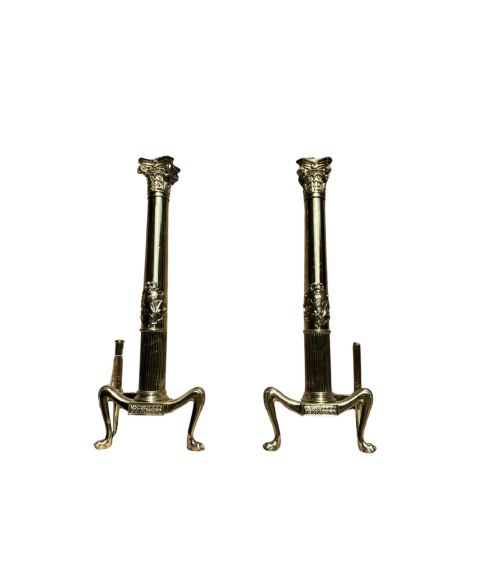
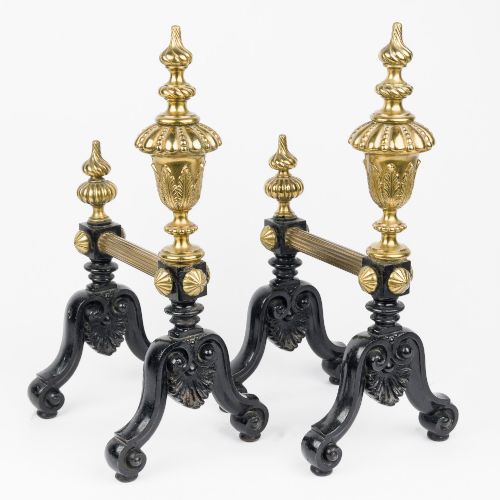
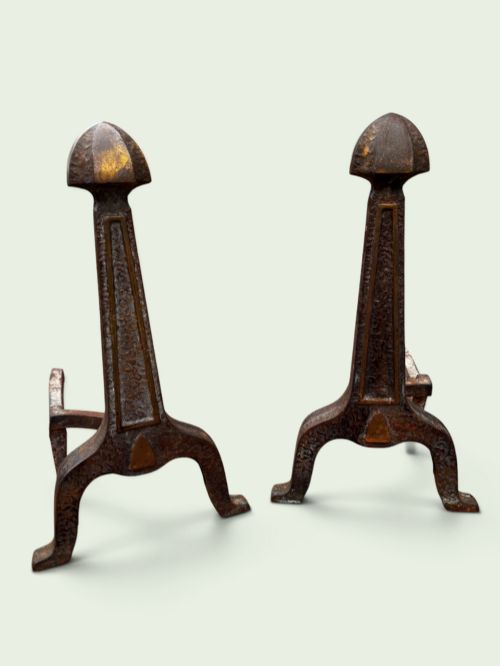
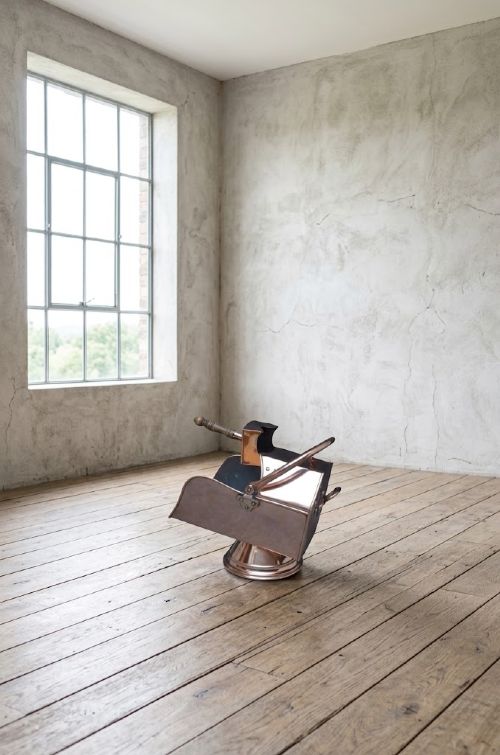
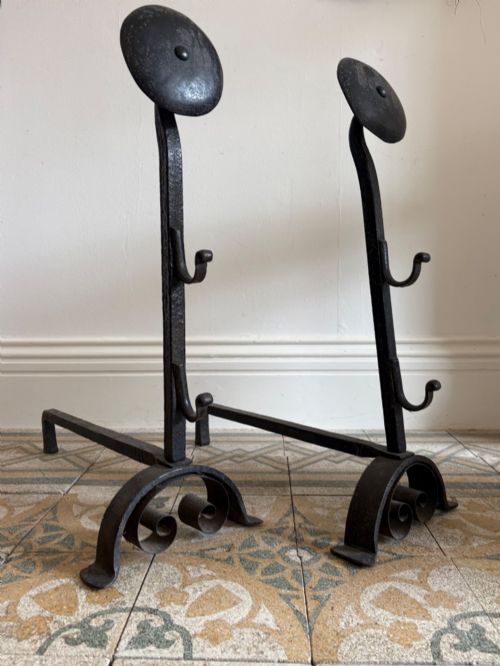
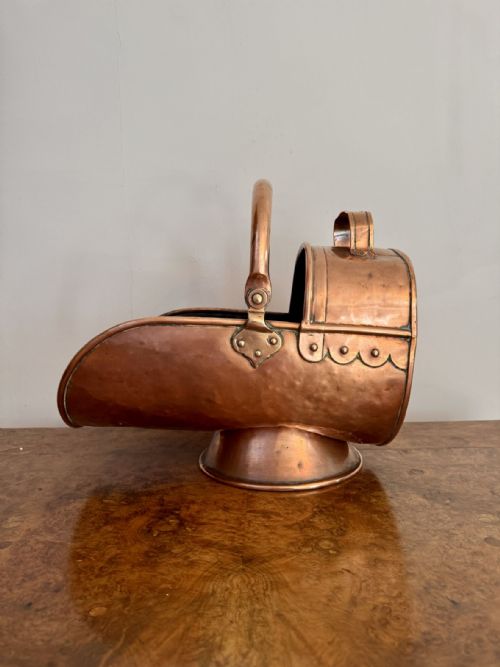
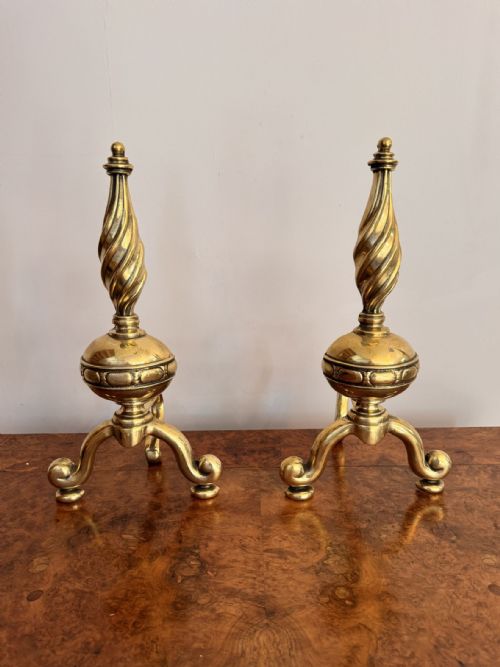
The coal scuttle is the commonest single object, with 42 titles using the phrase, and the helmet shape is a category of its own at 18 titles, turning up in brass, copper and beaten copper. Running level with scuttles are andirons and fire dogs, which is why pairs are so common here: 60 titles describe a pair or matched set. French chenets in bronze, ormolu and gilt brass sit within the same branch.
Dating is broad rather than exact. Only 96 of the listings carry a clean year, and the rest are dated by reign or century, with 19th Century and Victorian the two big labels. The declared span runs 1700 to 1920, though sampled firedogs and firebacks reach back to the 16th and 17th centuries.

Where The Range Widens
Material sets the ends of the range. Gilt bronze and ormolu chenets and screens sit at the top, and bronze is uncommon at 12 titles with gilt at 9. Plain cast iron trivets and undecorated brass fire dogs sit at the other end, in a category where brass and iron are everywhere.
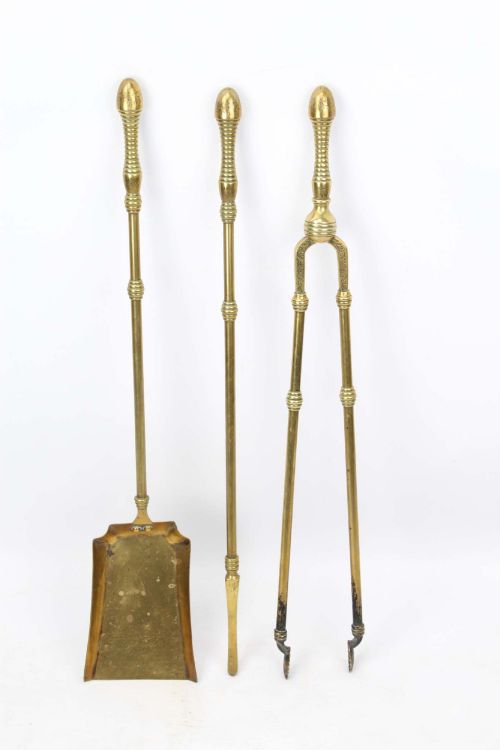
Completeness carries a lot of weight. A scuttle with its original shovel or liner, a fender still with its fire irons, dogs sold with the irons that match them, a full fireplace suite: these read differently from a single vessel or an odd tool. Companion sets on their own stand appear in 14 titles.
Scale and date pull upward too. Monumental wrought iron fire dogs stated at 86cm, inglenook grates on andirons and firebacks flagged as very heavy, the 16th- and 17th-century firedogs, Georgian steel and gilt brass irons, and named styles from Arts and Crafts and Aesthetic Movement through to Rococo and Louis XV all sit well above the many 1880 to 1900 brass scuttles.
Antique Fireplace Accessories Retail Price Guide 2026
Typical UK retail prices for fireplace accessories, calculated from the Sellingantiques database of over a million retail prices indexed since 2003. This retail price guide relies exclusively on Sellingantiques data; no external sources or auction records are used, so the figures do not describe the wider market.
Dealer-declared dates for fireplace accessories on Sellingantiques run from 1700 to 1920.

The Antique Fireplace Accessories Glossary
- Coal scuttle
- A portable container for bringing coal to the fire. The phrase appears in 42 titles, making it the commonest object in the category.
- Helmet scuttle
- A scuttle shaped like an upturned helmet with a pouring lip. Named in 18 titles, in brass, copper and beaten copper.
- Andiron or fire dog
- One of a pair of hearth stands supporting burning logs. The two words are used interchangeably in these listings.
- Chenet
- The French word for a fire dog. In this evidence it usually means bronze, gilt bronze or ormolu.
- Purdonium
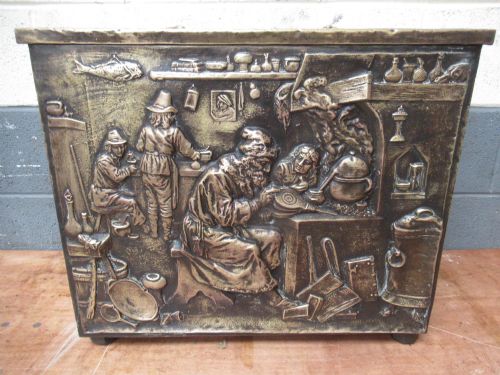
- A lidded coal box with a liner and shovel, often wood with metal mounts. A hod is the tall narrow relation, seen in copper and in oak with brass.
- Footman
- A standing hearth trivet for keeping a kettle or dish warm. A Welsh footman and trivet turns up among the sampled pieces.
Antique Fireplace Accessories: Frequently Asked Questions
What is the most common type listed?
Coal scuttles, with 42 titles using the phrase, and the helmet form accounting for 18 of them.
Pairs of andirons or fire dogs run level with scuttles, and sets of fire irons or companion tools follow close behind. Coal containers as a whole make up roughly a third of the category.
Why are so many sold as pairs?
Andirons and chenets were made and used in twos, one either side of the burning logs, so they come to market that way.
That's unusual for a furnishing category. Sixty titles, close to a quarter, describe a pair or a matched set.
How old are these pieces?
The dealer-declared dates run from 1700 to 1920, with Victorian and late-19th to early-20th entries making up the bulk.
Only 96 of the 252 listings carry a clean year. The rest use broad labels, with 19th Century on 62 and Victorian on 41, so more than half the category is dated by reign or century and reads as an approximation.
Sampled titles do go further back, to 16th- and 17th-century firedogs and firebacks.
Are French pieces common in this category?
Nineteen titles call themselves French, against 29 English, so French work is a steady presence rather than an outlier.
It shows up mainly as chenets in bronze, ormolu and gilt brass, along with French bellows and large heavy French iron andirons.
What materials do these accessories come in?
Brass leads by a wide margin, named in 134 of 252 titles. Copper follows at 32, then iron at 27, steel at 20 and bronze at 12.
Wood appears in combination rather than alone: purdoniums in wood with metal mounts, oak and brass hods, oak foot stoves and an oak and brass peat bellows.
Which unusual items turn up in this heading?
Behind the scuttles and dogs sits a small tail of hearth miscellany: cast iron firebacks, bellows, brass and cast iron trivets, footmen and foot stoves.
Some surface only once. An oak Dutch foot stove, a chip-carved stove described as possibly Frisian, and a revolving fireplace toaster with copper inlaid hearts.
Eighty-nine dealers have listed on Sellingantiques in this category, with about thirty-one pieces coming to market in a year, so it's broad but thinly spread.