


Antique Purdoniums
A purdonium is a lidded coal box for the hearth, made to hold a household's coal, its metal liner and a small shovel out of sight in the drawing or dining room.

Antique Purdoniums
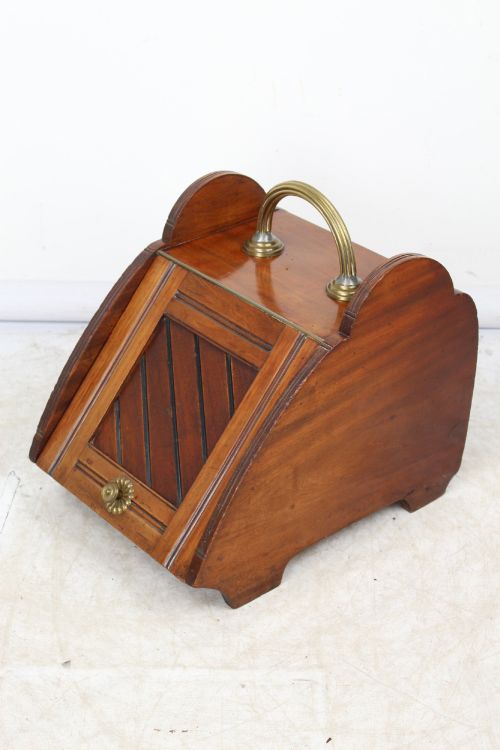
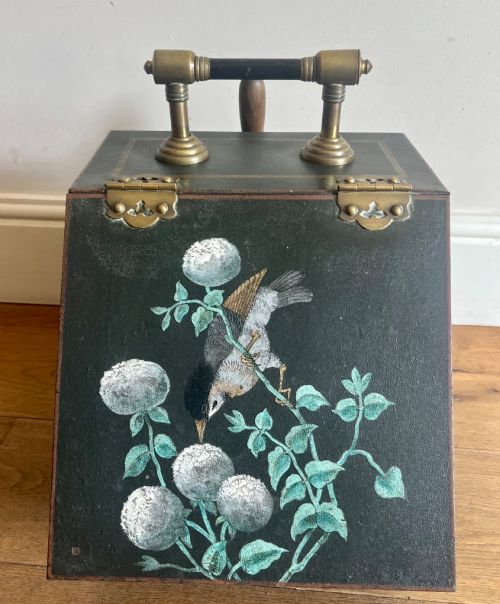
The name came into use in Britain in the second half of the 19th century for a covered coal receptacle that stood at the fireside. The form is a wooden box on a plinth or short feet, with a hinged or sliding front, a removable metal liner inside and a matching shovel or scoop.
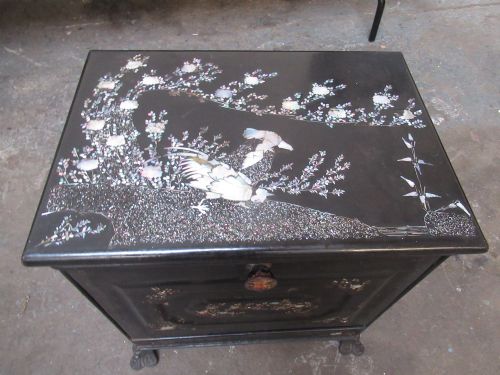
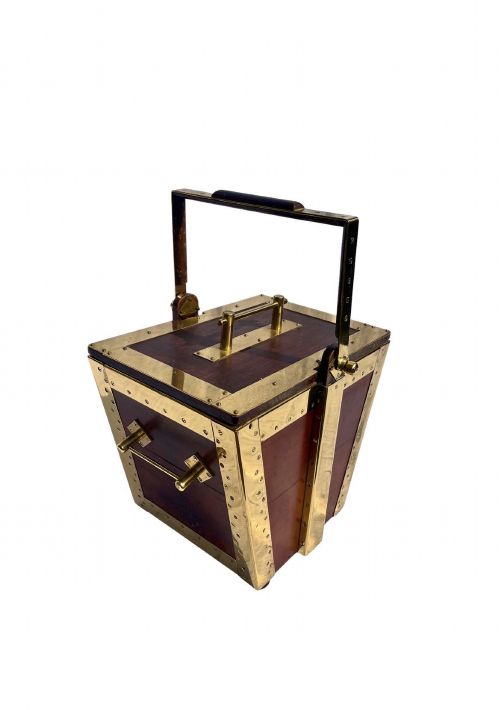
What you'll meet most often is a Victorian or Edwardian timber box with metal fittings. Oak, mahogany, walnut and rosewood all turn up, brass mounts are named in a quarter of listings, and inlay or carving appears on a good number. Victorian labels cover a little over four titles in ten, Edwardian a fifth.
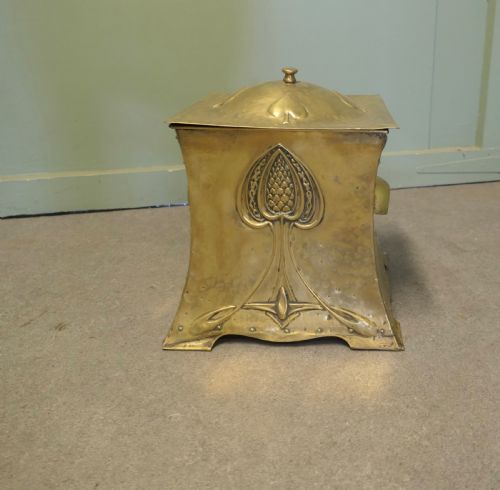
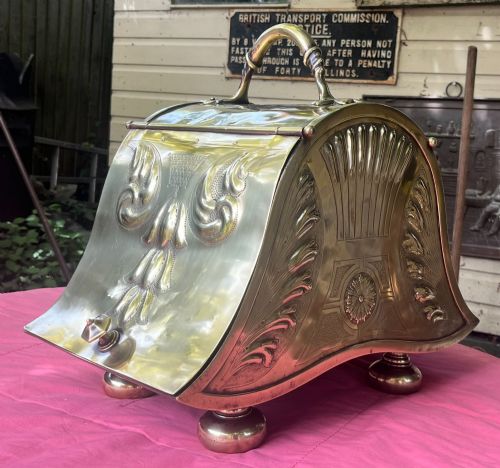
The heading covers metal as well as timber. Brass and copper scuttles, buckets and bins are filed under it by the same dealers, and they make up about a quarter of the category, rising in current stock. Nine titles in ten put "coal" in the title, then call the object a box, a scuttle, a bin, a depot, a keep or a fireside store.
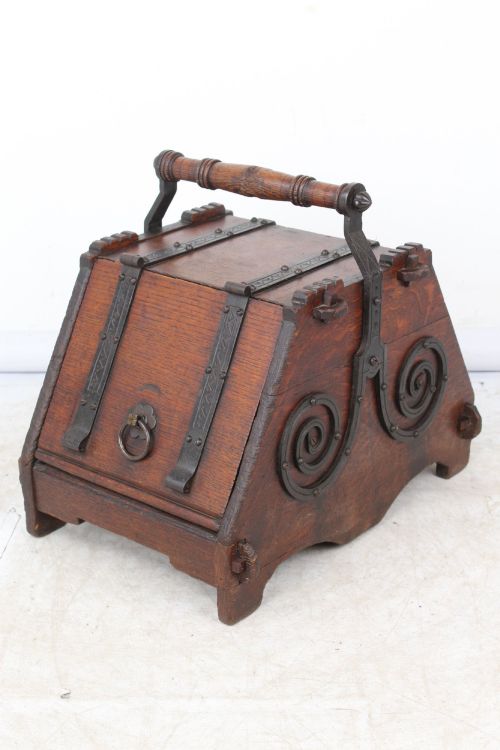
Smaller branches sit alongside. Arts and Crafts, Art Nouveau, Aesthetic and Gothic Revival examples account for around a tenth. Log bins and dual-purpose hearth stores account for another tenth, concentrated in the archive. Painted toleware scuttles are the scarce end, a handful across the whole run, one on wheels and one modelled as a nautilus shell.
What Sets Them Apart
Timber and decoration do most of the separating. Pollard oak, marquetry, inlaid rosewood and carved oak sit at the top of the range, while the plainest entries are described as nothing more than an antique coal box or an Edwardian oak purdonium. Ten titles mention inlay, eight carving.
Fittings count. Nine titles advertise a shovel, and several specify the liner and shovel together, which tells you dealers treat a complete set as worth stating in the title rather than leaving it to the description.
Metal content and design framing pull the rest. Solid brass and copper bodies, brass mounts and a single ormolu-mounted bin run high, as do the pieces framed by a named movement. Scale does the same: titles reaching for "large" or "unusual" cluster in the upper half, and the top of the range runs to silver-plated and large copper-and-iron pieces.
Antique Purdoniums Retail Price Guide 2026
Typical UK retail prices for purdoniums, calculated from the Sellingantiques database of over a million retail prices indexed since 2003. This retail price guide relies exclusively on Sellingantiques data; no external sources or auction records are used, so the figures do not describe the wider market.
Toleware ones are the rarity: painted metal scuttles, including one on wheels and one modelled as a nautilus shell.
The Antique Purdoniums Glossary
- Purdonium
- A lidded coal box for the hearth, usually with a removable metal liner and a shovel. The spelling wobbles in listings, and "perdonium" turns up more than once.
- Liner
- The loose metal container that sits inside the box and actually holds the coal. Named in several titles.
- Coal scuttle
- Used across this heading for both the metal bucket form and, loosely, the wooden box. It appears in twenty-two titles.
- Brass-mounted
- Brass handles, galleries, corners or straps applied to a timber carcase. Brass is mentioned in twenty-five titles.
- Toleware
- Painted tinned sheet metal, seen on a small number of decorated scuttles in this category.
- Metamorphic
- A body that changes configuration in use, recorded once, of an inlaid rosewood scuttle.
Antique Purdoniums: Frequently Asked Questions
Is a purdonium the same as a coal box?
In practice, yes. Nine listings in ten carry the word "coal", and the same object is variously called a box, a scuttle, a bin, a depot, a keep or a fireside container.
One title even puts "Purdonium" in inverted commas, as if translating the term for the buyer.
What woods were used?
Oak leads, then mahogany, walnut and rosewood, in that order across the titles. Pollard oak is named once.
Surfaces range from plain to inlaid or carved fronts and lids, with brass mounts a recurring addition.
How old are most of them?
The dating runs from 1840 to 1920. Victorian and Edwardian labels dominate, with a further seventeen listings given only as "19th Century".
Only thirty-two of a hundred and three listings carry a clean year, so a good slice of the dating is a period name rather than a date. Decade tags cluster in the 1880s and 1900s.
Do they still have their liners and shovels?
Some listings say so. Nine titles mention a shovel, and several specify the original liner and shovel together.
Where a title stays silent, the archive records nothing either way.
Are metal scuttles included in this heading?
They are. Brass and copper buckets, scuttles and bins account for about a quarter of the category, and a larger share of what's currently listed.
Samples include polished brass, copper, brass-and-copper and copper-and-iron bodies, filed by the same dealers under the same heading as the timber boxes.
How often do they come up for sale?
Around thirteen a year come to market on Sellingantiques, and fifty-four different dealers have listed one.
That makes it a category most general dealers touch once rather than stock in depth.