




Antique Fire Tools
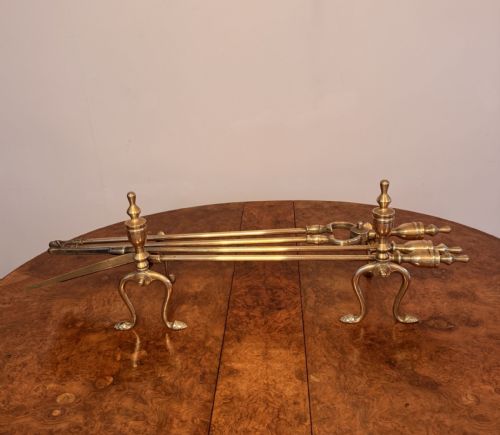
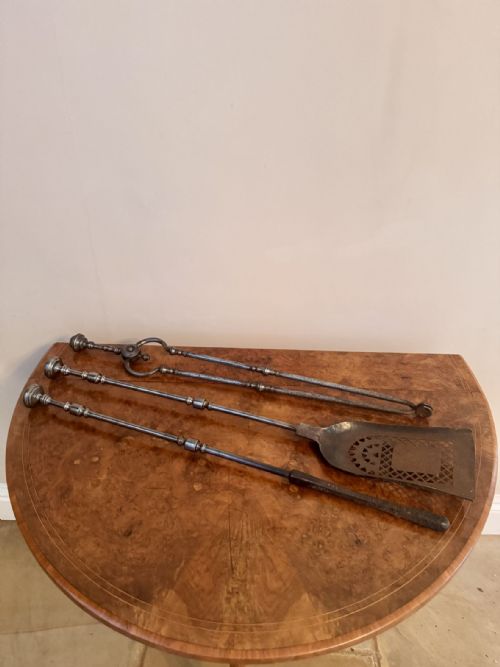
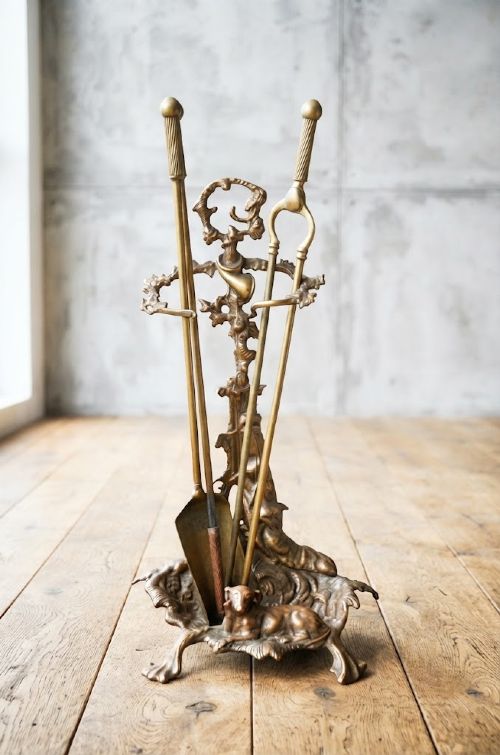
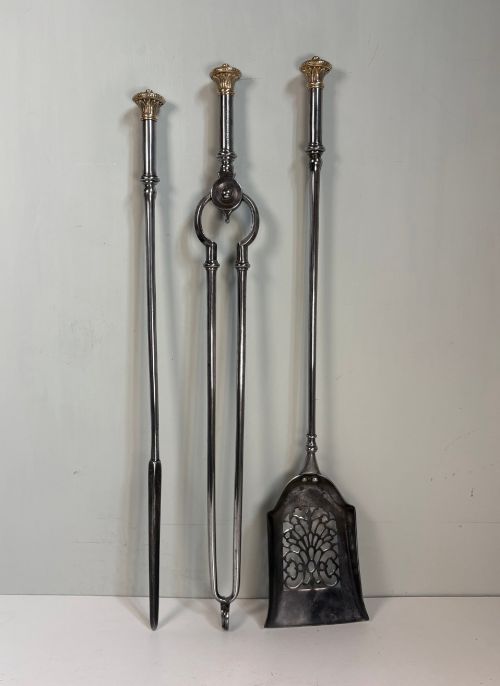
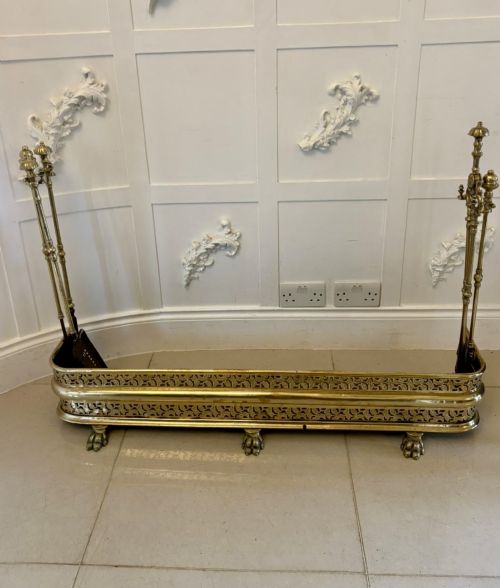
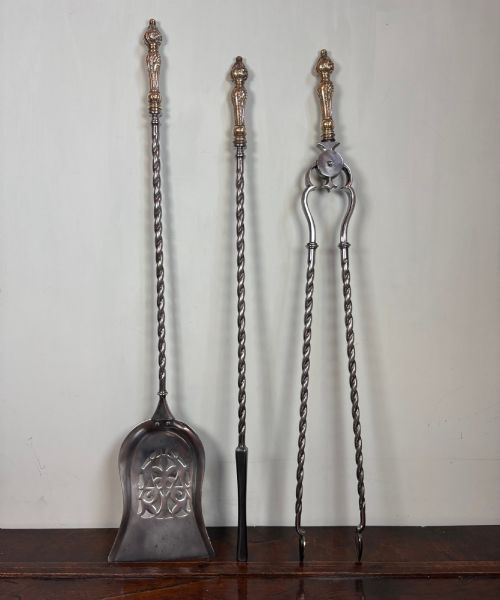
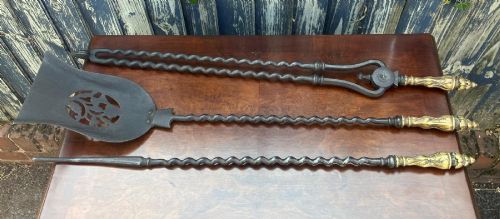
Poker, shovel and tongs for an open hearth, sold as a matched set in brass, steel or iron, either loose as fire irons or standing on their own companion stand.

Antique Fire Tools
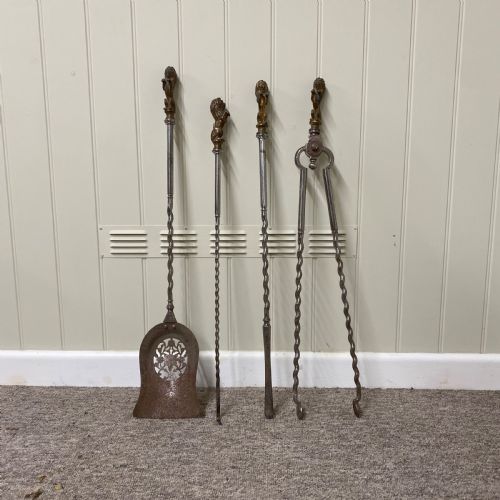
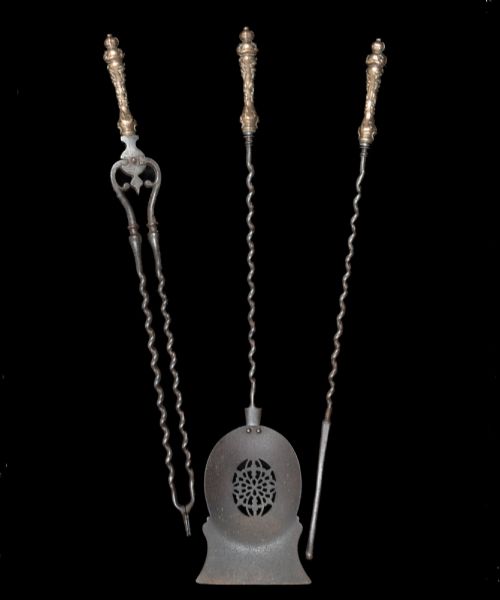
Three tools is the near-universal number: poker, shovel and tongs, described as a set of three, a trio or a triple companion. Occasional four-piece sets turn up. They were the working implements of a coal or wood fire, and became a matched decorative suite in British houses from the 18th century onwards.
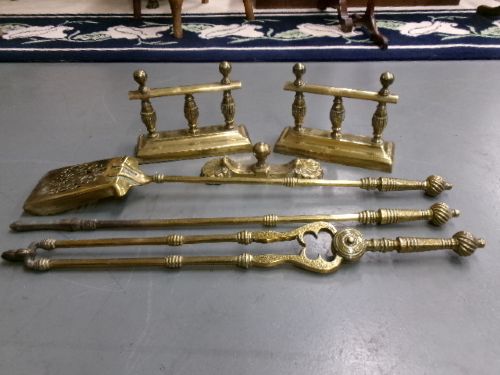
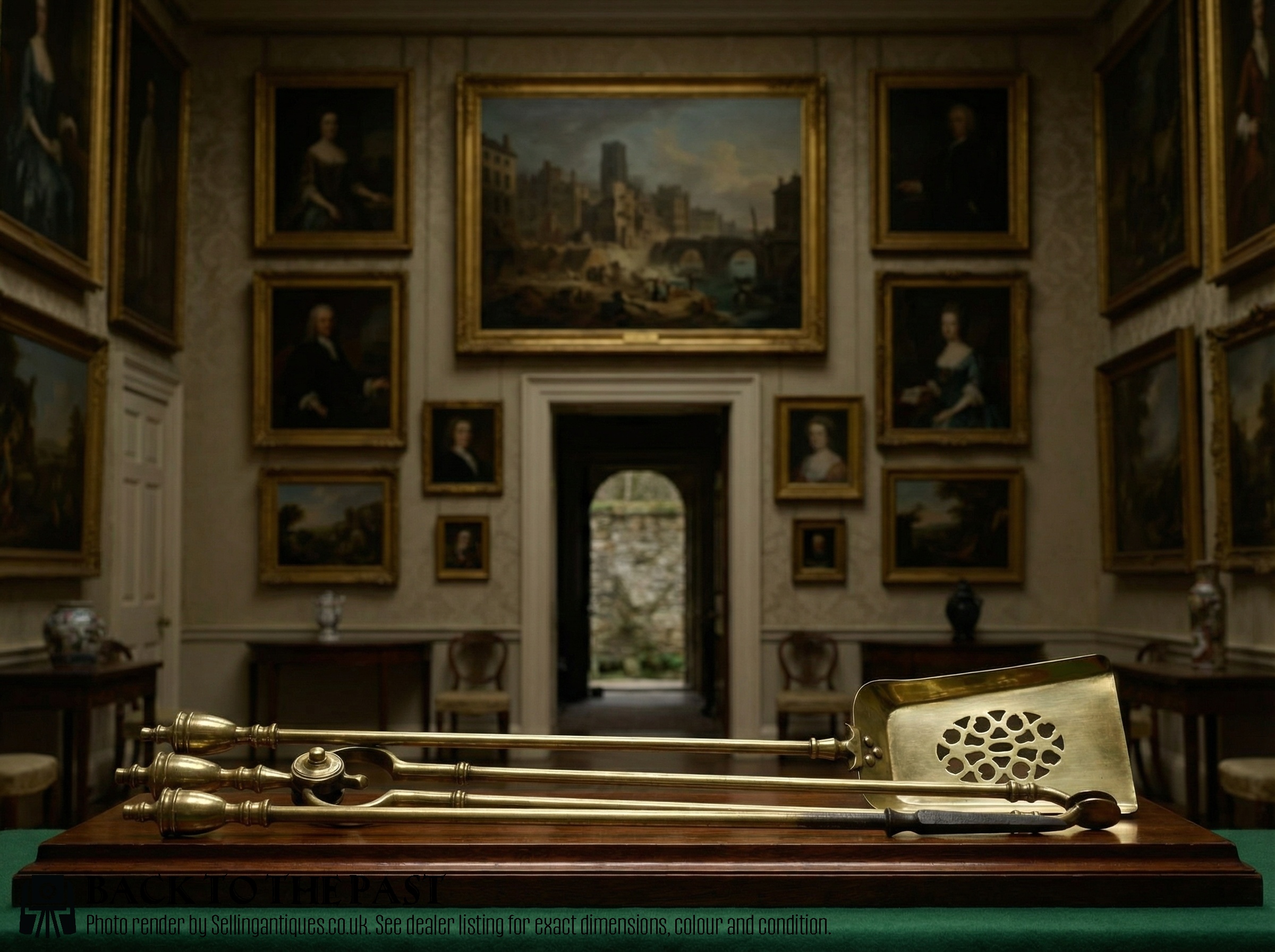
Material leads the titles rather than makers. Brass is named in over half of them and steel in nearly two in five, with a run of sets naming both metals together. The most common thing you'll meet is a brass Victorian or Edwardian set, either loose irons or mounted on a stand. Polished and burnished steel sets sit in the Georgian and Regency register and make up roughly a third of the archive.
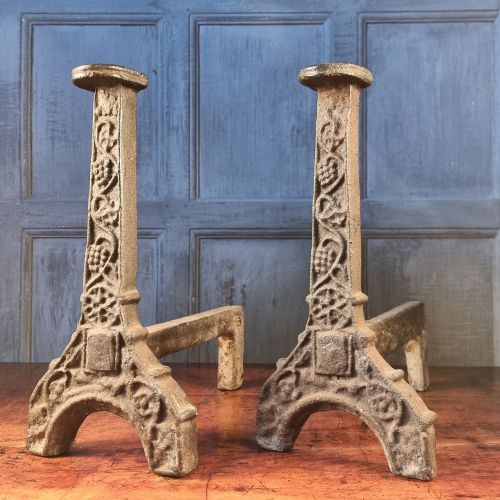
Around the tools sit the pieces that carry them. Paired fire dogs and andirons often double as rests, fenders are sometimes offered with their irons, and hearth-rests take irons that lean rather than hang. A smaller strand is wrought and cast iron: estate-made, inglenook and manor-house sets, several of them oversized, with French chenets and Gothic examples among them.
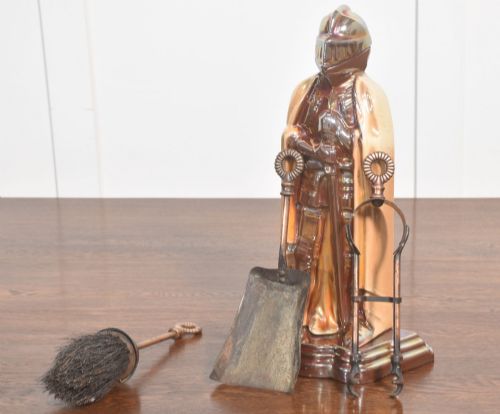
Dating is loose. Dealer-entered years run from 1750 to 1930, but 19th century, Victorian and 1800s together cover far more listings than any decade, and where decades are given they cluster in the 1860s and 1850s. A single year in a title is usually the dealer's estimate. A scattering of Arts and Crafts and figural sets rounds the category out: a knight, a Beefeater, a golfer, a child-and-lamb group, each appearing once.

What Sets Them Apart
Metal does most of the work. Polished or burnished steel, and steel combined with brass, sits above plain brass through the archive, and the bright-finished steel sets carry the earlier dating: 18th century and George III examples run toward the top, with the earliest clean years at 1750 and around 1780.
Completeness of the suite is the other lever. Tools alone are the common offer; irons with their dogs, andirons, hearth-rests or a fender cluster in the upper part of the range, and the top is held by these full hearth suites and by the earliest ironwork rather than by any single tool.
Scale and ornament finish the picture. Large, tall, massive and inglenook sets push upward, the heaviest of them wrought iron, one estate-made set stated at 128cm. Named decoration counts too: foliate engraving, starburst, claw and ball, rope-twist handles, and the figural companion sets stand above plain forms.
Antique Fire Tools Retail Price Guide 2026
Typical UK retail prices for fire tools, calculated from the Sellingantiques database of over a million retail prices indexed since 2003. This retail price guide relies exclusively on Sellingantiques data; no external sources or auction records are used, so the figures do not describe the wider market.
Sets of three are the norm on Sellingantiques - tongs, shovel and poker - with four-piece sets turning up now and then.
The Antique Fire Tools Glossary
- Fire irons
- The tools themselves, usually poker, shovel and tongs. Titles use it interchangeably with fire tools.
- Companion set
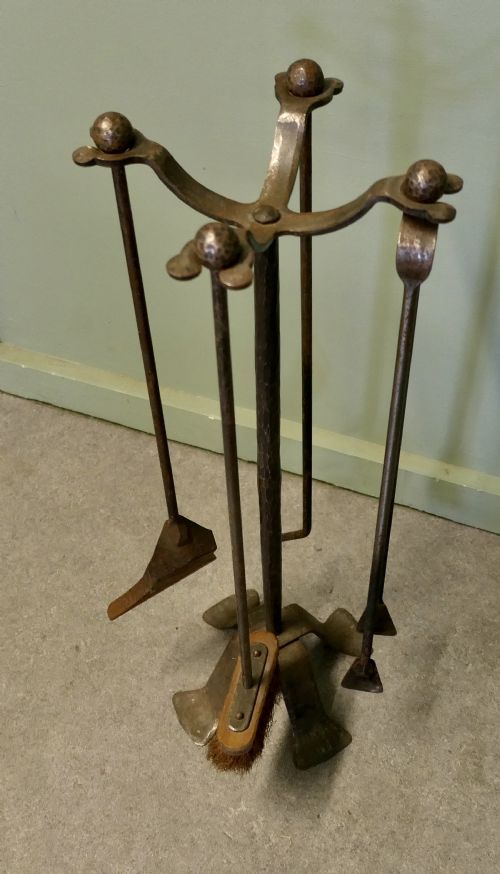
- Tools supplied on their own stand rather than loose. The word appears in 42 titles, and 13 of those call it a triple companion.
- Fire dogs and andirons
- Paired hearth stands, here frequently doubling as rests for the irons. They're sold as a pair, often alongside a set of tools.
- Fender
- The kerb enclosing the hearth. Eight titles offer one together with its irons.
- Polished steel
- Bright-finished steel, named in 15 titles. Burnished steel is a worked bright finish, recurring mostly on the earlier George III sets.
- Chenet
- The French word for a fire dog, used on the French and Rococo-style pieces. Wrought iron, forged rather than cast, covers the country-house and French sets.
Antique Fire Tools: Frequently Asked Questions
How many tools are in a set?
Three is the near-universal count: poker, shovel and tongs, listed as a set of three, a trio or a triple companion.
Four-piece sets appear occasionally, but they're the exception across both sold and current stock.
What's the difference between fire irons and a companion set?
Fire irons are the tools on their own, leaning on a rest or standing loose. A companion set is the same tools supplied on their own stand.
Both terms are common in titles. Irons appears in 48, companion in 42.
Which metals turn up most?
Brass and steel account for almost everything. Brass is named in more titles than any other material, steel comes second, and 15 titles name both metals in the same set.
Iron is a smaller strand, mostly wrought, and it covers the estate-made, inglenook and French pieces. Brass Victorian sets are the largest single group and the bulk of current stock.
Are these sets ever signed by a maker?
Makers barely feature. Titles are dominated by material and period words rather than names, and the category carries no maker attributions on Sellingantiques.
What identifies a set is metal, form and dating: brass or steel, irons or companion, Victorian or George III.
What are fire dogs used for?
Fire dogs, also called andirons, are paired stands for the hearth. In this category they frequently double as rests for the tools.
They make up about a tenth of listings and are sold as pairs, often alongside a set of irons.
How old are most of these?
Dealer-entered dates run from 1750 to 1930. Loose descriptions dominate: 19th century, Victorian and 1800s together cover more listings than any decade.
Where decades are given, the 1860s lead, then the 1850s, 1890s and 1880s. The 18th century and Georgian labels appear in smaller numbers, and two sampled titles reach back to the 16th century, one an andiron dated 1580.