
Antique Cast Iron Fireplaces
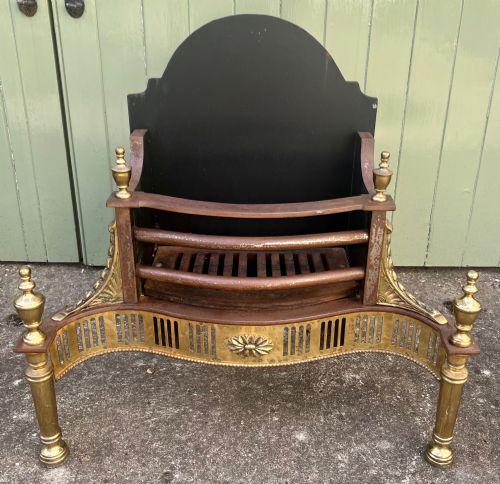
Cast iron made for the open hearth: the plates, baskets, grates, dogs and fenders that held a coal or log fire and threw its heat back into the room.
Antique Cast Iron Fireplaces
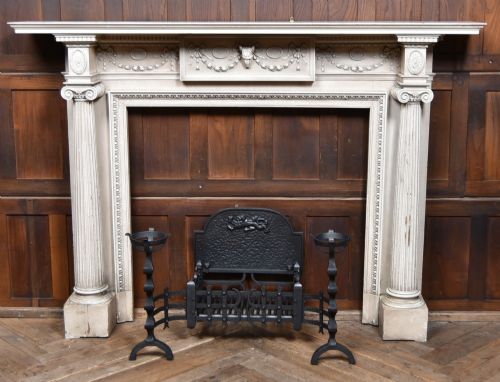
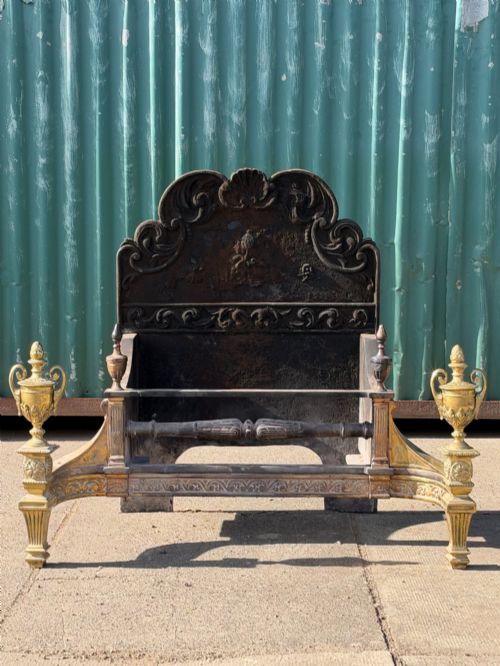
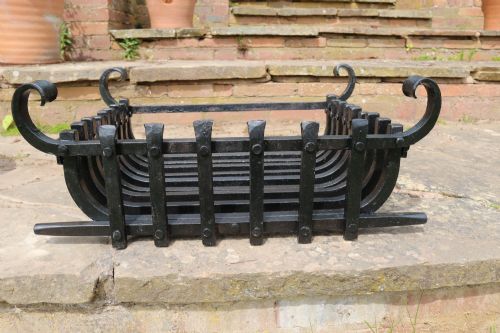
The heading covers hearth ironwork rather than chimneypieces. What dominates is the metal that sat in and around the fire: fire backs, free-standing baskets and grates, andirons sold in pairs, and fenders. Complete fireplaces and surrounds do appear, but they are a small part of what comes to market.
Cast iron entered the domestic hearth from the 16th century, first as firebacks to shield the chimney wall and push heat forward. Once coal took over from logs the fire needed containing, and grates, baskets and fenders followed. Foundry production in the 19th century put all of it into ordinary houses.
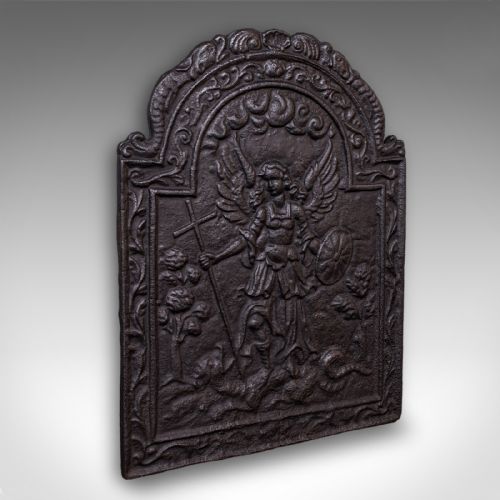
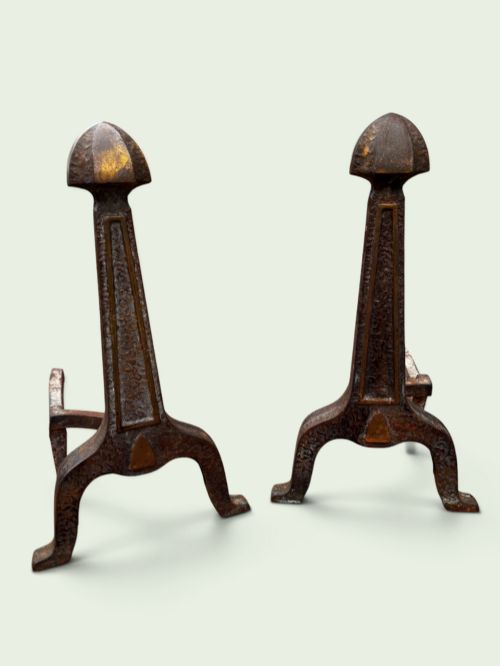
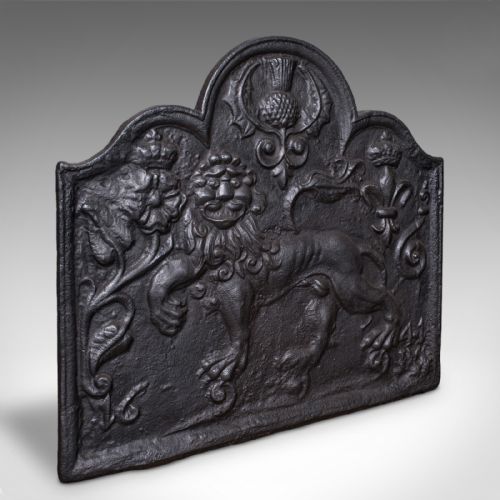
Fire baskets and grates form the largest block on Sellingantiques, ahead of fire backs, which are commonly sold on their subject: royal crests, a lion and unicorn, a coat of arms, a Tree of Life. Andirons and fire dogs come next, nearly always as pairs, with fenders, kerbs and club fenders behind them and a steady tail of ranges, stoves, coal hods and fire irons.
Dating is often broad. Dealers place a great many pieces as Victorian or simply 19th century, a sixty-year band rather than a year, with 1900s, 1920s and Georgian groups behind. Earlier claims turn up on firebacks and firedogs, and a cast date on a fireback is not a date of manufacture: one sampled plate carries 1635 and is dated by its dealer to 1930.
Where The Range Sits
Size does most of the work. Large and heavy recur through the titles, and the top of the range runs to inglenook-scale baskets and monumental plates, while miniature fire surrounds and salesman's samples sit at the bottom. Complete Victorian kitchen cooking ranges are the giants of the whole category, the most elaborate hung with brass rails and pots.
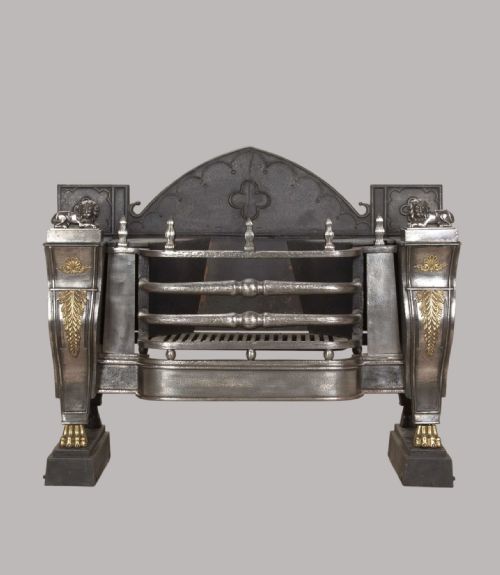
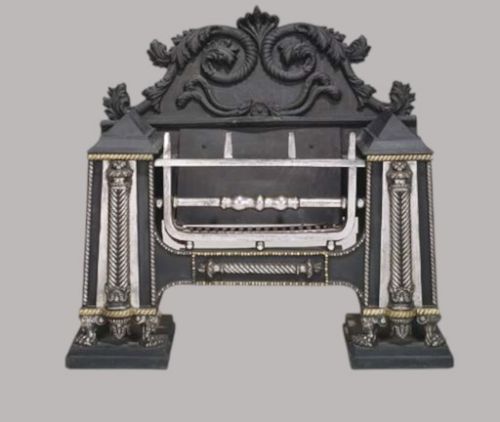
Completeness lifts a listing well clear of a single element. A basket with its andirons, or a grate offered with its fire back, sits above one plate or one dog on its own, and lone trivets, pokers and tidies sit lowest.
Then decoration and metal. Modelled subjects carry a piece: lions, unicorns, sphinxes, armorials, a horse and rider, against plain black fenders and undecorated plates at the other end. Brass appears in around one title in six, and brass finials, brass-mounted grates and gilt-brass fenders run through the upper half.
Antique Cast Iron Fireplaces Retail Price Guide 2026
Typical UK retail prices for cast iron fireplaces, calculated from the Sellingantiques database of over a million retail prices indexed since 2003. This retail price guide relies exclusively on Sellingantiques data; no external sources or auction records are used, so the figures do not describe the wider market.
Cast iron fireplaces have been listed on Sellingantiques since 2009.
The Antique Cast Iron Fireplaces Glossary
- Fire back
- A heavy cast plate set against the back of the hearth to protect the brickwork and throw heat forward. Also written fireback, and dealers use reflector for the same thing.
- Fire basket
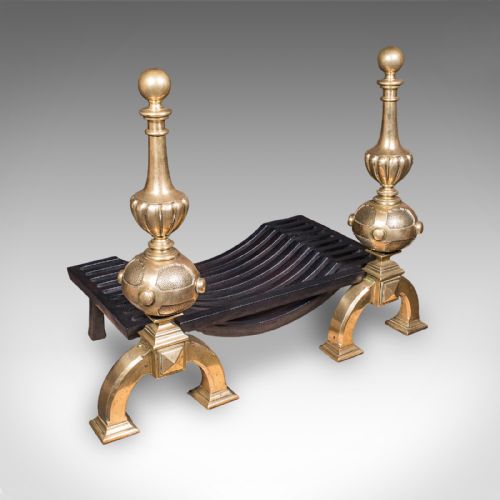
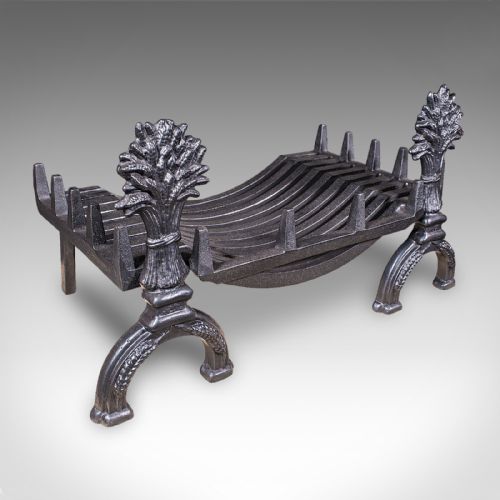
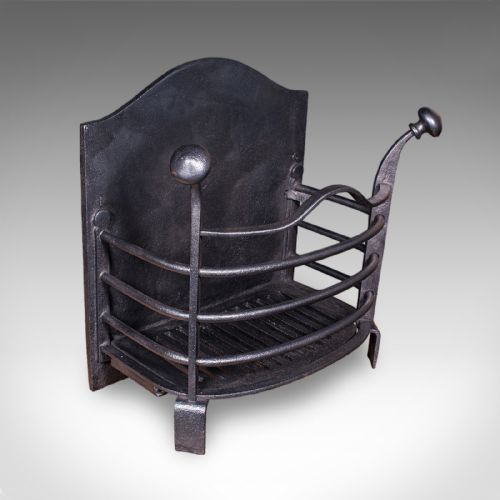
- A free-standing barred basket holding coal or logs clear of the hearth floor. Grate is used more loosely in these titles, covering both basket grates and fixed ones.
- Andirons
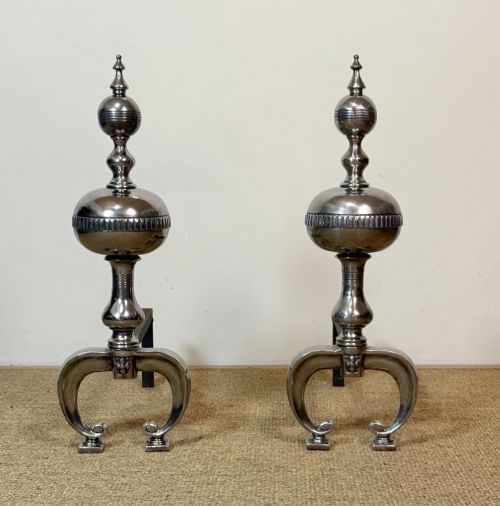
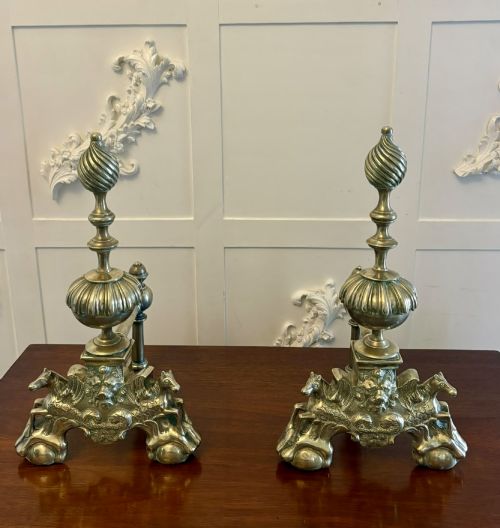
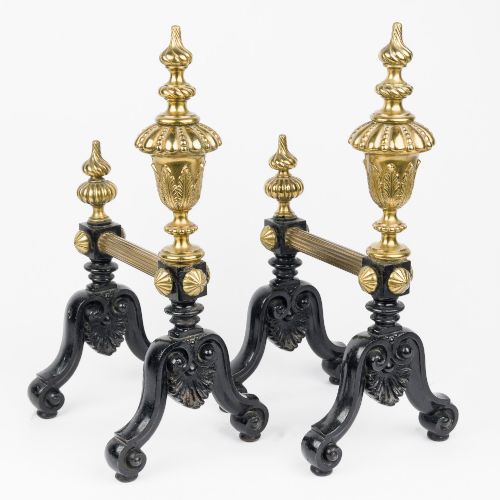
- Paired uprights standing on the hearth to carry burning logs. Fire dogs means the same, and French-attributed pairs are sometimes listed as chenets.
- Fender
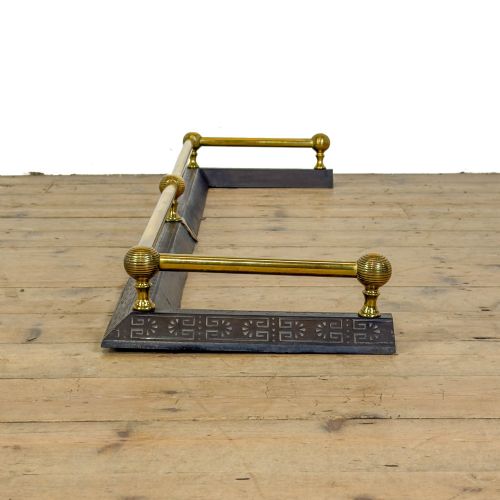
- A low guard along the front of the hearth keeping coals off the floor. A fire kerb is the same idea as a border, sometimes wide enough to sit on.
- Club fender
- A deep fender with a padded or railed top, made to be sat on. Several turn up described as extra long or serpentine.
- Register grate
- A fixed grate with an adjustable plate controlling the flue. A hob grate has flat side platforms for kettles and pots; a dog grate stands free on integral andiron-like legs.
Antique Cast Iron Fireplaces: Frequently Asked Questions
Are these complete fireplaces or loose parts?
Mostly loose hearth ironwork. Baskets, grates, fire backs, andirons and fenders make up the bulk of what is listed, and each is normally sold on its own or as a pair.
Complete cast iron fireplaces and surrounds do come up, but they are a minority. The word surround appears in only a handful of titles.
What does a fireback actually do?
It sits against the back wall of the hearth, shielding the brickwork from the fire and reflecting heat back into the room. It is the oldest cast iron form in the domestic hearth, in use from the 16th century.
In listings, firebacks are sold on their subject rather than their size. Royal crests, a lion and unicorn, a passant guardant leopard, a Tree of Life and a Black Forest scene all recur.
Can I trust a date cast into the iron?
Not as a date of manufacture. Revival casting carried old dates for a very long time, and one sampled fireback bearing the initials CR and the year 1635 is dated by its dealer to 1930.
Dealer dating across the category runs from 1700 to 1940. A large share rests on the words Victorian or 19th century rather than a specific year.
Where were most of these made?
English is by far the commonest origin named in titles, well ahead of anything else.
French pieces are a distant second, and French-attributed pairs of dogs are sometimes listed as chenets. German, Dutch and Italian examples appear singly.
Which pieces sit at the top of the range?
Complete Victorian kitchen cooking ranges. They occupy the whole top of the category, one running to a double oven, another still hung with its brass rail and pots.
Below them come the very large and heavy pieces, inglenook baskets and monumental plates, and grates or fenders carrying brass. Miniature surrounds and salesman's samples sit at the other extreme.
How often do these come up for sale?
Around thirty-two pieces a year on Sellingantiques, from a pool of ninety-four dealers who have listed in the category.
That means most of those dealers have handled only one or two. Hearth ironwork is something they pick up rather than something they stock in depth.