

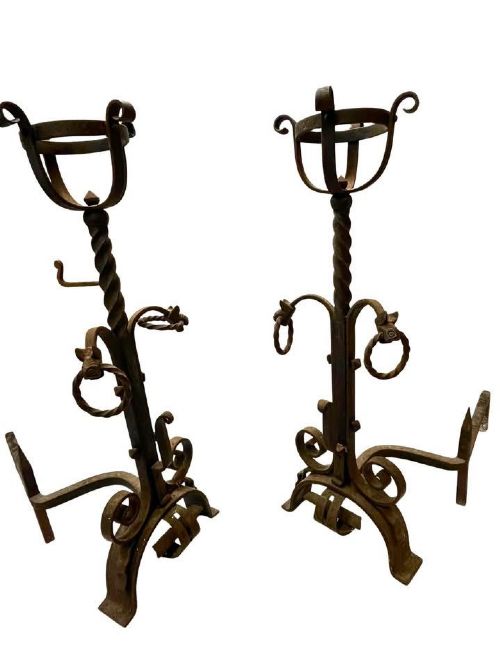


Antique Fire Baskets
A fire basket is a free-standing iron container of bars on legs that holds fuel above the hearth floor, so air can reach the fire from below.
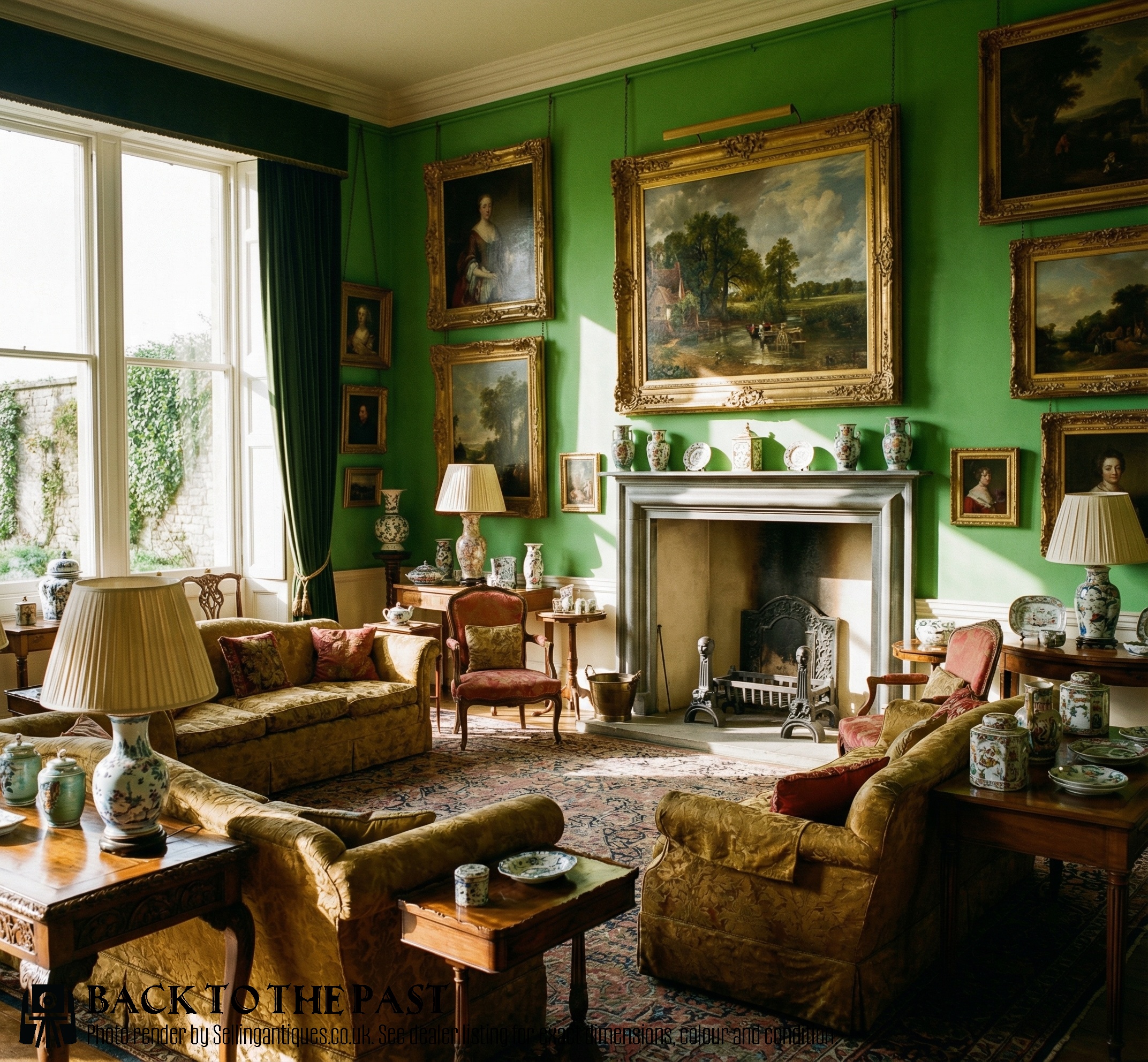
Antique Fire Baskets
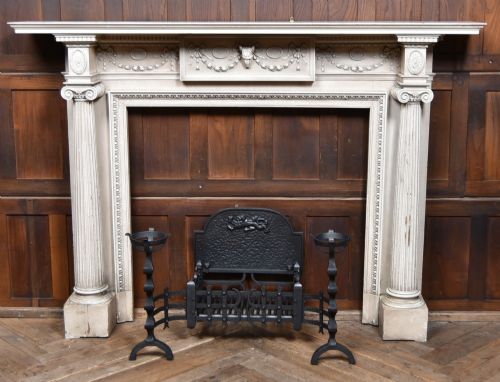
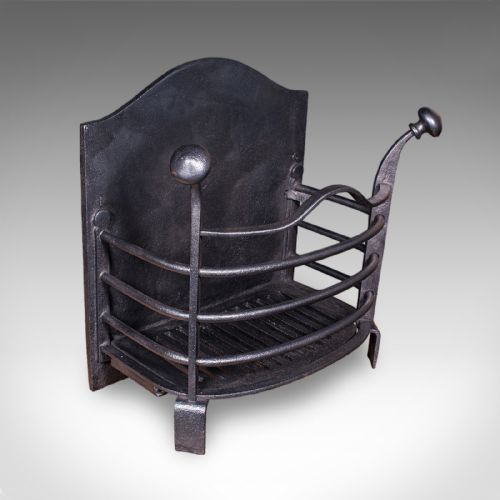
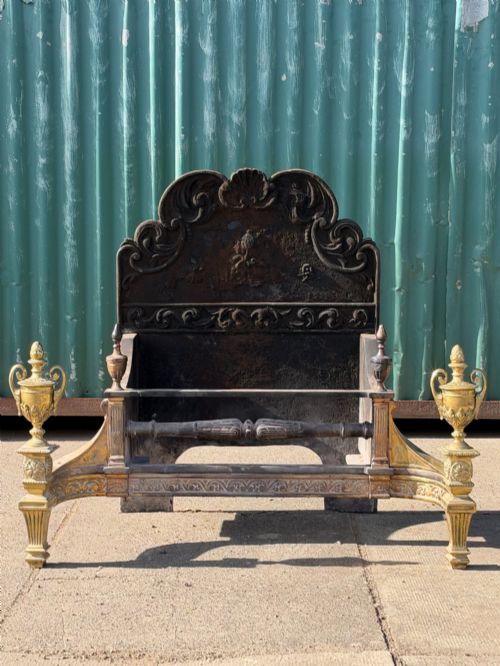
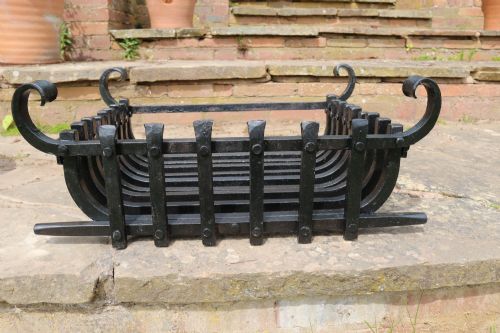
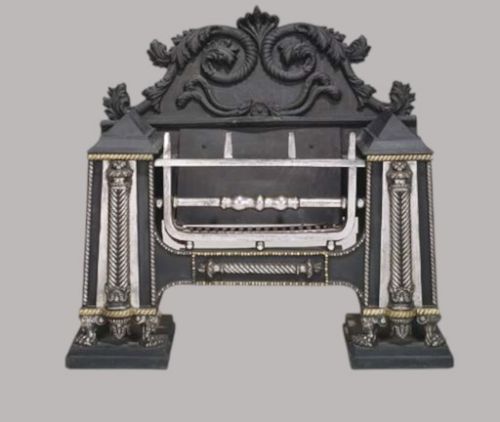
A raised bowl or box of iron bars standing on legs, loose on the hearth rather than built into the chimney breast. Some carry a decorative back plate, some sit over an ash pan, and many come flanked by a pair of andirons. Dealers use "basket" and "grate" almost interchangeably in the titles.
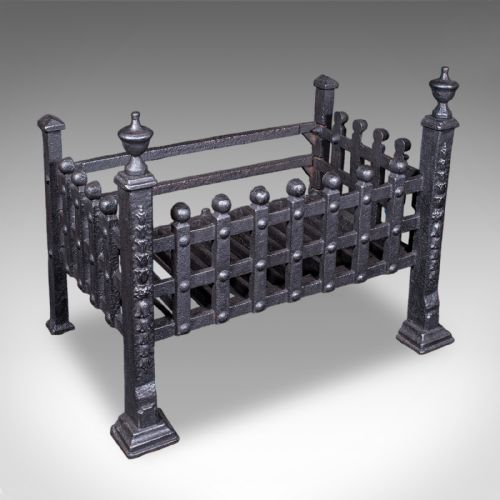
Iron dominates. The word appears in two thirds of titles on Sellingantiques, with cast iron the single most common material and wrought iron a smaller share. Brass turns up as trim, finials and front rails rather than as the body of a piece. The form was the standard way of holding wood, and later coal, in an open fireplace.
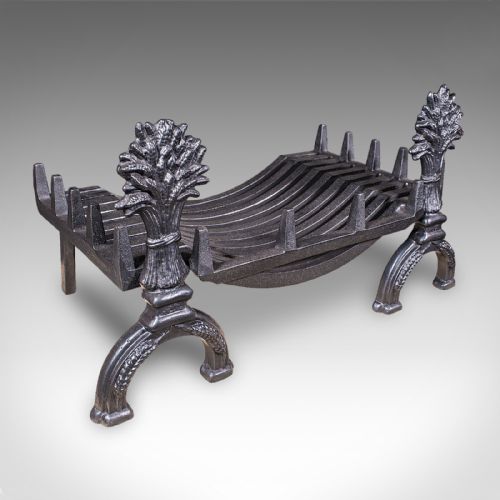
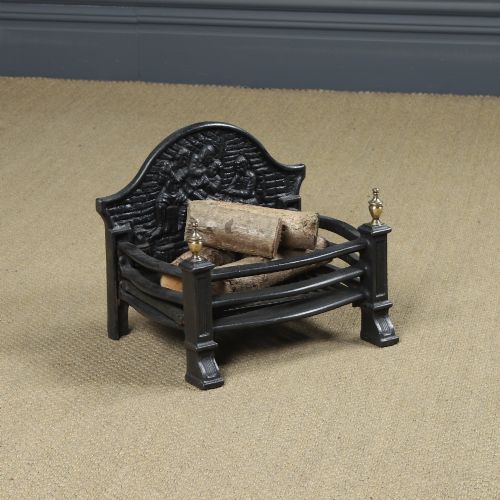
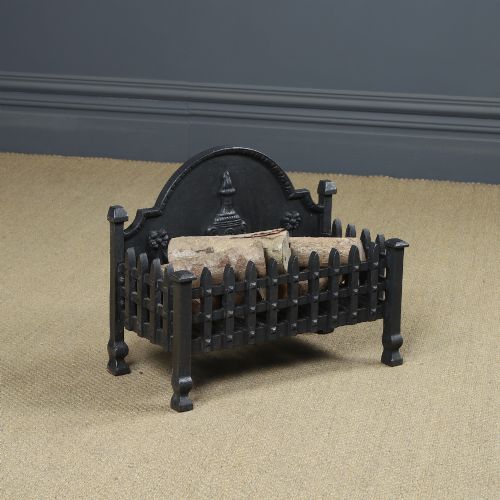
The version you are most likely to meet is a free-standing English cast-iron basket grate of around 1900. The dated field runs 1800 to 1950 and the bulk of it sits at the turn of the century, with Victorian and Edwardian labels attached to much the same thing. One title shape repeats almost word for word across a dozen entries: "Antique Fire Basket Chimney Hearth Fireplace Iron Grate c1900".
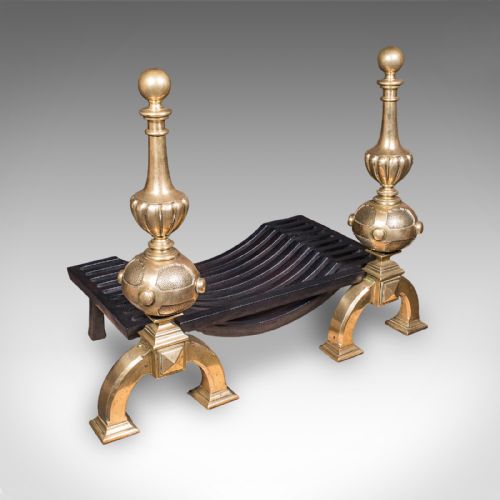
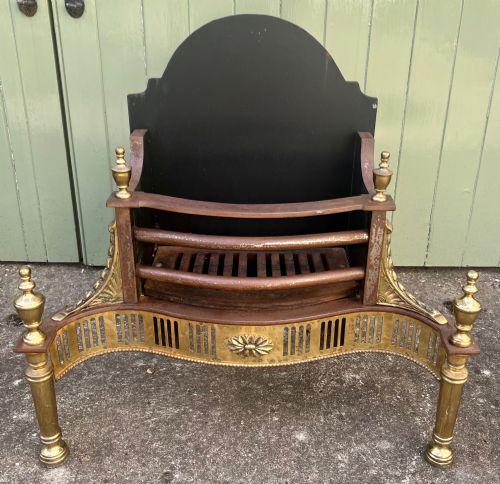
Beyond that centre, four smaller groups recur. Hearth sets with andirons or fire dogs account for close to a fifth of titles. Wrought and forged baskets, including inglenook sizes and Gothic patterns, make about a tenth of the archive and a larger part of live stock. Brass-and-iron neoclassical designs form another tenth, and a handful arrive with a cast fire back or as a fuller fireplace assembly. Style names here often describe a later copy: "Georgian Revival" and "18th Century Style" sit on pieces dated 1900 to 1920.
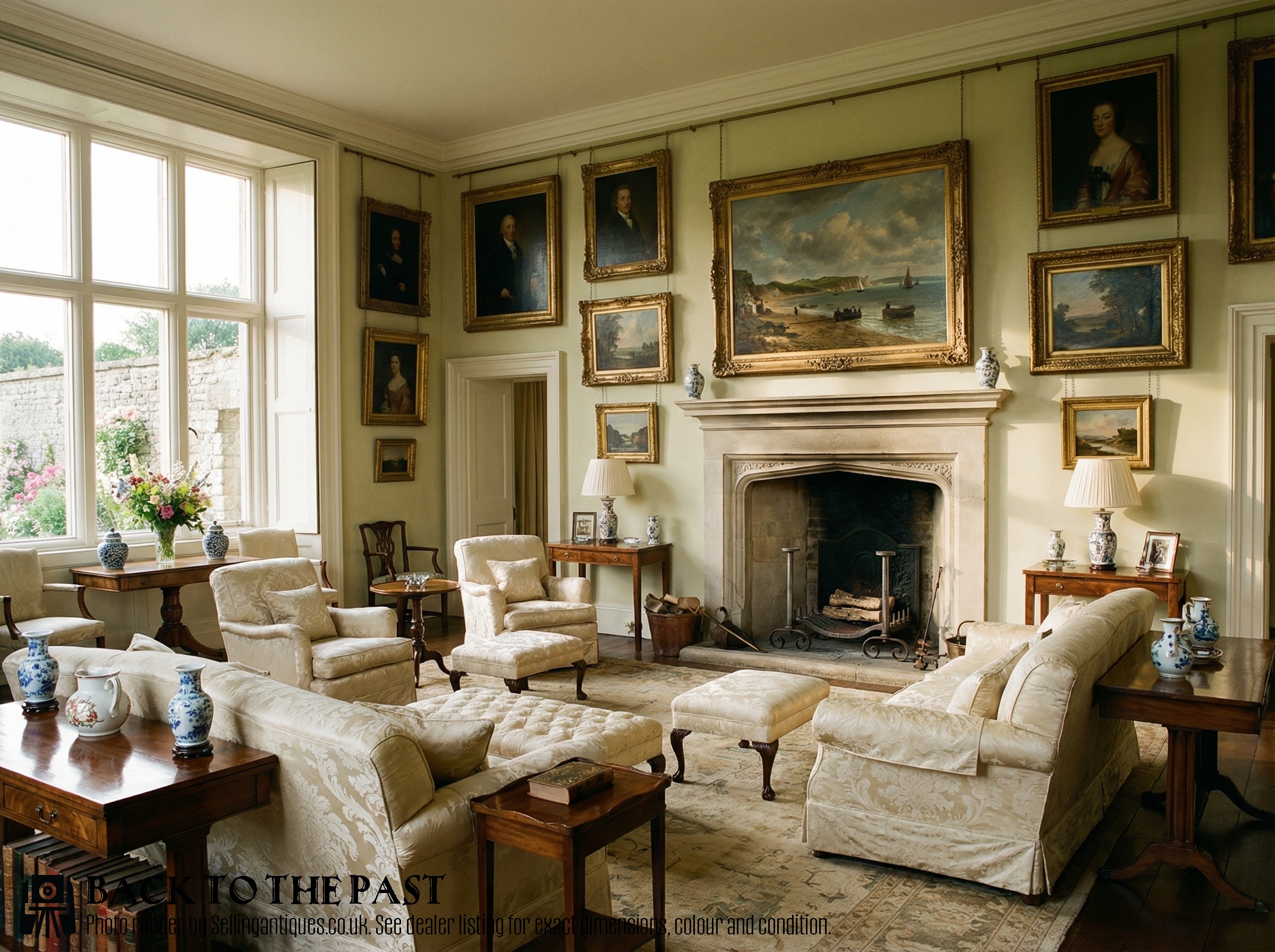
Top And Bottom
Completeness carries the range. A basket that comes with its andirons, its fire dogs or a cast fire back sits in the upper half, while the bare entries titled simply "A Fire Basket" sit at the bottom. Almost one title in five names andirons or dogs, so a good share of the category arrives as a hearth set rather than a single object.
Scale does the same work. "Large" appears in eighteen titles and rises among live stock, and "very large" and "very heavy" show up only among the higher-priced entries. "Medium sized", "small proportions" and "dainty" sit low.
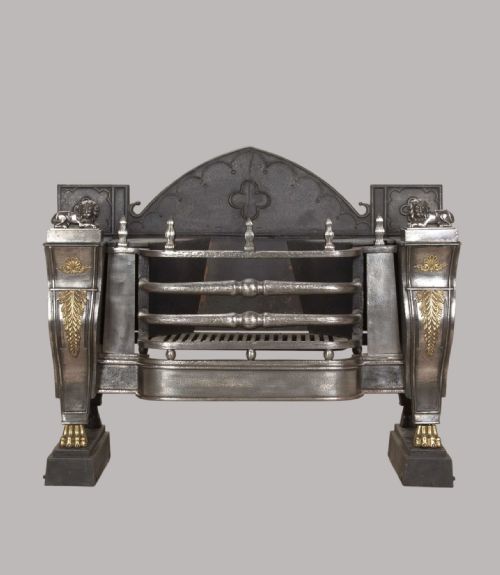
Then ornament and idiom. Brass worked into iron recurs at the top, in serpentine fronts, griffins and finials, against plain iron below. Named design idioms do the same: Adam, George III, Regency, Neoclassical and Gothic attach to the upper end, along with one-off motifs such as Prince of Wales feathers, a Celtic cross and a dragon. Forged work reaches higher than moulded, and the two highest-priced pieces in the sample are both cast-and-wrought hob grates.
Antique Fire Baskets Retail Price Guide 2026
Typical UK retail prices for fire baskets, calculated from the Sellingantiques database of over a million retail prices indexed since 2003. This retail price guide relies exclusively on Sellingantiques data; no external sources or auction records are used, so the figures do not describe the wider market.
The top sale of the last year on Sellingantiques was an English free-standing hearth basket in the Georgian Revival taste, sold in January 2026.
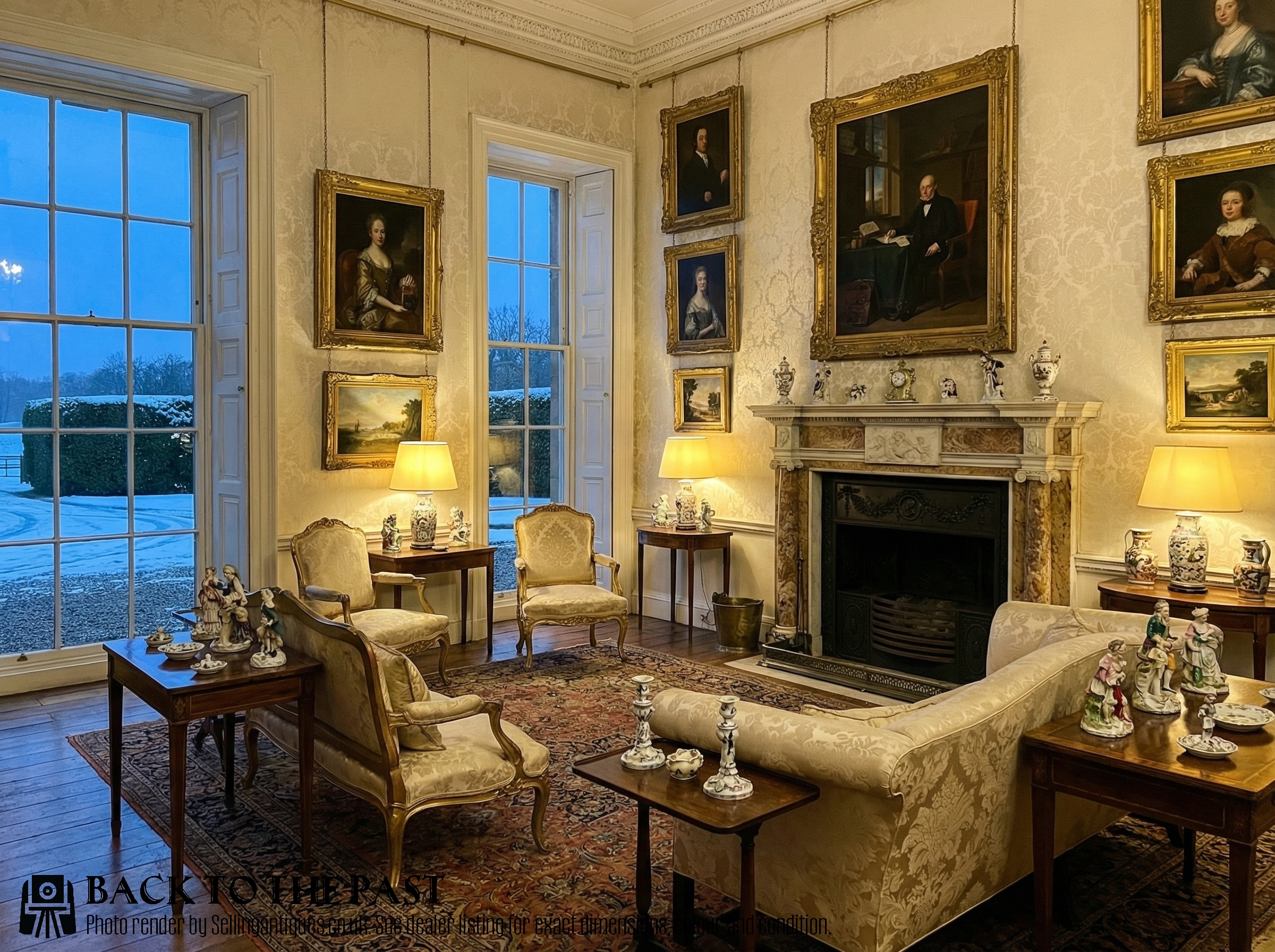
The Antique Fire Baskets Glossary
- Fire basket
- A free-standing container of iron bars holding fuel above the hearth floor.
- Grate
- Used almost synonymously with basket in these titles; strictly the barred fuel-holding part.
- Andirons, fire dogs
- The uprights flanking a basket, often sold with it as a set. Both words appear in titles.
- Cast iron
- Poured into a mould, so it carries relief ornament and repeated patterns. Wrought or forged iron is worked hot at the forge, scrolled and hammered.
- Inglenook
- A large recessed hearth. In titles it flags an oversized basket meant for one.
- Hob grate
- A grate with flat flanking platforms for warming vessels. It appears twice in the sample, both times at the top of the range.
Antique Fire Baskets: Frequently Asked Questions
Are fire baskets and fire grates the same thing?
In these listings, near enough. "Basket" and "grate" are used interchangeably in titles, and "grate" turns up in well over half of them.
Strictly, the grate is the barred part that holds the fuel. A register grate is a different object, built in with a plate that regulates the flue, and only one appears in the sample.
How old are most antique fire baskets?
The dated field runs 1800 to 1950, and the weight of it sits at the turn of the century. The 1900s label leads, with Victorian close behind and Edwardian after that.
Georgian and Regency dates are thin on the ground. The oldest thing in the samples is a seventeenth-century wrought iron basket, the youngest is dated 1950, and neither end is crowded.
Why do listings say Georgian Revival or 18th Century Style?
Because the piece was made in an earlier manner rather than in that period. Style names outnumber genuine periods in this category, and most of the pieces wearing them are dated 1900 to 1920.
Adam, George III, Regency, Neo Gothic, Neo Classical and Renaissance all appear as descriptive idioms. They tell you the pattern, not the century.
What comes with a fire basket when sold as a set?
A pair of andirons or fire dogs, most often. Nearly one title in five names them, so a substantial share of the category comes to market as a hearth set.
A smaller number include a cast fire back, the plate that sits behind the fire against the chimney back. A few are offered as a fuller fireplace assembly.
Is brass common on antique fire baskets?
It shows up in about one title in ten, and as trim rather than structure: finials, front rails, applied ornament.
Brass with iron recurs among the higher-priced entries, in serpentine fronts, griffins and neoclassical designs. Plain iron sits lower down.
Do many fire baskets come from outside Britain?
Almost none. Titles say "English" more than any other origin, and only one piece in the whole sample is given a non-British source: an early eighteenth-century Dutch wrought iron basket.
That makes Continental work the rarest thing in the category by a wide margin. Around twelve fire baskets are listed on Sellingantiques in a year, spread across thirty-five dealers who have handled one.