


Antique Firebacks
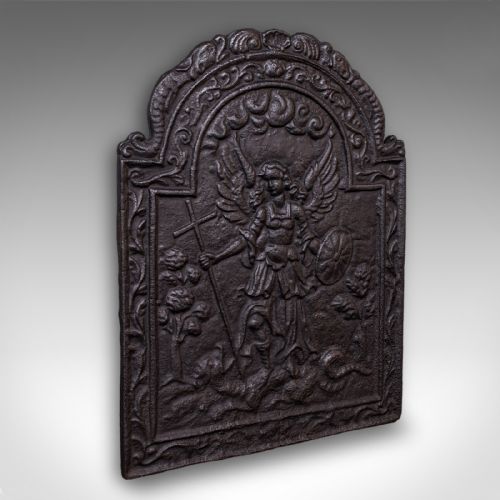
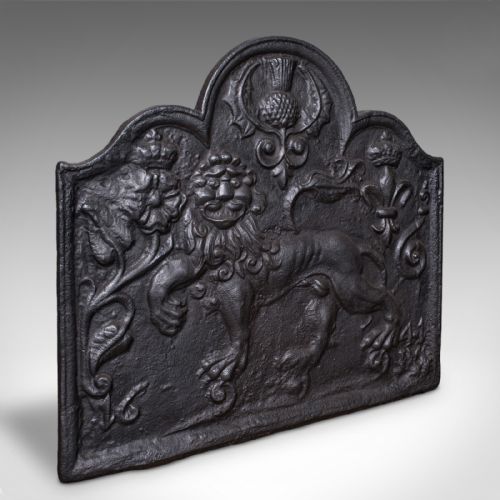
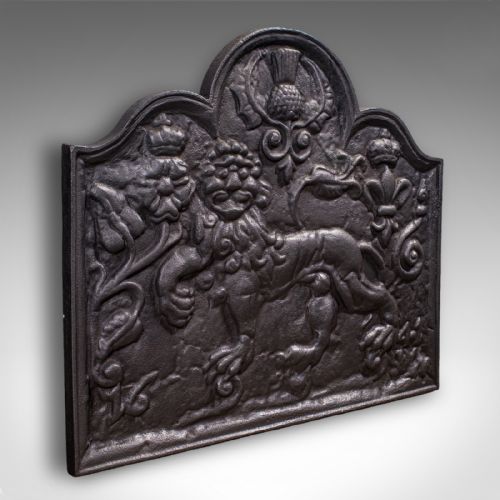
A fireback is a thick slab of cast iron that stands upright at the back of an open hearth, guarding the brickwork and throwing heat back into the room.
Antique Firebacks
What you're looking at is almost always an English cast iron plate with a moulded relief design on the front face. Iron is named in 23 of the 40 listings on Sellingantiques, cast iron in 16, and English in 15. Continental examples barely appear, with one French plate and nothing else.
The plates began as practical hearth furniture in northern Europe, set against the masonry to protect it and push warmth forward. Later castings were made as much for the relief as for the work, and a quarter of titles here call the object a fireplace reflector rather than a fireback, stressing the heat rather than the position.
Dating is loose. Victorian appears 13 times and 19th century 11, with 1900s behind them, and only nine listings carry a clean year at all. Revival casting is a recognised strand: three listings are 19th-century plates described as being of 17th-century design or in 17th style, and one plate catalogued as 1930s carries a cast date of 1635, so a date on the iron is not the date of the casting.
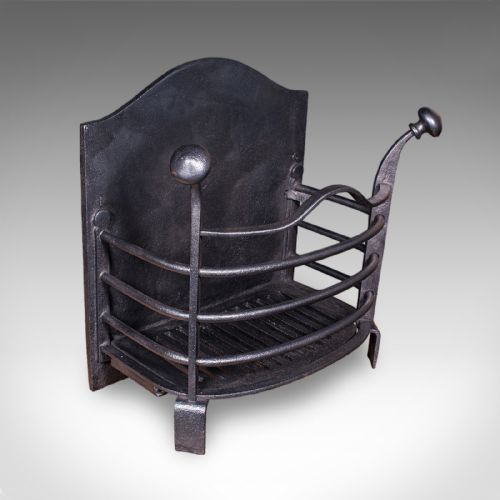
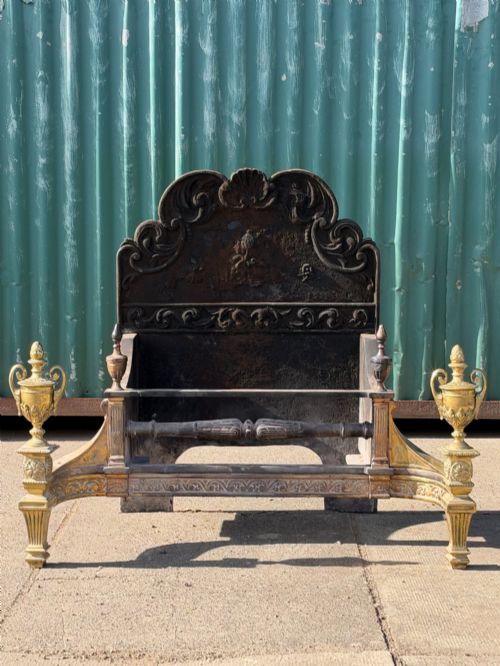
Not everything in the category is a single plate. Roughly one in six listings pairs a back with a grate, fire basket, fender or andirons, and a small handful are register grates or firegrates catalogued alongside with no back at all.
Where The Range Sits
Age carries the top. The highest-priced plate in the archive is a 17th-century armorial attributed to the reign of James I, several times anything else, while the 19th-century plates offered in 17th-century style sit near the bottom alongside plain turn-of-the-century castings.
Subject matter is the next lever. Plates with a named, legible design cluster in the upper half: a Welsh Dragon, a Horse and Rider, a Lion and Unicorn coat of arms, Armour and an Eagle, a Tree of Life, each appearing once. An undescribed cast iron plate with no subject given sits low.
Scale and completeness do the rest. Heavy, very heavy and large recur through the upper half, and small in the lower-middle, all as adjectives rather than figures. Backs sold with a grate, basket, fender or andirons run well above standalone plates, and an inscribed casting, such as the one initialled CR, stands as its own small group.
Antique Firebacks Retail Price Guide 2026
Typical UK retail prices for firebacks, calculated from the Sellingantiques database of over a million retail prices indexed since 2003. This retail price guide relies exclusively on Sellingantiques data; no external sources or auction records are used, so the figures do not describe the wider market.
Firebacks have been listed on Sellingantiques since 2012.
The Antique Firebacks Glossary
- Fireback
- The upright iron plate at the rear of the hearth. Both fireback and fire back are used across titles, so the two spellings mean the same thing.
- Fireplace reflector
- A dealer's term for the same plate, used in about a quarter of titles. It stresses the throwing back of heat; hearth reflector appears once as a variant.
- Cast iron
- Iron poured into a mould, the material named in 16 titles. Wrought iron, hammered rather than poured, appears only once and on a fire basket.
- Relief
- The raised moulded design on the face of the plate. It is what most of these listings describe when they name a subject.
- Register grate
- A grate with a closing plate to control the flue. One turns up in the archive, catalogued alongside the firebacks.
- Armorial
- Bearing coats of arms or heraldic beasts, the Lion and Unicorn among them. Carolean Revival, a later design in the manner of the Charles II period, is used in one title.
Antique Firebacks: Frequently Asked Questions
How many firebacks come up for sale?
Around four reach Sellingantiques in a year, which makes them one of the quieter hearth categories.
Twenty-one different dealers have listed one, so the trade in them is spread wide rather than held by a few specialists. Almost nobody handles them repeatedly.
Why are so many called fireplace reflectors?
It's a dealer's phrasing for the same object, and it has spread. A quarter of all titles in the archive use fireplace reflector rather than fireback, and one uses hearth reflector.
The term points at the function, the plate pushing heat back into the room, rather than at where it sits.
What designs appear on the plates?
Heraldry and beasts. The named subjects in the archive are a Welsh Dragon, a Horse and Rider, a Lion and Unicorn coat of arms, Armour and an Eagle, and a Tree of Life, each appearing once.
Style labels also turn up as subjects in their own right, with Heraldic, Neoclassical Revival and Carolean Revival among them. About a quarter of titles name a subject at all; the rest describe a plain plate.
Are 17th-century firebacks common in listings?
No. Victorian and 19th century between them account for most of the category, with 1900s behind. Only three listings are given as 17th century and one as before 1700.
What does turn up often is 17th-century taste on later iron. Three plates are described as being of 17th-century design or in 17th style while dated to the 19th century.
One casting reads 1635 yet is catalogued as 1930s.
Do firebacks sell with grates or andirons?
Sometimes. Roughly one in six listings pairs a back with a grate, fire basket, fender or andirons as a hearth group.
Those grouped lots run well above the standalone plates in the archive. A small handful of listings are grates or firegrates on their own, catalogued alongside the backs with no plate mentioned.
Where were these firebacks made?
English is stated in fifteen titles and is the origin for everything here bar one French plate. No Dutch, Belgian or German examples appear.
No foundry or ironworks name is recorded anywhere in the archive, and no regional attribution either. The listings describe the finished plate and its design, not who cast it.