



Tapestry Fire Guard
These tapestry fire guard examples combine practical hearth protection with intricate needlework, offering both warmth deflection and period decorative charm.
Tapestry Fire Guard
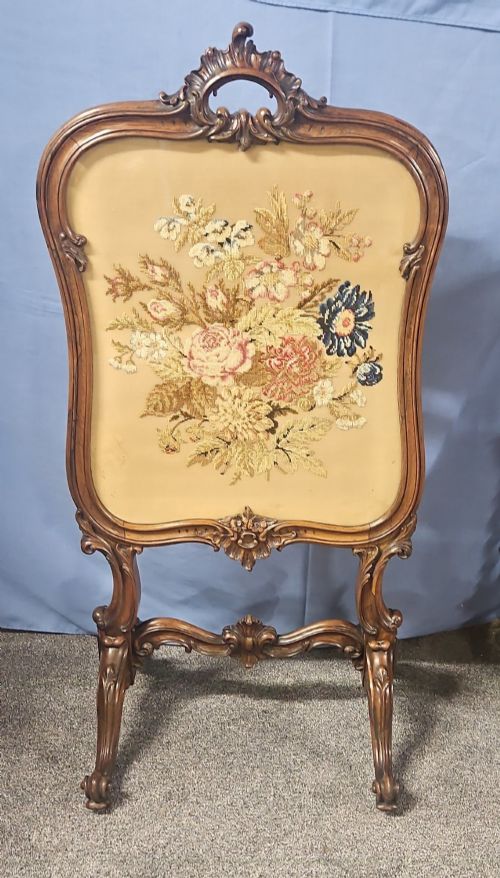
A tapestry fire guard protects a room from the intense heat of an open hearth while adding colour and texture to an interior scheme. These pieces appear in forms such as folding screens, pole screens, and metamorphic tables.
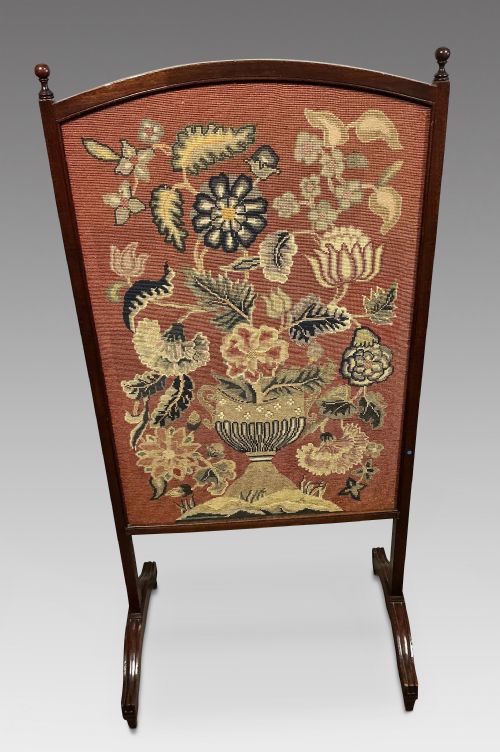
The Victorian era dominates the available selection, though examples span from the Georgian period through to the early twentieth century. You will encounter various woods including walnut, rosewood, mahogany, and carved oak supporting the textile panels.
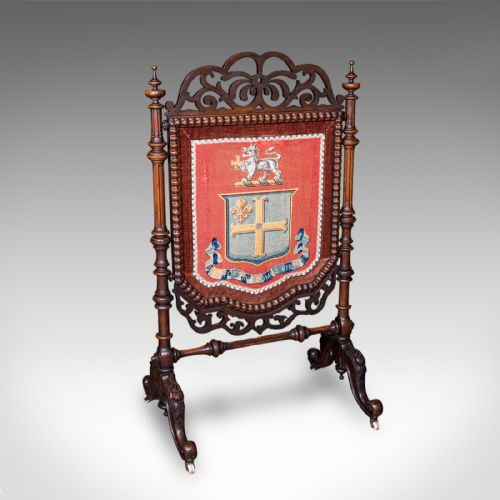
Makers utilised different configurations, from cheval frames to standing screens and pole screens with adjustable needlework panels. Many feature wool and silk embroidery depicting pastoral scenes, coats of arms, or figural subjects.
Assessing quality and craftsmanship
Quality rests in the crispness of the timber carving and the density of the needlepoint stitches within the panel. Finer pieces demonstrate superior joinery in the frame and greater complexity in the pictorial design.
Condition of both the textile and the supporting wood dictates the standing of a piece. Original glass preservation and robust mechanical elements in adjustable pole screens or metamorphic tables also influence overall integrity.
Parrots occasionally peer out from early twentieth-century brass frames, proving that hearthside companions came in feathered varieties too.
The Tapestry Fire Guard Glossary
- Pole screen
- A standing fire screen featuring a vertical wooden shaft and an adjustable needlepoint panel held by a thumb screw or sliding collar. This design allowed occupants to shield their faces from the direct heat of the fire.
- Needlepoint
- A form of canvas work embroidery executed with wool or silk yarn using a tent stitch. It forms the pictorial panels seen mounted within the wooden frames.
- Cheval screen
- A self-supporting floor screen with a swinging frame pivoted between two upright pillars. This allows the tapestry panel to tilt at different angles.
- Armorial
- Relating to heraldry, depicting coats of arms or family crests. Such motifs are frequently hand-stitched into the tapestry panels of British pieces.
- Metamorphic
- A piece of furniture designed to transform into another functional object, such as a fire screen that converts into an occasional table.
Tapestry Fire Guard: Frequently Asked Questions
How do you use a tapestry fire guard?
These screens were traditionally placed directly in front of an active fireplace during the warmer months when fires were not lit, preventing drafts and soot smells from entering the room. They also served to protect the faces of people sitting near blazing hearths from excessive heat.
Today, they function primarily as decorative room dividers or wall-adjacent focal points in living spaces, preserving historic needlework while adding period character to an interior.
What is the difference between a pole screen and a standard screen?
A pole screen consists of a vertical wooden post on a tripod or weighted base with a small, sliding needlepoint panel that can be adjusted up and down. A standard fire screen uses a fixed frame resting on floor feet or legs.
Pole screens were personal items meant to shield an individual's face, whereas standard screens offered broader protection for a larger area of the hearth.
How do I date a wooden fire screen?
Dating relies on identifying the prevailing style of the timber frame, such as George III giltwood, Victorian rosewood revival, or Edwardian brass and oak. Joinery techniques and secondary woods also provide clues to the decade of manufacture.
The needlework panel often mirrors the prevailing decorative tastes of the period, ranging from formal coats of arms to pastoral scenes.
Are the tapestry panels hand-stitched?
Most period panels found in these screens feature hand-worked needlepoint, tent stitch, or embroidery executed in wool and silk. The complexity of the stitches and the natural variation in yarn colours typically indicate traditional handcrafting.
Examining the reverse of the panel often reveals the hand-tied knots and irregularities characteristic of historic needlework.