

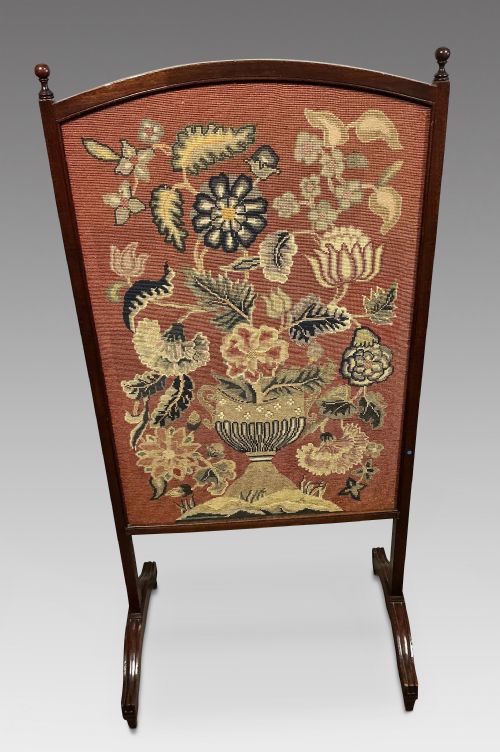


Victorian Tapestry Hearth Screen
A victorian tapestry hearth screen brings tactile warmth and period textile art directly to the fireside.
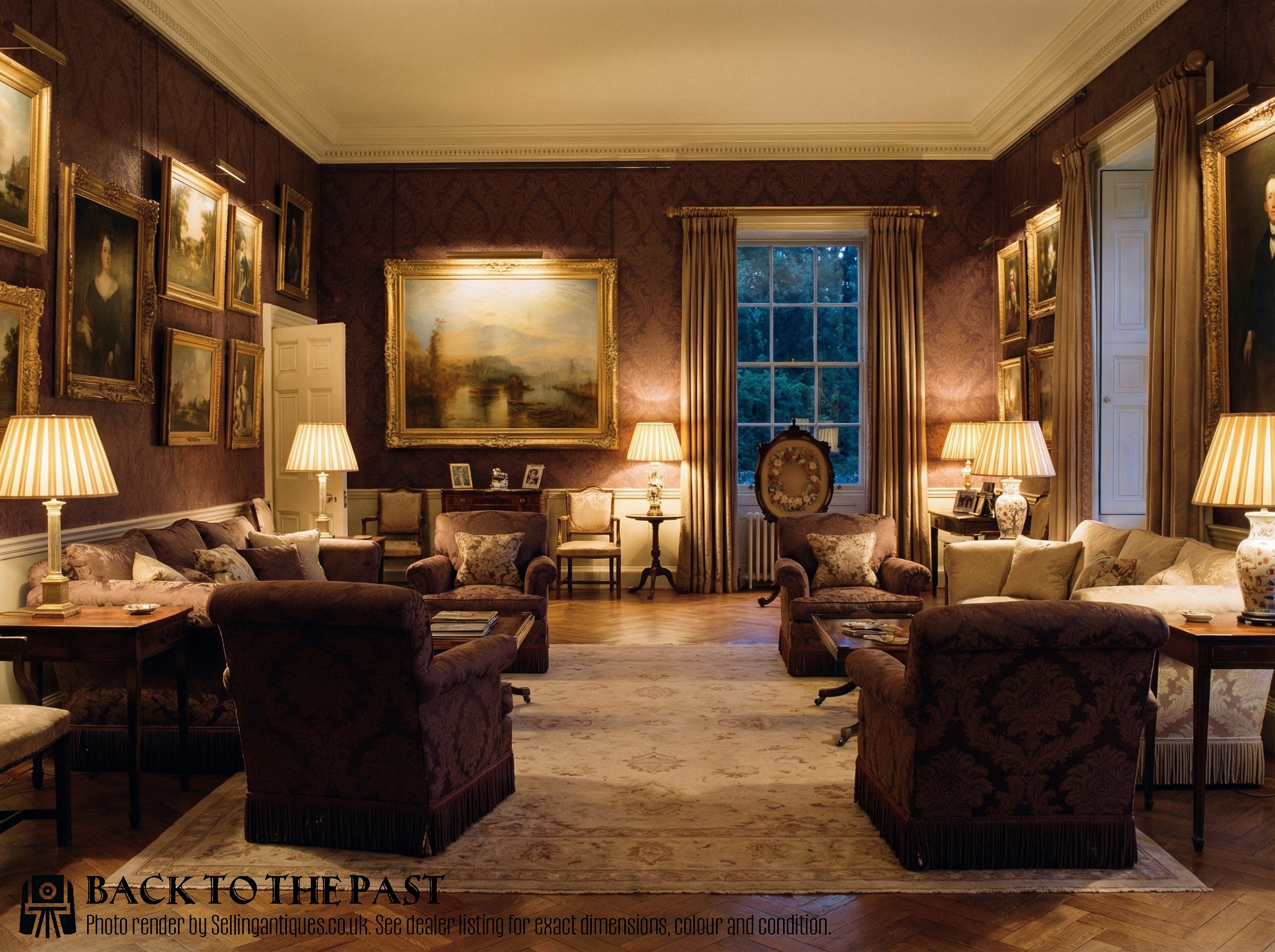
Victorian Tapestry Hearth Screen
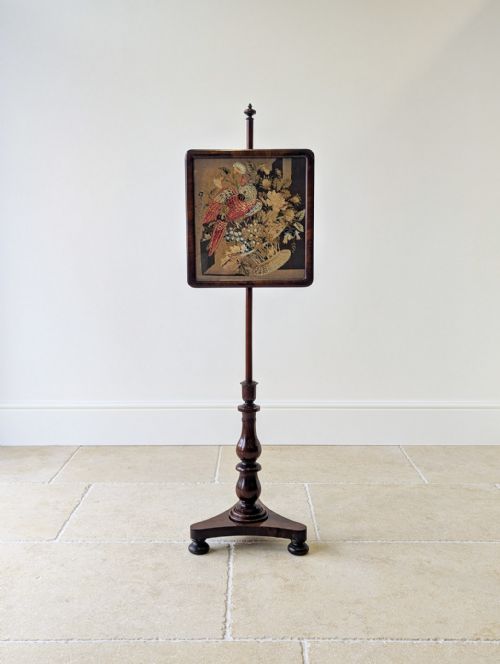
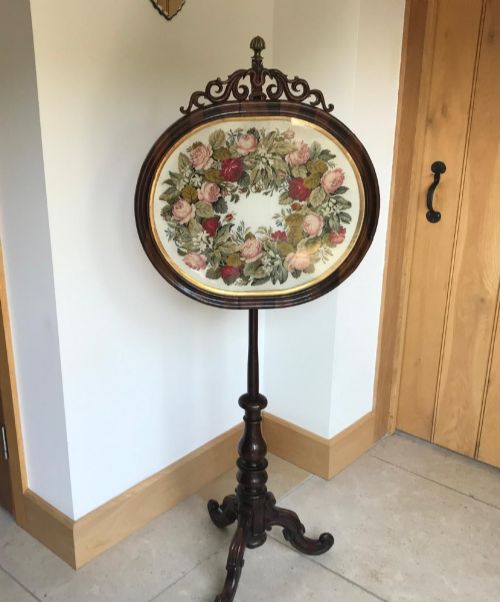
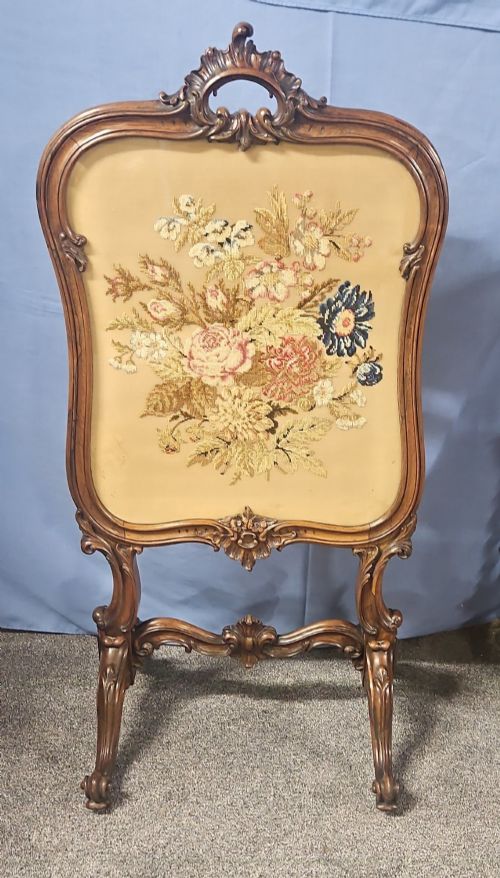
A victorian tapestry hearth screen is a decorative standing frame designed to shield residents from the intense heat of an open fire. These pieces take two primary forms: the adjustable pole screen, which mounts a sliding panel on a slender wooden shaft, and the cheval or standing screen with a wider floor-based frame.
The versions you meet most often on this page date from the nineteenth century, spanning Regency, William IV, and Victorian periods. Woods such as mahogany, rosewood, walnut, and satinwood form the uprights and bases, whilst textiles provide the visual focal point.
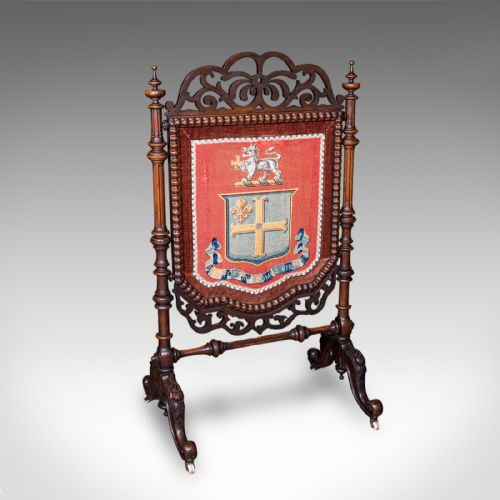
Makers fashioned these screens to combine utility with polite interior decoration, placing them strategically in sitting rooms and parlours. The textile insert typically displays needlework, woolwork, embroidery, or tapestry panels depicting floral arrangements, coats of arms, or figural scenes.
How they were made
Craftsmen built the structural frames using dense hardwoods like mahogany, rosewood, and walnut, frequently incorporating carved details, bobbin-turning, or gilded accents. These timbers were shaped into stable tripod bases for pole screens or robust rectangular structures for cheval designs.
The decorative panels rely on textile arts, combining wool, silk, and needlepoint threads worked onto canvas grounds. These hand-stitched tapestries and embroideries were then stretched securely within the wooden framework to withstand the ambient warmth of the hearth.
Listings feature walnut, rosewood, mahogany, and satinwood alongside wool, silk, and brass components.
What varies in quality
The refinement of the woodwork separates standard examples from finer commissions, visible in crisp carving, well-turned pedestals, and carefully selected timber grains. Better pieces utilise luxurious woods such as rosewood and satinwood alongside substantial brass adjustment mechanisms.
The artistry and execution of the needlework panel dictate much of the overall merit. Dense, finely worked woolwork and silk embroidery with complex pictorial detail or heraldic designs command greater attention than simpler geometric samples.
The Victorian Tapestry Hearth Screen Glossary
- Pole screen
- A standing fire screen featuring an adjustable panel that slides vertically along a central wooden shaft. This mechanism allowed occupants to position the textile shield at the precise height needed to block radiant heat.
- Cheval screen
- A self-standing floor screen supported by two sturdy side pillars rather than a central pole. These wider frames accommodate larger embroidered or tapestry panels.
- Needlepoint
- A type of canvas work embroidery stitched with wool or silk threads to create dense pictorial surfaces. It forms the primary decorative medium for nineteenth-century fire screens.
- Armorial
- Pertaining to heraldry and family coats of arms. Many fire screen panels depict specific familial crests worked in coloured threads.
- Bobbin-turned
- Woodwork shaped on a lathe to resemble a series of rounded bobbins or beads strung together. This decorative turning technique appears frequently on nineteenth-century furniture legs and screen frames.
Victorian Tapestry Hearth Screen: Frequently Asked Questions
How did people use a pole screen?
Occupants placed the screen between their seating and the fireplace to protect their faces from the intense heat of open coal fires. The sliding panel adjusted up or down on its pole to block the warmth exactly where needed.
In polite nineteenth-century interiors, these screens also served to shield delicate wax-based cosmetics on ladies' faces from melting near the hearth.
What is the difference between a pole screen and a cheval screen?
A pole screen uses a single vertical shaft with a counterbalanced or friction-held sliding panel, usually supported by a tripod base. A cheval screen rests on wider floor feet and holds a fixed rectangular frame.
Pole screens tend to be lighter and more easily repositioned around a room, whereas cheval screens offer a larger surface area for expansive tapestry panels.
How do I date a nineteenth-century fire screen?
Dating relies on combining the prevailing furniture style with timber choice and construction methods. Regency and William IV pieces often feature rosewood or mahogany with crisp classical turnings, whilst later Victorian examples frequently employ walnut and heavier carved ornament.
Needlework styles and framing techniques also offer clues, as floral motifs evolved from restrained Regency patterns to more exuberant Victorian Rococo Revival designs.
Are the tapestry panels usually original to the frames?
Most pieces retain their original period needlework or woolwork panels, often executed by the original owners as domestic needlecraft. Close inspection of the mounting points reveals whether the textile has long inhabited its current frame.
Needlework samplers and tapestries were sometimes remounted during the nineteenth century, reflecting changing interior tastes while preserving the textile itself.