




Adjustable Standing Fire Screen
These adjustable standing fire screen examples combine fine timber and hand-worked panels to block the fierce heat of an open hearth.
Adjustable Standing Fire Screen
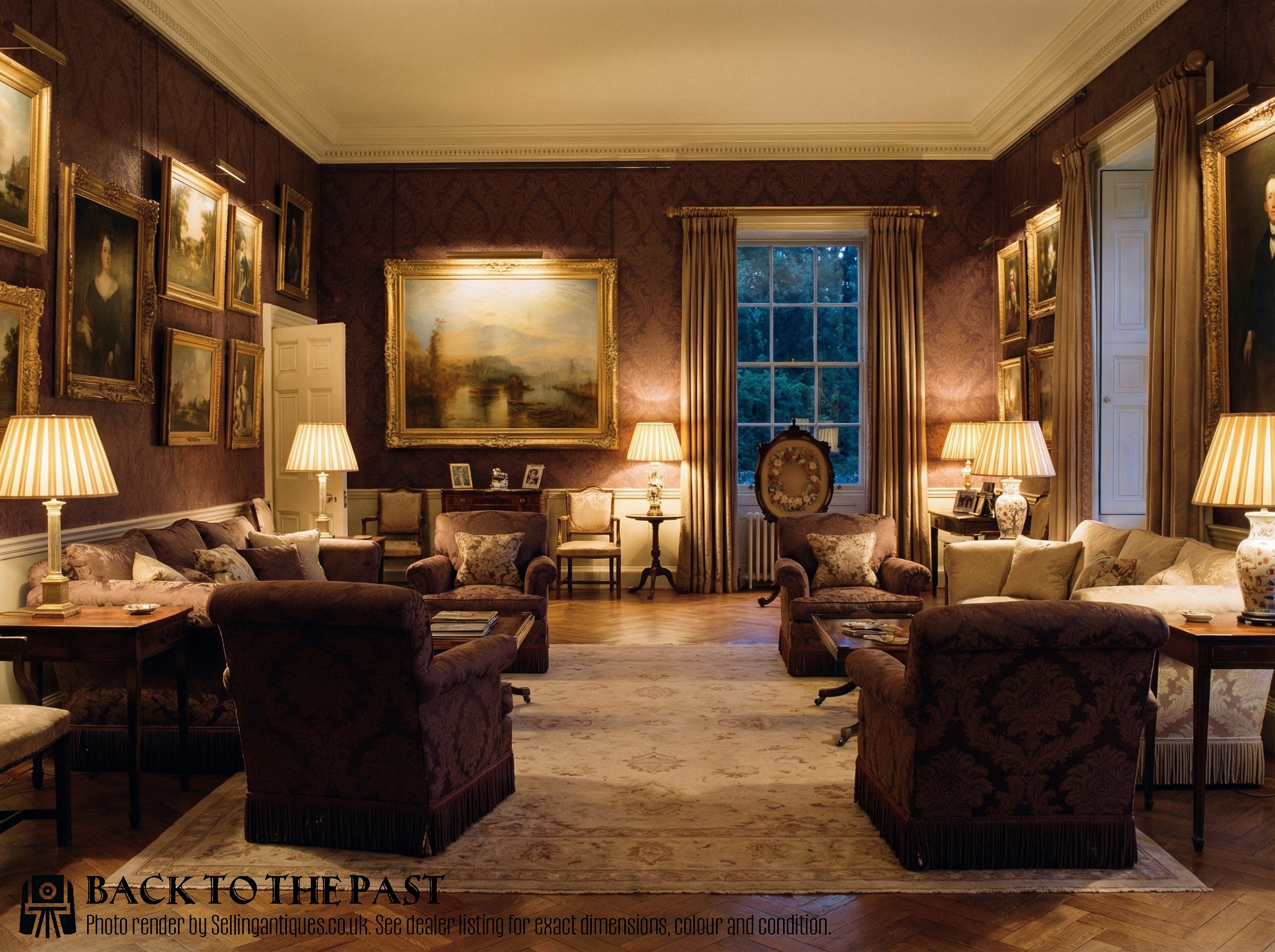
An adjustable standing fire screen stands before the fireplace to shield the room from the radiant heat of an open coal fire. These pieces emerge primarily from the Georgian, Regency, and Victorian eras, taking forms such as the traditional tripod pole screen or floor-standing shield.
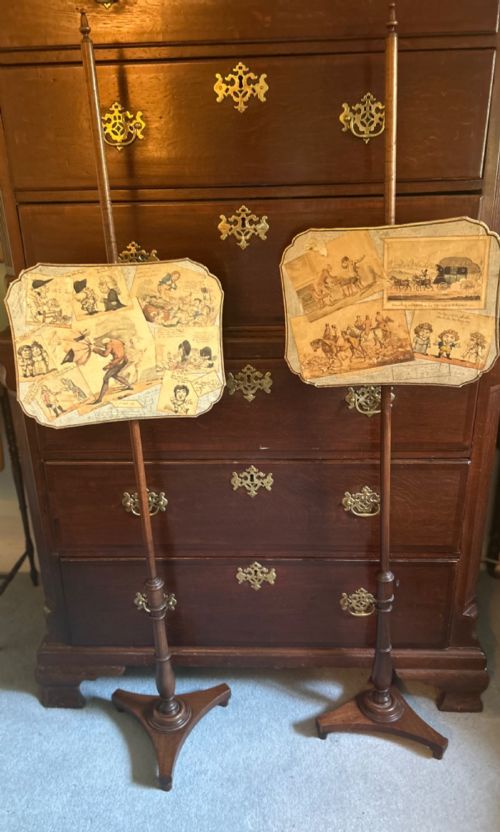
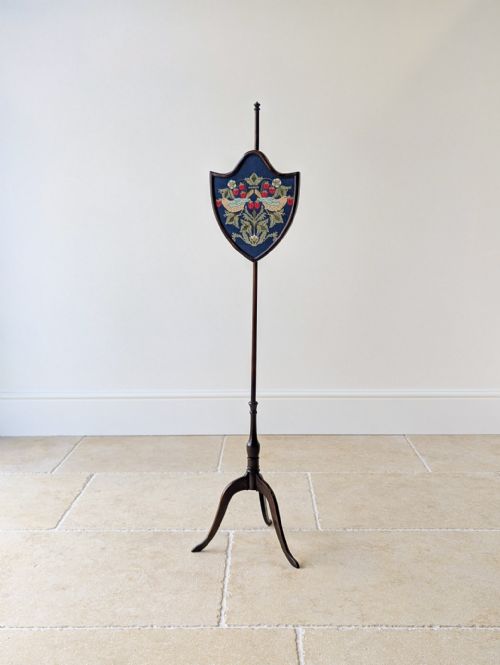
The user encounters variations in timber and panel work, ranging from tripod bases in mahogany and rosewood to mounted screens featuring needlepoint, tapestry, embroidered fire panels, and satirical prints. Many examples incorporate a sliding mechanism along a vertical pole to alter the height of the shield as required.
How they were made
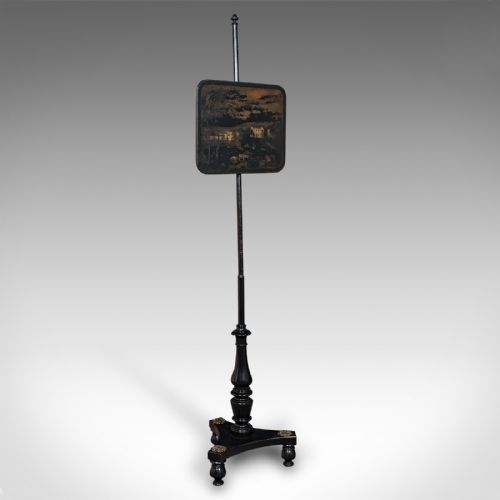
Cabinet makers utilised dense hardwoods such as mahogany, rosewood, and satinwood to turn slender poles and carve sturdy tripod bases or supports. Ebonised wood and papier mâche also appear among the varied surviving examples.
Panels demand meticulous domestic or professional needlework, employing wool, needlepoint, tapestry, and embroidered textiles. Alternative surfaces feature delicate poker work or mounted glass, secured within timber frames and fitted with brass adjustment screws.
Listings demonstrate materials spanning mahogany, rosewood, satinwood, ebonised wood, and papier mâche alongside wool, glass, and brass.
What varies in quality
The refinement of the carved timber base determines much of the initial distinction, from plain turned shafts to elaborately carved tripod legs with scroll or foliage details. Proportions also shift from modest domestic items to examples of grand proportions.
The intricacy and condition of the textile panel elevate the piece further, distinguishing simple printed insertions from densely worked needlepoint tapestry or original poker work. The reliability of the mechanical adjustment mechanism completes the assessment.
The Adjustable Standing Fire Screen Glossary
- Pole screen
- A type of fireplace screen featuring a vertical wooden shaft on a base, holding a sliding panel that can be adjusted for height. This design protects the face from excessive hearth heat.
- Needlepoint
- A form of counted thread embroidery stitched onto canvas to create dense pictorial or geometric designs. This technique decorates the primary viewing panel of many screens.
- Tripod base
- A three-legged support structure commonly turned from mahogany or rosewood to balance the tall vertical pole. It provides stability on uneven floorboards.
- Poker work
- The method of burning designs into a wooden surface using a heated metal tool. This technique appears on specific panels instead of traditional textiles.
Adjustable Standing Fire Screen: Frequently Asked Questions
How do you adjust the height?
A small brass thumbscrew or friction collar secures the panel to the central wooden pole. Loosening this mechanism allows the screen to slide up and down before being fixed in the desired position.
This movement requires gentle handling to protect the aged timber pole and the mechanical fitting from unnecessary wear.
Were these used for cooking?
These screens served primarily to protect sitters from the intense glare and radiant heat of an open coal fire. They shielded the face from overheating and prevented wax cosmetics from melting.
They stood between the hearth and the armchair, remaining movable as the room temperature shifted throughout the evening.
How do I date an antique screen?
Stylistic clues within the carved base and the timber choice point toward specific eras such as the Georgian, Regency, or Victorian periods. Heavier rosewood and elaborate carving often signal later Victorian production, while simpler tripod proportions align with earlier decades.
Hardware details and the style of the needlework panel provide additional supporting evidence for the period of manufacture.
Can I place one near a modern radiator?
Dry artificial heat from modern radiators can cause antique timbers to warp and delicate textiles to become brittle. Placing these screens away from direct heat sources helps preserve the wood and the stitched panel.
Stable indoor humidity and indirect sunlight protect the historic materials from fading and cracking over time.