


Dark Wood Pole Screen
A dark wood pole screen is a functional fireside shield mounted on a vertical shaft, designed to protect the face from the fierce heat of an open hearth.
Dark Wood Pole Screen
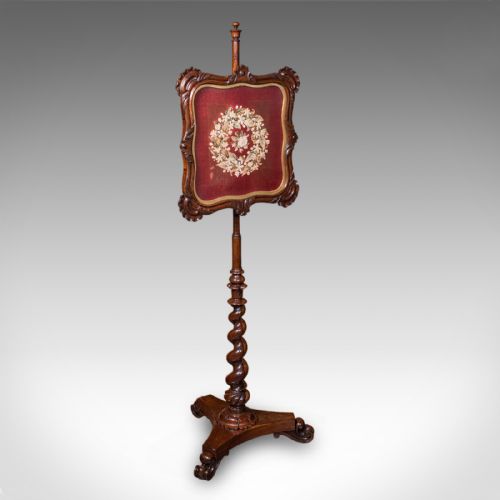
A dark wood pole screen serves as a movable barrier, using a sliding mechanism on a central turned column to raise or lower the needlework panel as required by the hearth fire. These pieces span the Georgian, Regency, William IV, and Victorian periods, showcasing the evolving tastes of the nineteenth and late eighteenth centuries.
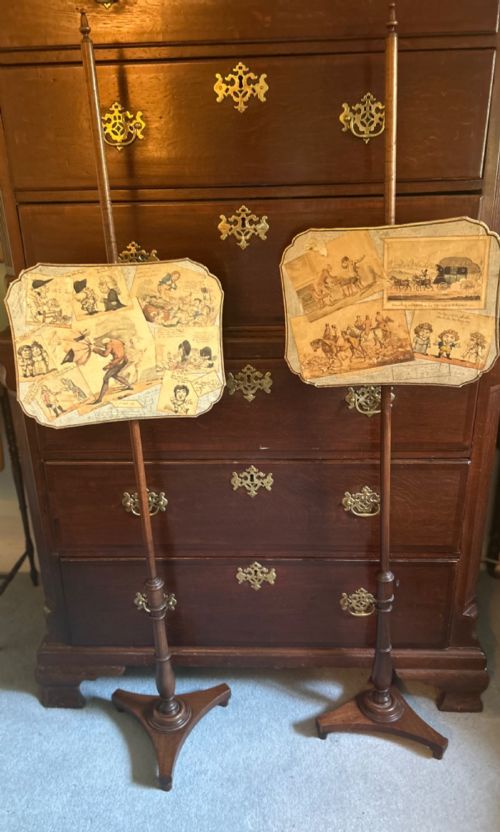
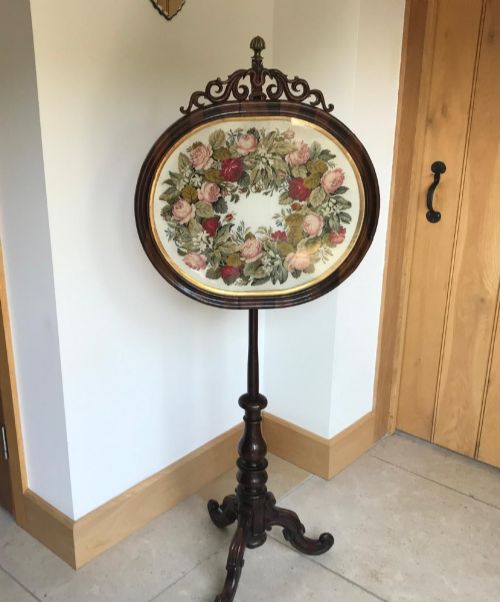
Rosewood and mahogany form the primary timbers of these screens, often supported by tripod bases with carved details or plain legs. The panels themselves display embroidered wool, silk, tapestry, needlepoint, or satirical prints under glass.
Buyers encounter single examples and pairs alike, with varied proportions ranging from standard domestic heights to grander formats. The adjustable design remains the defining characteristic across all periods represented on this page.
Materials and construction
Cabinetmakers utilised dense timbers like mahogany, rosewood, and goncalo alves to turn the slender central poles and shape the supporting tripod bases. These woods received hand-applied finishes that brought out the deep grain and natural dark colour of the material.
The adjustable mechanism relies on a brass collar or internal screw system fitted within the panel mount, allowing smooth vertical movement along the wooden pole. Needlework panels use wool and silk threads stitched onto canvas grounds, frequently protected behind flat glass panes.
Dark Wood Pole Screen Retail Price Guide 2026
Typical asking prices for dark wood pole screen among the pieces listed under this phrase on Sellingantiques today, from the lower quarter to the upper quarter. They describe what is for sale here now, not the wider market.
Textile panels incorporate tapestry, wool, silk, and needlepoint, alongside occasional satirical prints under glass.
Distinctions in quality
The refinement of the carved tripod base separates standard examples from exceptional ones, with superior pieces showing crisp acanthus leaves, reeded columns, or robust scroll work. Heavier timber proportions and balanced joinery indicate superior workshop execution.
Needlework quality dictates much of the visual merit, where intricate pictorial needlepoint or finely stitched tapestry panels demand significantly greater skill than basic geometric patterns. Original brass fittings that move smoothly without slipping also distinguish better specimens.
The Dark Wood Pole Screen Glossary
- Pole screen
- A freestanding fireside screen with an adjustable panel sliding on a vertical wooden shaft. This design allowed sitters to shield their faces from coal or wood fires.
- Tripod base
- A three-legged support structure commonly found at the bottom of pole screens. These legs often feature carved cabriole shapes, paw feet, or plain turned profiles.
- Needlepoint
- Embroidery stitched onto an even-weave canvas mesh using wool or silk threads. Many period screens feature floral or figurerative scenes worked in this technique.
- Goncalo alves
- A dense exotic hardwood with distinctive figuring, occasionally utilised for fine Regency furniture. It provides a striking alternative to standard rosewood and mahogany.
- Brass collar
- A metal ring or mount fitted to the back of the display panel that grips the vertical pole. It permits the user to secure the screen at various heights.
Dark Wood Pole Screen: Frequently Asked Questions
What is a pole screen used for?
A pole screen protected individuals sitting near an open fire from the intense heat radiated by the hearth. The adjustable panel could be raised or angled to shield the face while leaving the lower body warm.
Over time, as heating methods changed, these pieces transitioned from practical winter accessories to decorative items appreciated for their textile panels and turned woodwork.
How do you adjust the panel height?
The panel is mounted to the vertical shaft via a brass collar or internal friction mechanism that allows it to slide up and down. Users simply push or pull the panel to the desired position along the pole.
Original mechanisms should hold the panel firmly in place without dropping, though worn fittings sometimes require careful handling or gentle tightening.
Where were pole screens placed in a room?
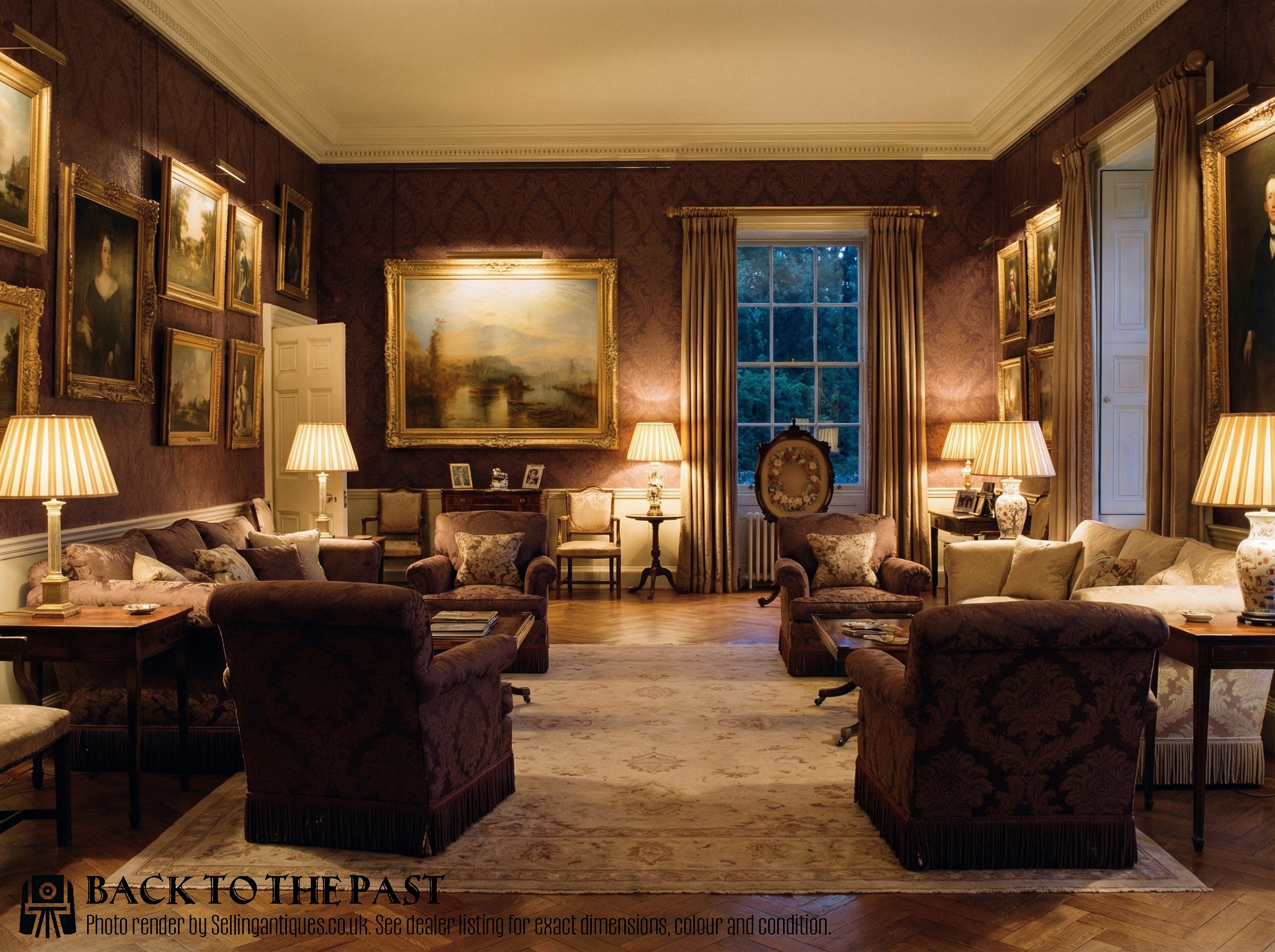
They stood near fireplaces, drawing rooms, and parlours where family members gathered around the hearth. Because they were lightweight and portable, servants or residents moved them closer to chairs as needed.
Today, collectors place them in period rooms, beside reading chairs, or against empty wall spaces where the textile panels remain visible.
How do I date a pole screen?
Dating relies on the style of the base, the turned profile of the pole, and the framing of the panel. Georgian and Regency examples often feature sleeker lines and specific leg carvings, while Victorian pieces tend to show heavier proportions and ornate rosewood work.
The materials used for the embroidery and the mounting hardware also provide clues to the exact manufacturing decade.