
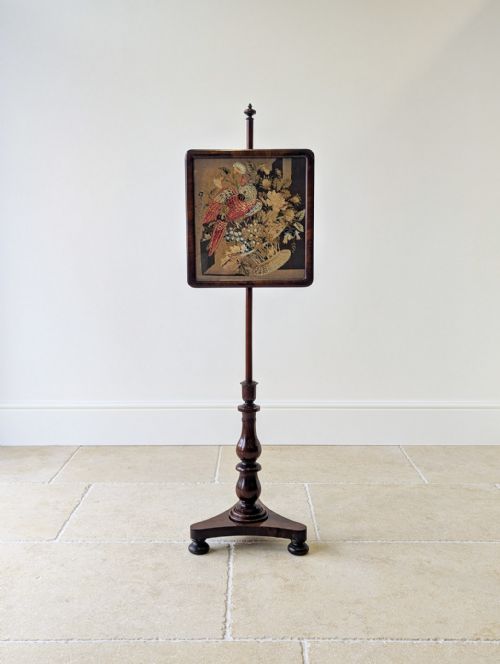
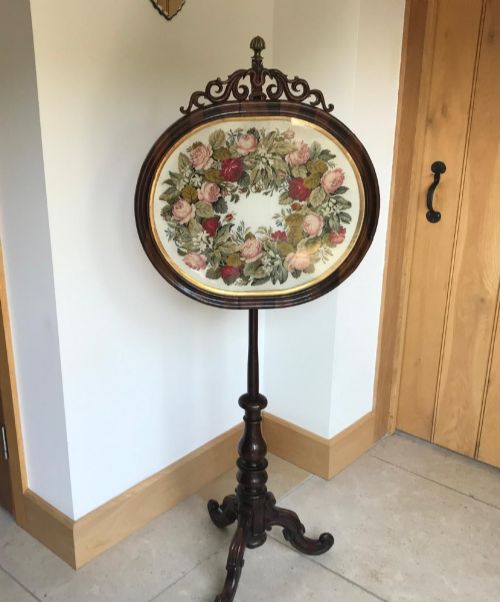
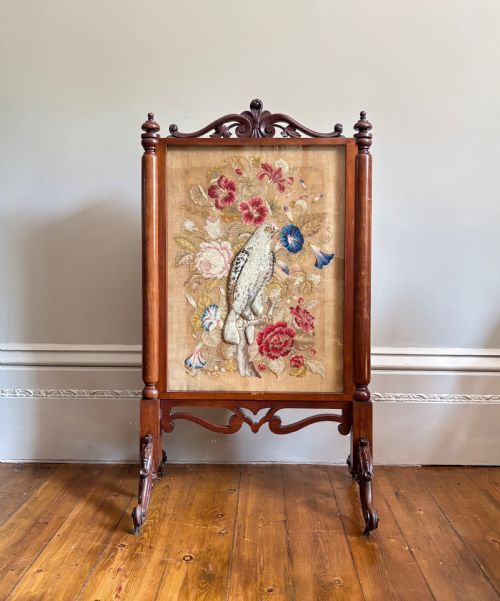


Rosewood Needlepoint Screen
These rosewood needlepoint screen examples offer rich mahogany tones and hand-worked panels designed to deflect hearth heat and warm the room.
Rosewood Needlepoint Screen
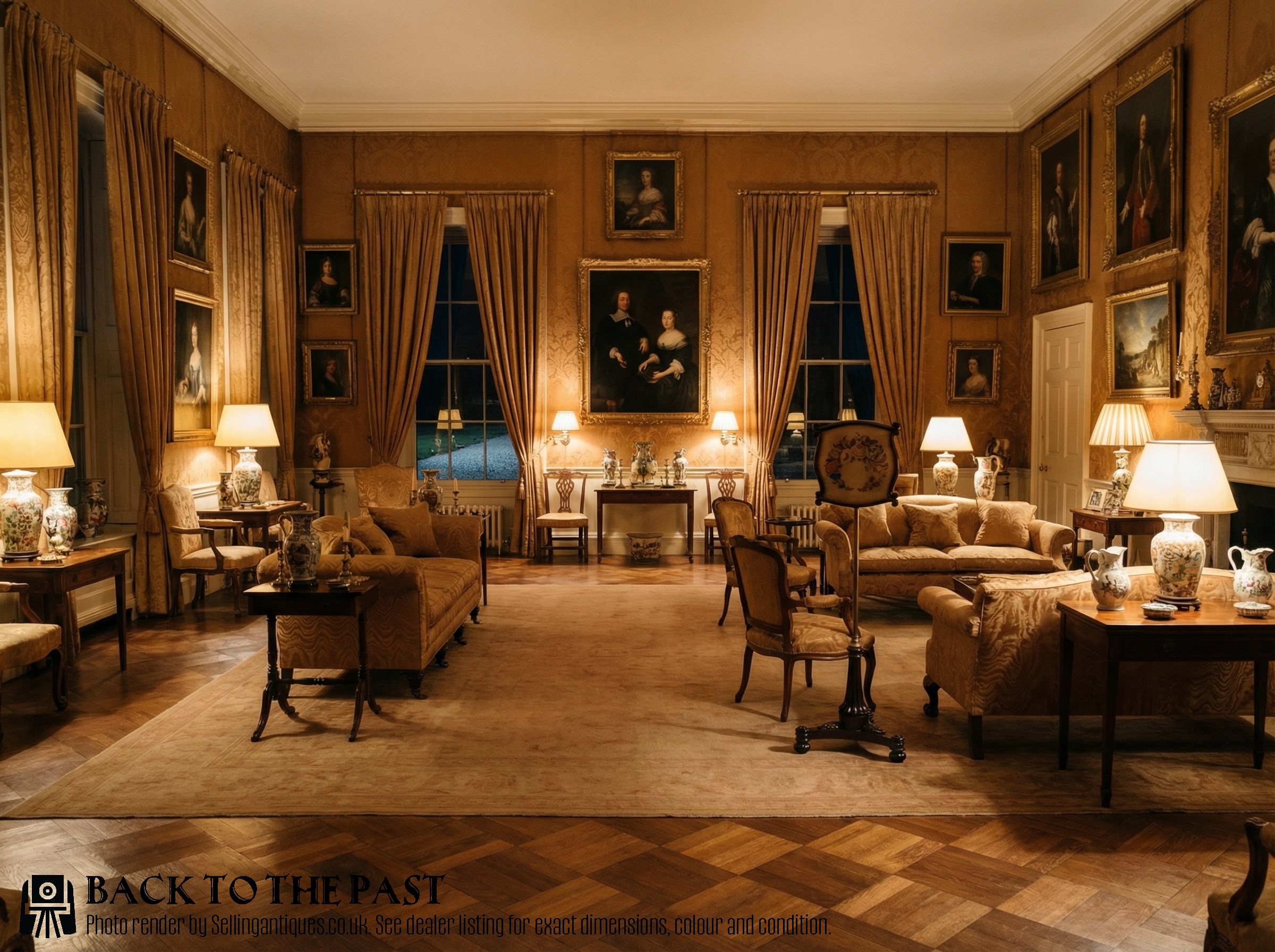
A rosewood needlepoint screen serves as a decorative barrier placed before a fireplace to shield occupants from radiant heat, most frequently taking the form of a pole screen with an adjustable panel mounted on a tripod base.
The selections span the Regency, William IV, and Victorian periods, ranging from compact tripod stands to larger cheval frames and pairs.
Makers shaped these functional items using dense exotic hardwoods to support hand-worked textile panels depicting floral motifs or pastoral scenes.
Materials and construction
Turned and carved timber forms the structural skeleton, utilising rosewood alongside mahogany, palisander, and goncalo alves.
Needlepoint, wool, and Berlin work textiles fill the framed inserts, often backed by textile panels and supported by brass adjustment fittings.
Assessing craftsmanship and condition
The refinement of the timber carving on the tripod base and column dictates the standing of an individual piece.
The tightness of the needlework stitch and the preservation of the original tapestry panel determine the overall integrity of the design.
The Rosewood Needlepoint Screen Glossary
- Cheval screen
- A floor-standing frame supported by two side pillars rather than a central pole. This form allows the screen to tilt or pivot between upright supports.
- Needlepoint
- Hand-stitched embroidery worked through a stiff canvas grid. It forms the pictorial panels seen on these fireplace barriers.
- Berlin work
- A style of charted needlepoint popular in the nineteenth century using brightly coloured wools. It produced detailed floral and pastoral pictures.
- Palisander
- A dense tropical timber related to rosewood with distinct grain patterns. Cabinet makers valued it for fine nineteenth-century frames.
Rosewood Needlepoint Screen: Frequently Asked Questions
How did people use pole screens?
Occupants positioned these adjustable stands near fireplaces to protect their faces from the intense heat of open coal fires. The sliding panel moved up or down the pole to block warmth where needed.
They also served to soften the glare of candles and lamps in evening drawing rooms, creating a comfortable microclimate in large spaces.
What is the difference between pole and cheval screens?
Pole screens balance a single display panel on a central turned column fitted to a tripod or pedestal base. They take up minimal floor space and adjust vertically.
Cheval screens rely on a rectangular frame held between two upright posts on feet. This format provides a wider viewing area for larger tapestry scenes.
How can I date a rosewood screen?
Stylistic clues within the timber turnings and base carving point to specific eras. Regency and William IV pieces often display crisp reeding and bold collars.
Victorian examples frequently introduce heavier floral carving and varied needlework techniques like Berlin work. Brass adjustment screws also shift in design across these decades.
Where should I place a screen at home?
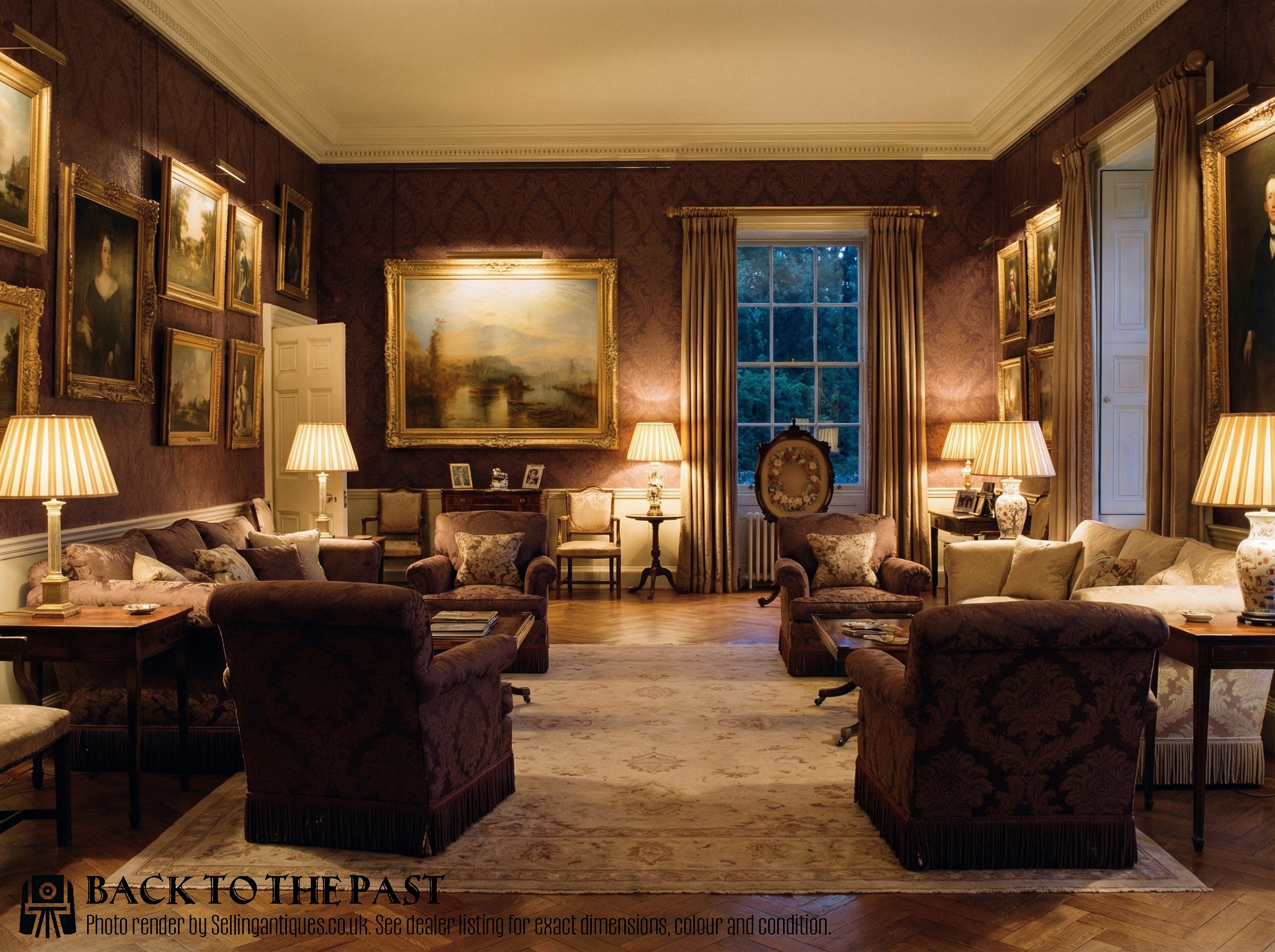
These pieces fit naturally beside seating areas in living rooms or studies where traditional furniture sets the tone. Their slender tripod bases slide easily into corners.
Position them away from direct sunlight to protect the wool and textile panels from fading over time.