





Standing Fireplace Screen
A standing fireplace screen guards a room against radiant heat while bringing period timber, brass and needlework to the hearth.
Standing Fireplace Screen
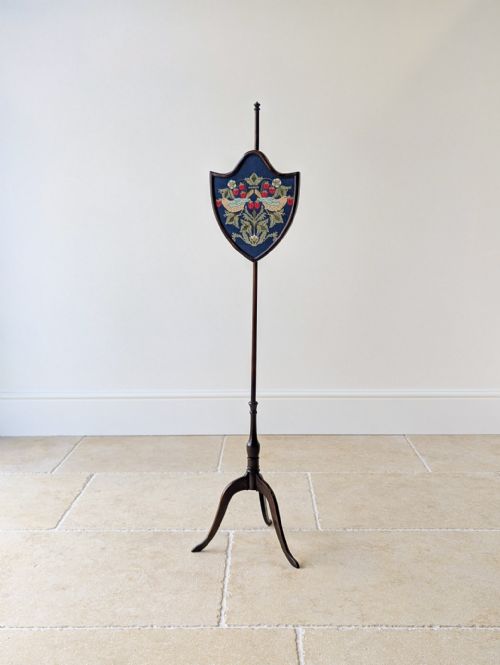
A standing fireplace screen protects those seated near the hearth from excessive heat while serving as a decorative anchor for the room. The most common form seen here is the pole screen, featuring an adjustable panel mounted on a slender upright timber support with a tripod or pedestal base.
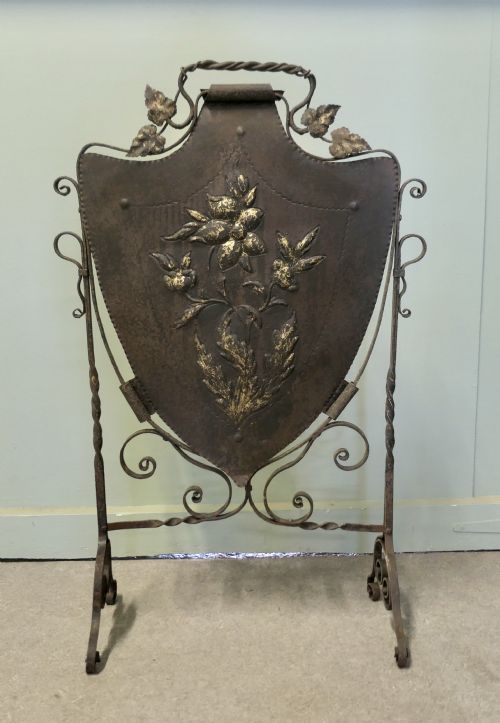
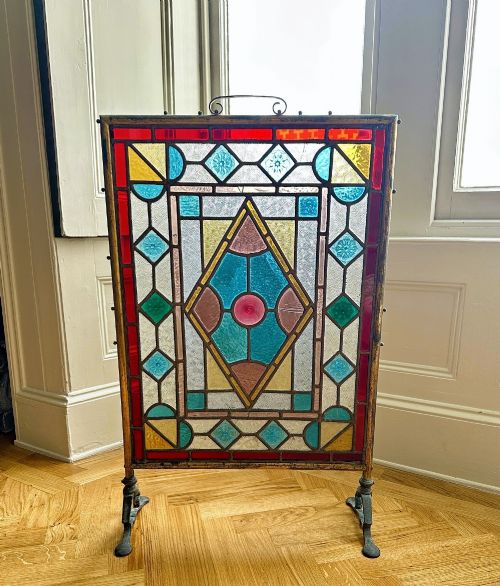
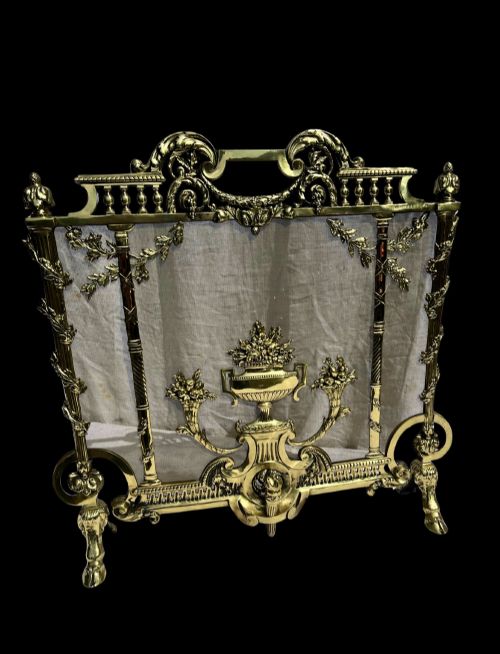
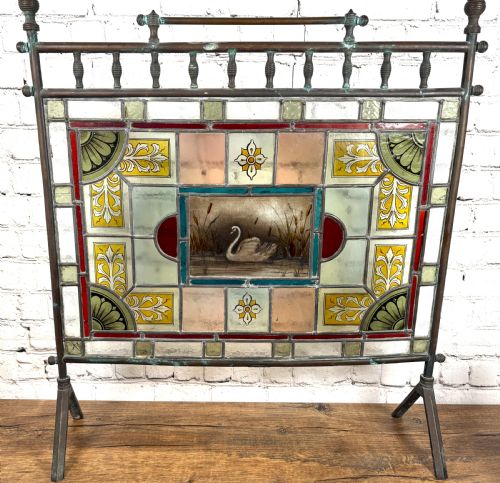
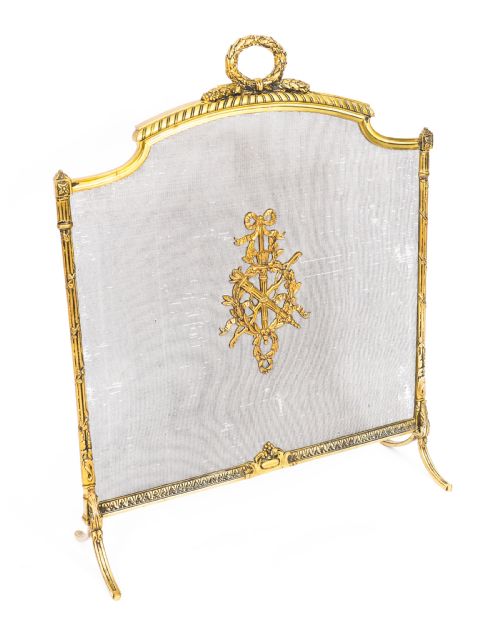
Other variations include Cheval frames, folding screens and rigid metal or glass fireguards designed to stand independently on the floor. Pieces span Georgian, Regency and Victorian eras, utilising timber frames alongside ornate metalwork.
The panels themselves range from hand-worked needlework and silk embroidery to stained glass and carved wood.
Materials and construction
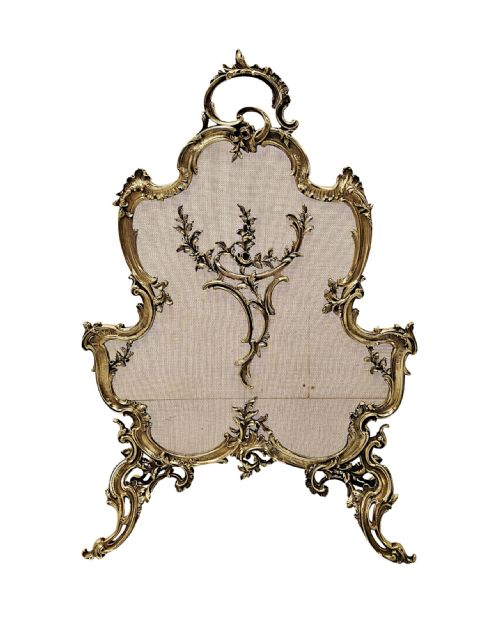
Frames rely on cabinet timbers such as mahogany, rosewood, walnut and satinwood, frequently shaped with turned standards and carved tripod bases. Metal examples utilise brass, copper, wrought iron and gilt bronze.
Needlework and tapestry panels employ wool and silk threads stitched onto canvas grounds, often mounted to allow vertical adjustment along a wooden pole.
Some Victorian pole screens doubled as subtle face-guards to protect ladies' expensive cosmetics from melting near the hearth.
Assessing quality and finish
Quality rests in the crispness of the timber carving, the stability of the support base and the complexity of the needlework or metalwork panel. Superior examples combine dense, well-figured hardwoods with intricate hand embroidery or finely chased brass mounts.
Simpler versions feature plain turned poles and standard frames, while finer pieces display refined proportions, specialised joinery and materials such as palisander or satinwood.
The Standing Fireplace Screen Glossary
- Pole screen
- A standing fire screen with an adjustable panel that slides up and down a vertical wooden shaft mounted on a base. This form allowed the user to shield their face from the fire.
- Cheval screen
- A self-supporting floor screen held within a standing frame that often allows the panel to tilt. It typically offers a larger viewing area than a pole screen.
- Needlework
- Hand-stitched textile art using wool, silk or cotton yarn on a canvas mesh. These panels often depict floral, figurative or geometric designs.
- Gilt bronze
- Copper alloy coated with a thin layer of gold, commonly used for decorative mounts and frames in French revival pieces. It provides a bright, durable metallic finish.
- Tripod base
- A three-legged support structure commonly found beneath the upright shaft of pole screens to ensure stability on uneven floors.
Standing Fireplace Screen: Frequently Asked Questions
Where should I place a fire screen?
These pieces sit directly in front of the fireplace opening when the hearth is not in active use, or off to one side to block radiant heat when a fire burns low. They work well in reception rooms and studies as decorative focal points.
Keep them away from direct, continuous intense heat sources to protect historic woods and fragile textiles from drying out.
How do I tell a Georgian screen from a Victorian one?
Georgian and Regency screens generally favour leaner proportions, classical column or tripod supports, and needlework with refined floral or classical motifs. Mahogany and rosewood predominate in these earlier centuries.
Victorian pieces often introduce heavier carving, darker woods like walnut, varied revival styles such as Gothic or Rococo, and larger glass or brass fireguards.
Can these screens still protect against sparks?
Metal spark guards and wire mesh frames were specifically built to catch embers and protect floor coverings from stray sparks. Fabric and needlework panels act primarily as heat shields and visual covers for an empty hearth rather than safety barriers.
Historical textile panels require careful handling and should be kept away from open flames and heavy soot.