


Brown Wood Hearth Screen
These brown wood hearth screen examples are functional fireside furnishings crafted to deflect warmth, offering enduring utility and decorative charm for period rooms.
Brown Wood Hearth Screen
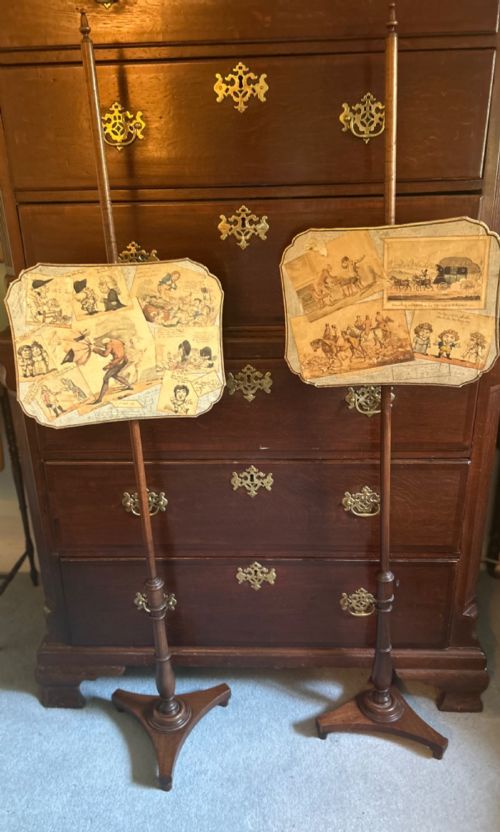
A brown wood hearth screen acts as a decorative shield placed before a fireplace, designed primarily to protect inhabitants from excessive radiant heat. When searching for a brown wood hearth screen, buyers encounter various forms including adjustable pole screens, folding panels, and fixed standing frames.
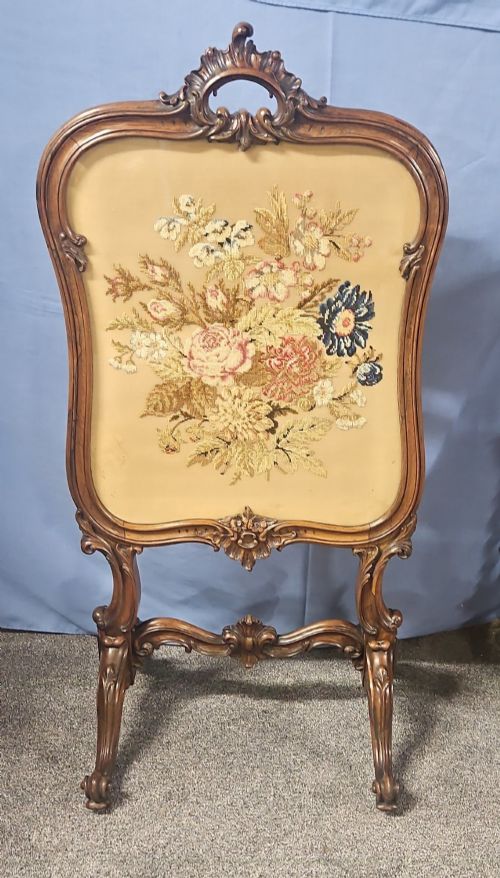
The pieces appearing on this page span several distinct eras, drawing from Georgian, Regency, William IV, and Victorian periods. Forms range from needlework panel inserts held within mahogany or walnut frames to elaborately carved Black Forest oak and Chinese hardwood designs.
Makers utilised dark timbers such as mahogany, walnut, rosewood, and palisander to construct these functional room accessories. Many examples incorporate textiles within the wooden frame, featuring tapestry, wool, or needlepoint embroidery alongside satirical prints and glass.
Materials and construction methods
Cabinetmakers constructed the primary framework of a brown wood hearth screen using dense hardwoods like mahogany, walnut, oak, and rosewood. These timbers were shaped through turning, such as bobbin turning, and detailed hand carving to achieve decorative uprights and bases.
Panels within the wooden frames frequently display textile artistry, utilising needlepoint, wool embroidery, and tapestry mounted securely into the structure. Other variations integrate adjustable brass mechanisms or multiple folding leaves to control the position of the screen relative to the hearth.
Materials recorded across these items include mahogany, walnut, rosewood, oak, brass, glass, tapestry, needlepoint, and wool.
Factors influencing quality
The refinement of the timber and the intricacy of the woodwork dictate the distinction between standard and superior pieces. Finer screens exhibit crisp hand-carved details, well-figured mahogany or walnut grains, and robust joinery designed to withstand daily use near a heat source.
The quality of the internal panel also shapes the overall standard of the object, particularly where finely worked needlepoint, antique tapestry, or satirical prints are present. Mechanisms that allow height adjustment on pole screens operate with precision in higher-grade examples.
The Brown Wood Hearth Screen Glossary
- Pole screen
- A type of hearth screen featuring a vertical wooden shaft where an adjustable panel slides up and down to block radiant heat.
- Needlepoint
- A form of canvas work embroidery commonly found mounted within the wooden frame of a firescreen.
- Palisander
- A dense, dark timber belonging to the rosewood family, utilised in high-status Regency furniture production.
- Bobbin turned
- A method of woodturning that produces a series of rounded, spool-like shapes along the length of a support leg or stile.
Brown Wood Hearth Screen: Frequently Asked Questions
What is a brown wood hearth screen used for?
These screens were positioned in front of an active fireplace to shield occupants from the intense heat radiating from the flames. They also served to protect delicate facial complexions from the direct warmth of open coal or wood fires.
Beyond functional heat protection, these furnishings acted as decorative room dividers and ornamental focal points during periods when fireplaces dominated domestic interiors.
How do I date a wooden firescreen?
Dating relies on observing the prevailing cabinetmaking styles, timber choices, and decorative motifs present in the wooden frame. For instance, pole screens with satirical prints often align with the Georgian era, while bobbin-turned walnut or mahogany frames typically point towards Victorian craftsmanship.
Construction techniques, such as hand-cut joints versus later mechanical fixings, provide further clues to the period of manufacture. Textile panels inserted into the frame also reflect the needlework fashions popular during specific decades.
Where should I place a hearth screen at home?
While originally intended for active hearths, modern interiors often utilise these screens as freestanding decorative elements against blank walls or empty fireplace openings. They fit well in living rooms, studies, or hallways where period furniture is displayed.
Positioning the screen away from direct, unmanaged sources of excessive heat or dampness helps preserve the aged timber and delicate textile panels.
What is the difference between a pole screen and a panel screen?
A pole screen consists of a vertical wooden post supported by a stable base, featuring a sliding panel that can be raised or lowered to the desired height. This design allowed the user to adjust the shade precisely where needed.
A panel screen relies on a fixed frame, sometimes constructed with multiple folding leaves or supported by wide feet, presenting a static display of embroidery or carved wood without height adjustment.