
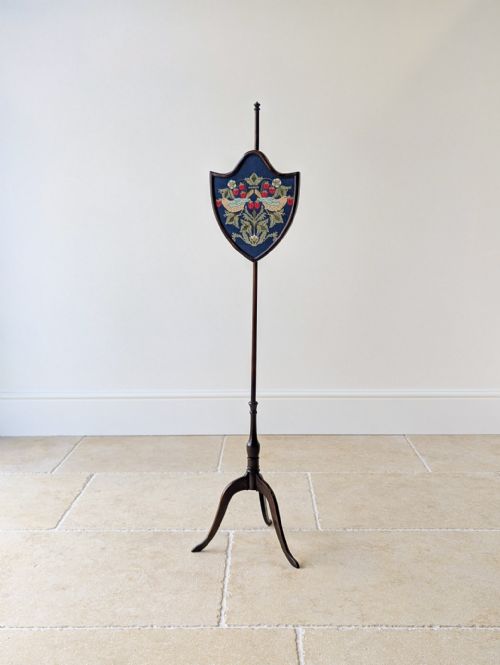
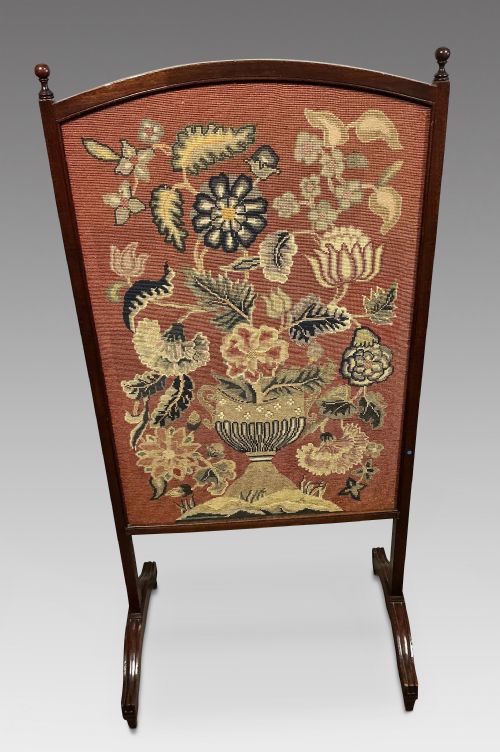


Georgian Embroidered Fire Screen
A georgian embroidered fire screen is a handsome furnishing that shelters a room from hearth drafts while displaying fine needlework.
Georgian Embroidered Fire Screen
When you search for a georgian embroidered fire screen, you are looking at functional parlour furniture designed to deflect the intense heat of an open coal fire. These pieces combine timber framing with hand-worked textile panels that often adjust along a central upright pole.
Makers of the period utilised rich hardwoods like mahogany and rosewood alongside giltwood and inlaid surfaces to frame needlepoint, tapestry, wool, and silk panels. Each piece balances practical domestic utility with decorative textile artistry.
How they were made
The structural framework relies on dense cabinet timbers such as mahogany, rosewood, and goncalo alves, shaped into slender tripod bases or substantial upright supports. Cabinetmakers turned poles and carved decorative details by hand to ensure stability on uneven floors.
Within the timber frames sit textile panels worked in wool, silk, needlepoint, or tapestry, requiring precise tension to remain flat over time. Brass mechanisms frequently allow the shield to slide and lock at different heights along the pole.
Design periods represented span from George III through the Regency and William IV eras into the nineteenth century.
What varies in quality
The distinction between standard and exceptional pieces rests upon the crispness of the timber carving and the complexity of the needlework panel. Finer examples display deeply sculpted tripod legs and pictorial tapestries with nuanced colour blending.
Adjustment mechanisms also indicate quality, with superior brass fittings operating smoothly and holding heavy panels securely without slipping. The integrity of the original wood finish and the tightness of the textile mounting further distinguish finer workshops.
The Georgian Embroidered Fire Screen Glossary
- Pole screen
- A freestanding furnishing featuring a vertical wooden shaft mounted on a base, holding a vertically adjustable panel. This design allowed occupants to position the textile shield precisely between themselves and the hearth.
- Tripod base
- A three-legged support structure commonly found beneath the upright shaft of a pole screen. These spreading legs provided stability for the tall, narrow frame.
- Needlepoint
- A type of canvas work embroidery executed with wool or silk yarn using a counted thread stitch. It forms the primary decorative element within the adjustable frames.
- Giltwood
- Timber treated with a thin layer of gold leaf over a prepared gesso surface. This luxurious finish appears on high-status drawing room furnishings.
- Goncalo alves
- A dense exotic hardwood with striking figuring utilised by Regency cabinetmakers. Its decorative grain patterns enhanced the visual appeal of polished screen frames.
Georgian Embroidered Fire Screen: Frequently Asked Questions
How did people use a fire screen?
These screens stood between seated guests and the fireplace to block radiant heat from scorching delicate complexions and varnished furniture.
Occupants adjusted the height of the textile panel as the fire burned down or as seating arrangements shifted around the room.
Where should I place a pole screen today?
A pole screen suits a drawing room corner, an empty wall space, or beside a reading chair where the needlework panel can be admired as art.
Because original textiles remain sensitive to direct sunlight, positioning the piece away from bright windows preserves the colours of the wool and silk.
How do I adjust the panel height?
Most pole screens feature a concealed brass collar or thumbscrew at the back of the sliding frame that loosens to permit vertical movement.
Tightening this mechanism secures the panel at the desired position along the turned wooden shaft without damaging the timber.
How do I distinguish George III from Regency styles?
George III pieces often exhibit classical restraint with mahogany framing and Chippendale or Sheraton influences in the carved tripod bases.
Regency examples tend toward bolder exotic woods like rosewood and goncalo alves, sometimes incorporating giltwood accents and more sculptural forms.