


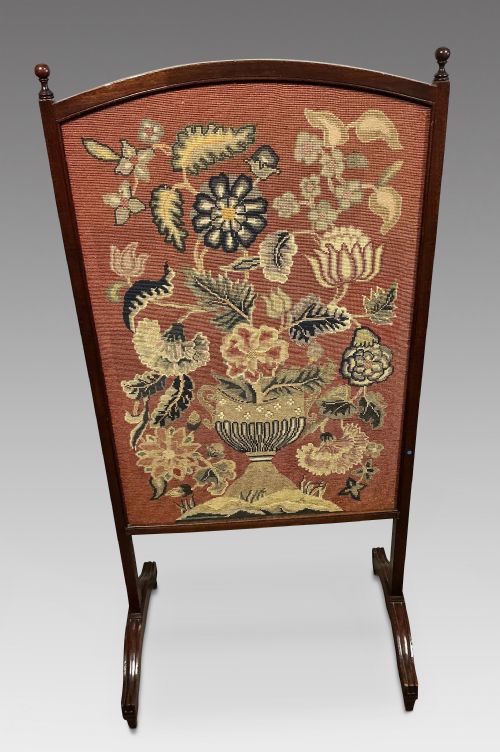


Antique Needlepoint Screen
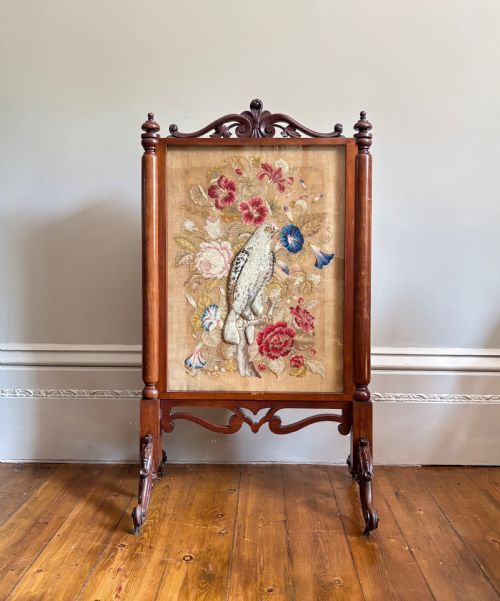
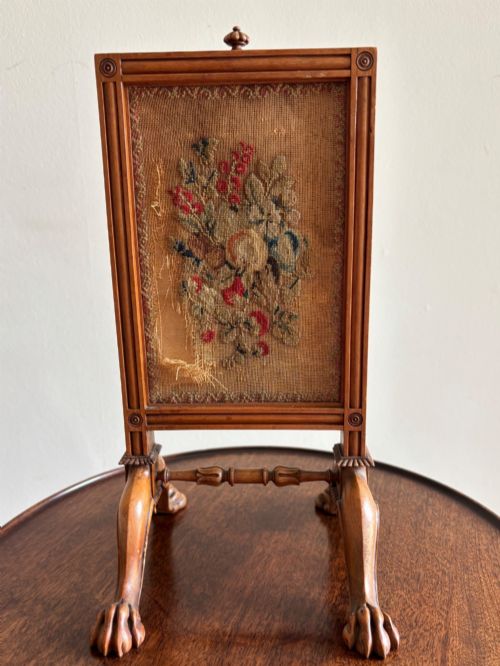
An antique needlepoint screen is a functional panel of worked textile set into a timber frame, designed to shield a room from hearth heat.
The Types of Antique Needlepoint Screen
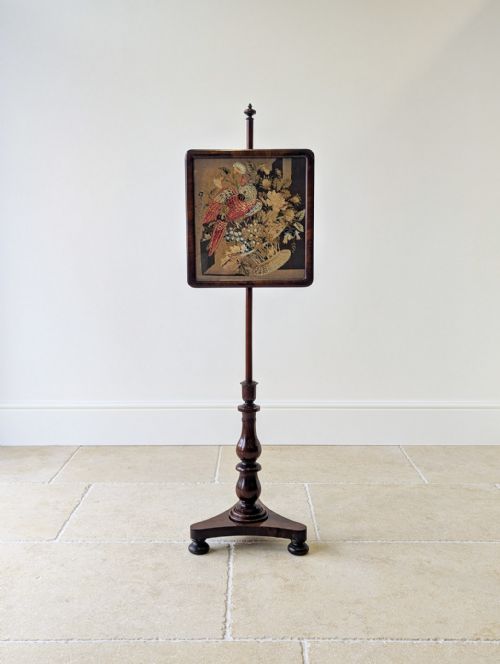
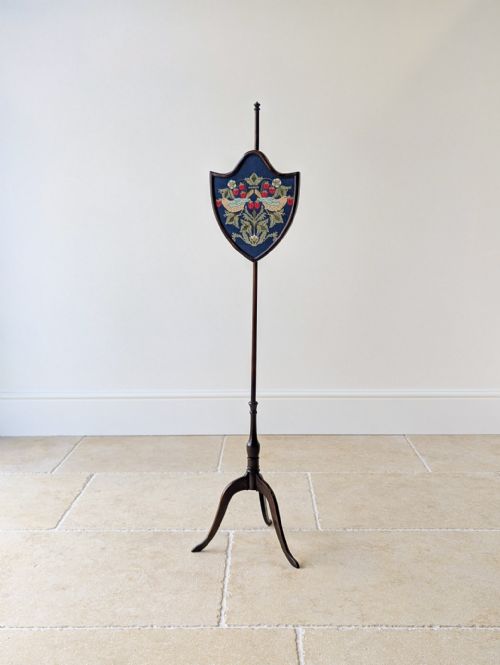
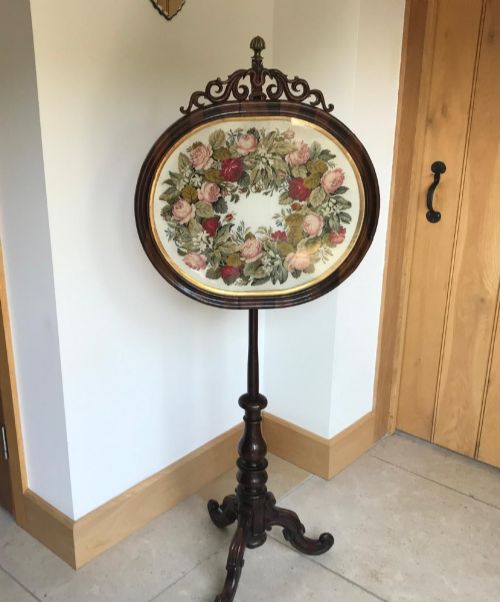
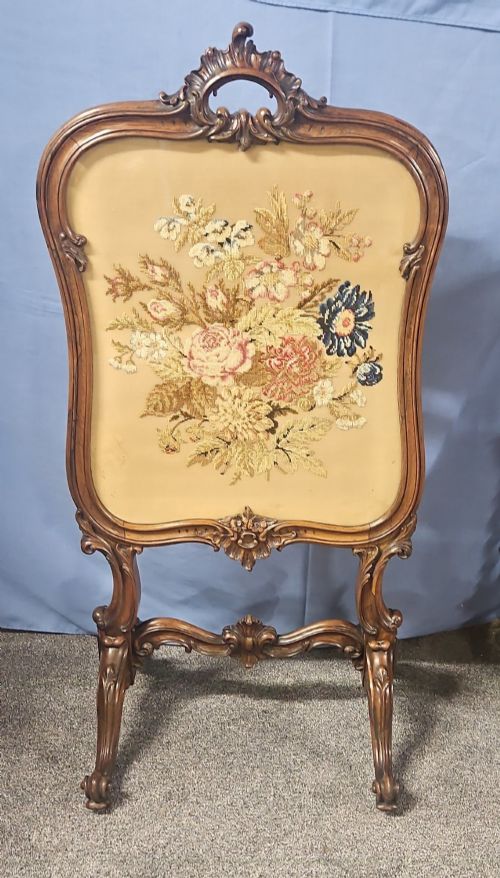
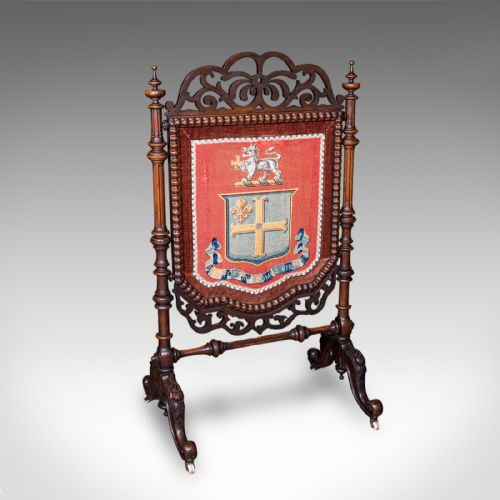
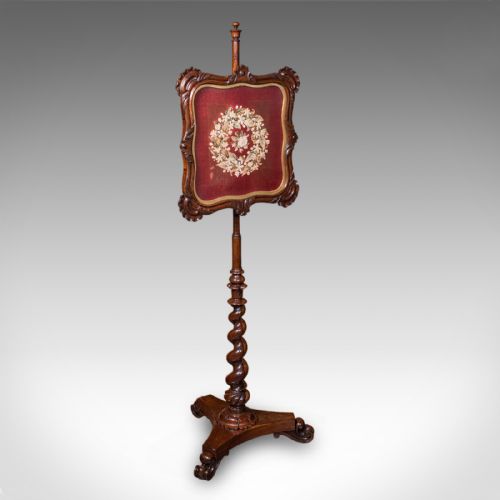
An antique needlepoint screen primarily takes the form of a pole screen or a fixed firescreen designed for placement near a fireplace. Pole screens feature an adjustable panel mounted on a central vertical shaft supported by a tripod base, allowing the textile to slide up and down to block radiant heat from the fire. Fixed versions stand on feet and often incorporate folding panels or wide stretcher frames.
The materials and aesthetic span several centuries, with examples appearing in Georgian, Regency, and Victorian periods. Mahogany, walnut, rosewood, and giltwood form the main structural frames, while the central panels utilise hand-worked wool and textile needlework.
Beyond hearth accessories, the archive shows occasional room dividers and privacy screens configured to partition large spaces. These larger formats utilise folding wooden frames hinged together to support substantial needlepoint and tapestry panels.
Materials and Construction
Makers constructed the structural frames from dense hardwoods including mahogany, walnut, oak, and rosewood, alongside decorative carved giltwood. Turning, carving, and joinery shaped the tripod legs, upright poles, and standing feet.
The textile panels consist of wool and assorted threads worked in needlepoint, tapestry, and embroidery techniques. These stitched surfaces were stretched tightly over wooden frames or inserted into sliding channels on pole stands.
Retail Price Guide 2026
Typical UK retail prices for needlepoint screen, calculated from the Sellingantiques database of over a million retail prices indexed since 2003. This retail price guide relies exclusively on Sellingantiques data; no external sources or auction records are used, so the figures do not describe the wider market.
Some Victorian needlework panels stubbornly refuse to depict anything other than extremely disgruntled spaniels.
Judgments of Quality
The skill of the needlework dictates visual success, with fine-gauge stitches producing intricate pictorial detail and subtle colour shading across the woolwork. Finer wools and complex tent-stitch execution lift a panel well above coarser, simpler ground work.
Frame construction also marks distinction, where turned tripod bases with crisply carved details and secure brass adjustment mechanisms surpass plain, utilitarian stands. Timber selection plays a part, with figured mahogany and rich rosewood commanding attention.
Jean Corot
The Antique Needlepoint Screen Glossary
- Pole screen
- A standing firescreen with a vertically adjustable panel mounted on a central pillar and tripod base. This allows the user to raise or lower the textile shield against hearth heat.
- Needlepoint
- A form of counted-thread embroidery stitched over an open-weave canvas mesh. It provides the dense pictorial surface seen on these panels.
- Giltwood
- Timber treated with a thin layer of gold leaf applied over a prepared gesso surface. This finish appears on decorative frames from the Georgian period.
- Tripod
- A three-legged base providing stable floor support for upright pole stands. It prevents the tall screen from tipping on uneven floorboards.
- Tapestry
- A thick woven textile depicting pictorial scenes or floral motifs. It is often used interchangeably with needlepoint in descriptions of these screen panels.
Frequently Asked Questions
How do you use a pole screen?
A pole screen stands near a fireplace to protect the face from direct radiant heat. The user slides the textile panel up or down the central wooden shaft to the desired height.
In period rooms, occupants adjusted the panel as the fire burned down or as seating positions shifted around the hearth. The tripod base allowed the entire stand to be repositioned easily.
What is the difference between a pole screen and a room divider?
A pole screen consists of a single adjustable panel on a vertical stand, built primarily for hearth use. A room divider uses multiple hinged panels to partition larger spaces.
Both formats employ needlepoint and tapestry textiles, but their scales and intended functions within a domestic interior differ completely.
How are Victorian screens dated?
Victorian screens display specific stylistic traits in their timber frames and needlework motifs. Walnut and rosewood frames from the mid-nineteenth century often feature heavier proportions and scrolling supports.
The textile panels themselves frequently show the dense floral patterns and pictorial subjects characteristic of the period.
Are the needlepoint panels original to the frames?
Many screens retain their original woolwork panels, secured within the timber rebate or sliding channel. Needlepoint was labour-intensive, so frames and panels were usually created as unified pieces.
Close inspection of the mounting points and the wear on the timber helps confirm whether the textile belongs to the frame.