


Wooden Hearth Guard
A wooden hearth guard keeps the heat back and frames the fire, offering the traditional protection every proper fireplace requires.
Wooden Hearth Guard
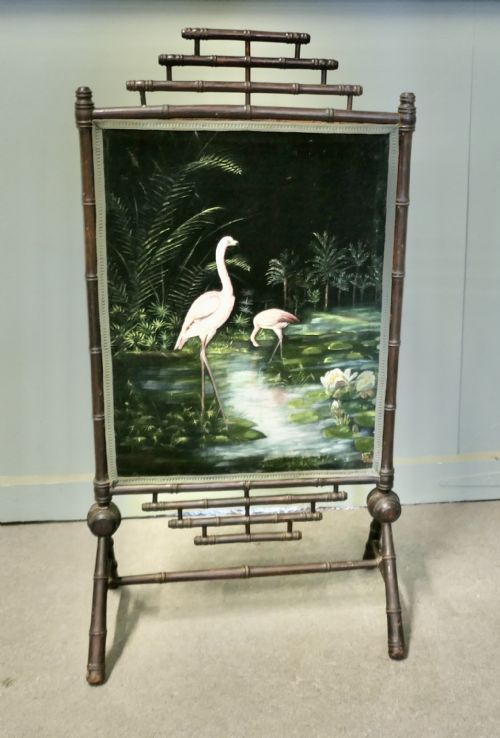
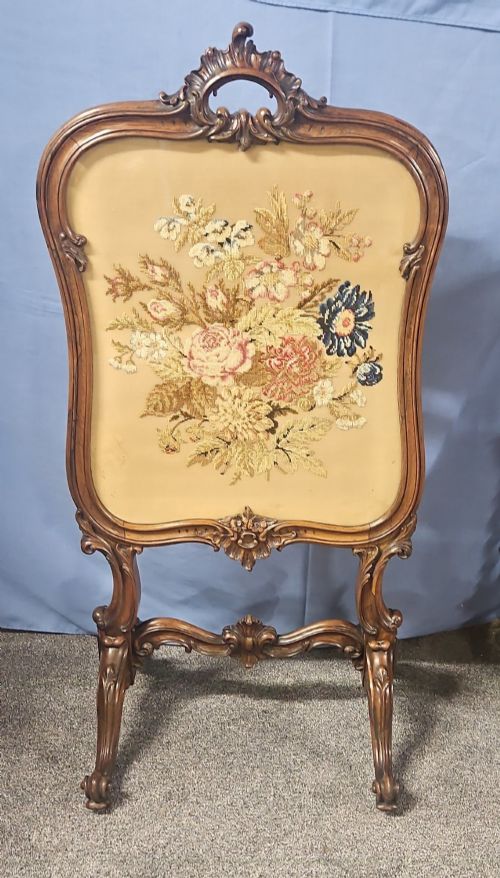
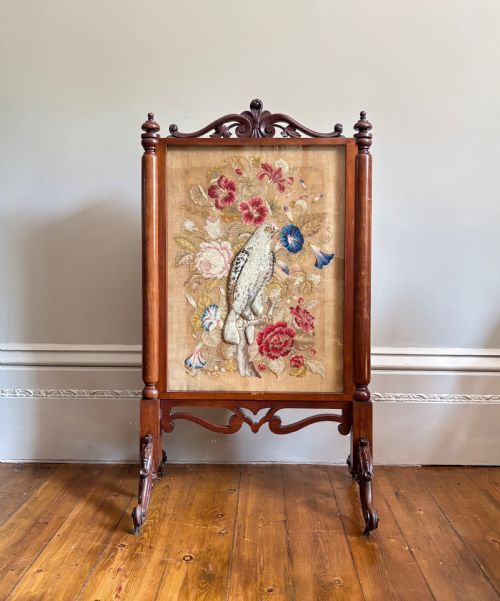
A wooden hearth guard takes the form of fire screens, fireplace fenders, and firescreens designed to shield the room from open flames. These pieces emerge chiefly from the Georgian, Regency, and Victorian periods, with walnut, mahogany, and oak framing the hearth.
The versions met on this page include carved walnut and oak frames alongside black lacquer oriental designs. Panels within these wooden structures incorporate Berlin work, needlepoint embroidery, glass, and textiles.
Many examples arrive with adjustable panels, poker work, or folding leaves. They serve to manage radiant heat while dressing the fireplace during warmer months.
How they were made
Cabinetmakers worked solid walnut, mahogany, and oak into sturdy frames using traditional joinery. Carving shaped the timber into structural supports and decorative crests, often accompanied by brass or bronze fittings.
Insets required diverse artisan skills, from hand-stitched needlepoint and Berlin work wool to etched glass and painted lacquer. Adjustable mechanisms relied on wooden tracks and metal hinges to move the central screens or leaves.
Listings span the Georgian, Regency, and Victorian periods, utilising walnut, mahogany, and oak across various screen and fender forms.
What varies in quality
The standard of timber selection and depth of carving set the finer examples apart from standard workshop output. Dense walnut and figured mahogany with crisp, deep-relief carving indicate superior cabinetmaking.
Panel execution dictates the visual weight of the piece. Fine needlepoint embroidery, intricate poker work, and hand-painted lacquer demand significantly greater skill than plain textiles or simpler glass inserts.
The Wooden Hearth Guard Glossary
- Berlin work
- A style of needlepoint embroidery worked on canvas from printed colour-coded grid patterns. This technique became popular during the nineteenth century for upholstery and fire screen panels.
- Poker work
- A method of decorating wood by burning designs into the surface with heated metal tools. It creates distinct tonal shading on the timber panels of adjustable screens.
- Club fender
- A low padded seat built over a brass or iron frame around the fireplace hearth. Examples appear in oak with upholstered top rails for fireside seating.
- Needlepoint
- A type of canvas embroidery stitched with wool or silk threads. It fills the viewing panel of many antique screens to provide decorative colour.
- Black Forest
- A style of deeply carved wooden ornamentation associated with nineteenth-century workshops. These pieces feature naturalistic foliage and animal motifs worked in oak and walnut.
Wooden Hearth Guard: Frequently Asked Questions
What is a wooden hearth guard used for?
These pieces served primarily to block excessive radiant heat from an open coal or wood fire. They also protected ladies' faces from the direct glare and heat of the flames.
Beyond functional protection, they masked the dark fireplace opening during summer months when fires were not lit. Embroidered and painted panels added colour and decoration to the drawing room.
How do I date a wooden hearth guard?
Dating relies on timber choice, carving styles, and the materials used in the central panels. Georgian and Regency pieces often feature mahogany with classical lines, while Victorian examples lean towards heavy carved walnut and ornate needlework.
Construction methods also help determine age, as machine-sawn components replaced hand-joinery towards the late nineteenth century. Subsidiary details like brass hardware and glass treatments align with specific decades.
Are the panel embroideries original?
Many screens retain their original nineteenth-century needlepoint, Berlin work, or textile panels. Hand-stitched wool work typically shows natural fading and wear consistent with age.
Replacement panels do occur when delicate textiles succumbed to heat or smoke damage over generations. Examining the mounting method helps reveal whether the textile matches the period of the wooden frame.
How do adjustable screens operate?
Adjustable screens utilise sliding wooden tracks, ratchets, or hinged leaves to alter the height or width of the barrier. These mechanisms allowed occupants to control the amount of heat deflected into the room.
Solid brass or bronze fittings frequently secured the moving parts in place. Careful handling ensures these nineteenth-century mechanical elements continue to function smoothly.