


Rococo Revival Fire Screen
These rococo revival fire screen pieces bring asymmetric curves and needlework panels to a fireplace, offering a decorative guard against the heat.
Rococo Revival Fire Screen
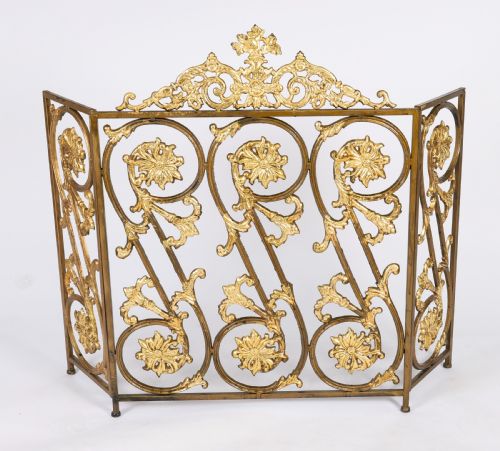
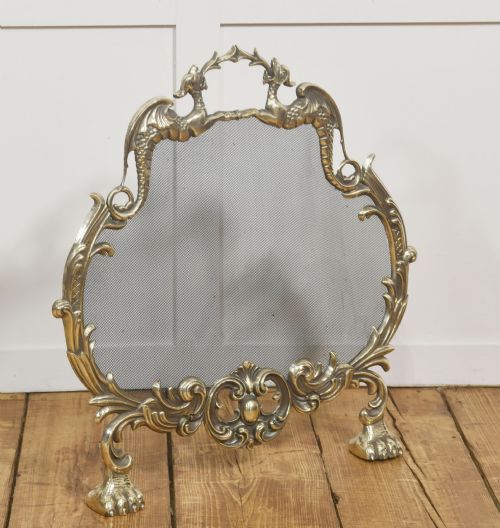
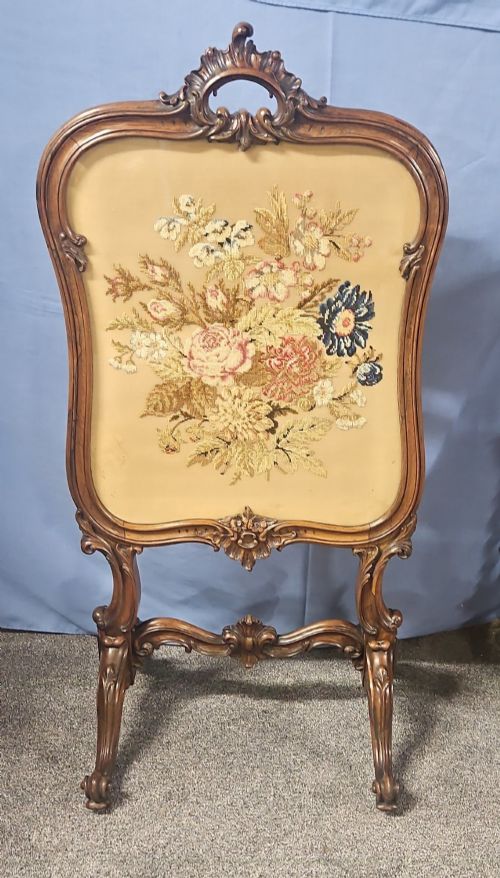
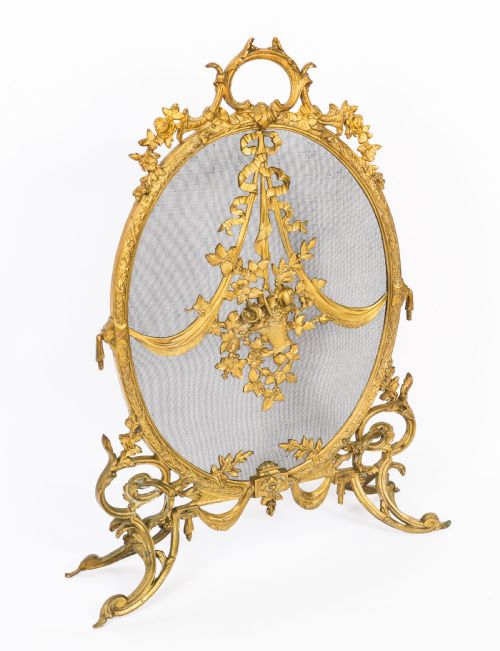
A rococo revival fire screen serves as both a practical fireplace accessory and a decorative panel within nineteenth-century rooms. The pieces listed across this page include brass, gilt bronze and carved wooden frames housing textile panels.
Most examples date from the nineteenth century, including specific years such as eighteen-eighty and nineteen-ten. Buyers encounter both freestanding folding screens and pole screens supported by tripod bases.
The decorative vocabulary draws heavily on French rococo revival and Louis style influences, often featuring scrolling brass or carved walnut and oak frames. Tapestry, needlepoint and wool embroidery form the central visual panels of these fireplace accessories.
How they were made
Frames rely upon cast brass, gilt bronze and carved hardwoods such as walnut, rosewood and oak. Metalwork often incorporates wire mesh panels or intricate openwork casting.
Textile panels utilise hand-woven tapestry, needlepoint and pastoral embroidery on canvas and wool. These soft panels are fitted securely into the wooden or metal uprights.
Listings span the nineteenth century, featuring walnut, rosewood, brass, wire mesh, wool, tapestry and canvas.
What varies in quality
The refinement of the cast metal or the depth of the wood carving dictates the character of the frame. Crisp detail in the rococo scrolls and organic motifs marks out the finer examples.
Needlework quality depends upon the tightness of the weave and the complexity of the figural or floral design. Hand-woven pastoral tapestries show greater artisan skill than simpler machine-woven substitutes.
The Rococo Revival Fire Screen Glossary
- Pole screen
- A vertical screen panel mounted on a slender wooden shaft with a tripod base, allowing the height of the textile to be adjusted. This form protects the face from the direct heat of an open fire.
- Tapisserie
- French term for woven textile art, frequently utilised for the central decorative panels of nineteenth-century fireplace screens. These panels often depict pastoral scenes or floral motifs.
- Gilt bronze
- An alloy treated with a gold coating, offering a bright metallic finish seen on French revival frames. This material captures the elaborate curves of the style.
- Needlepoint
- Embroidery stitched onto a canvas mesh ground to create dense pictorial surfaces. It forms the primary medium for the textile inserts found within wooden and brass frames.
Rococo Revival Fire Screen: Frequently Asked Questions
How do I use a fire screen?
These screens are placed in front of a fireplace hearth to block radiant heat when the fire is burning low. They also serve to conceal an empty grate during warmer months.
Position the screen a safe distance from active flames, particularly when the frame incorporates delicate textiles or wooden surrounds.
How do I clean tapestry panels?
Textile panels require gentle surface dusting with a soft brush to remove accumulated particles. Avoid harsh liquid cleaners that might damage historic wool or canvas.
Professional textile conservation is recommended for deep cleaning aged needlepoint and hand-woven embroidery.
Are these screens freestanding?
Most examples are freestanding pieces designed to stand directly on the floor or hearth. Tripod pole screens and folding brass frames support themselves without wall fixings.
Ensure the surface is level so that heavier cast metal or carved wooden frames remain stable.