



Antique Cheval Screen
These antique cheval screen pieces are adjustable hearth panels designed to shield the face from roaring fires, and collectors prize them for their decorative needlework.
Antique Cheval Screen
When you search for an antique cheval screen, you encounter adjustable upright frames made to stand before a hearth and block radiant heat. The versions met most often on this page date from the nineteenth century, spanning Victorian and Regency periods.
Most examples take the form of fire screens or firescreens built with framed panels that slide or tilt on vertical supports. These objects combine practical nineteenth-century room furniture with textile display, incorporating needlepoint, tapestry, and embroidery.
Makers produced these pieces in forms ranging from country house mahogany and carved walnut to rosewood and palisander. The evidence shows domestic heating furniture designed to sit in reception rooms and parlours during colder months.
Materials and construction
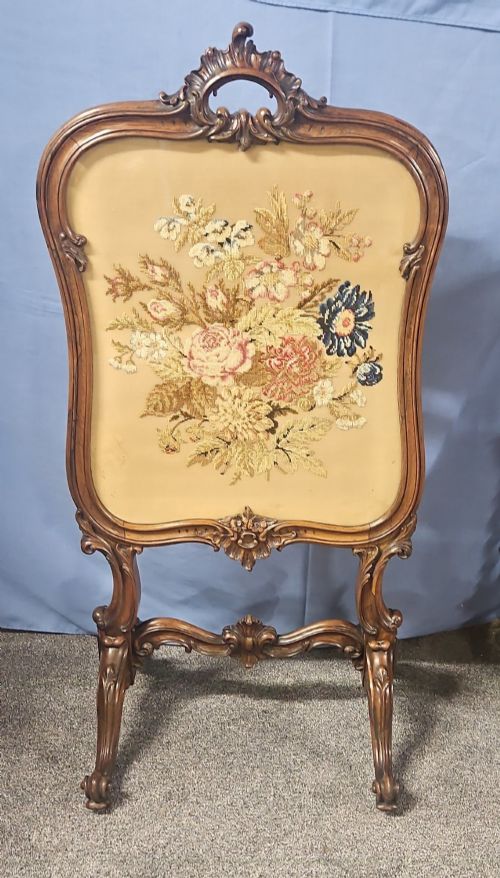
Workshops built the structural frames using dense cabinet timbers such as mahogany, walnut, rosewood, and palisander. Craftsmen carved these woods for Victorian rococo revival and regional interpretations, mounting the timber frames on stable floor bases.
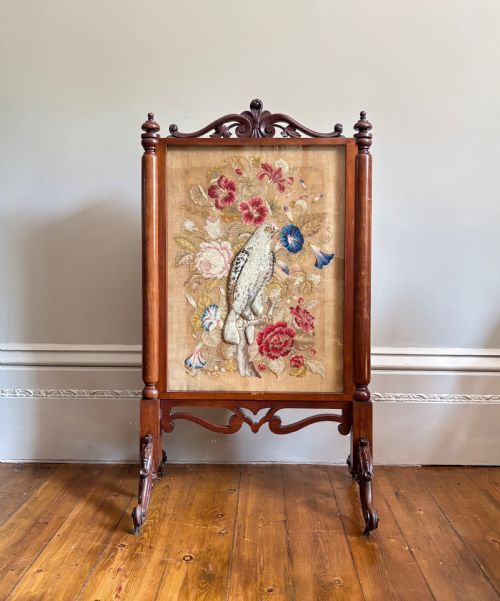
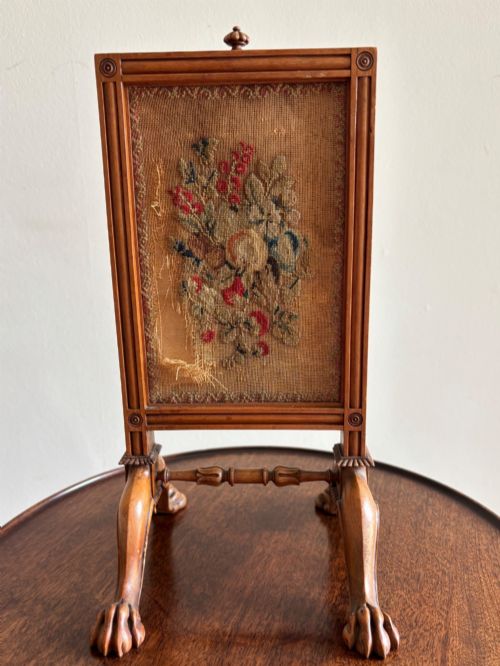
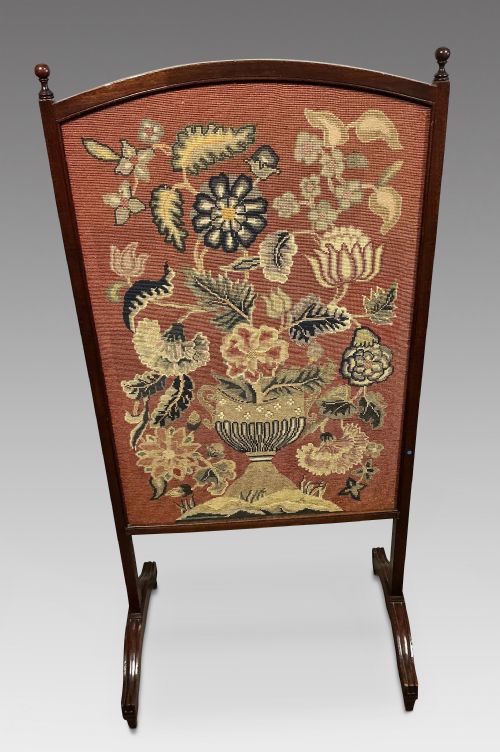
The central panels house textile art rather than plain wood, utilising wool and canvas worked in Berlin work, needlepoint, and hand-woven tapestry. Some variations integrate glass or marquetry mirror panels within the sliding or tilting framework.
The documented forms span fire screens, firescreens, fireplace screens, and mirror screens with cheval framing.
Quality variations
Differentiation across the range depends upon the depth of timber carving and the complexity of the internal frame mechanism. Plain mahogany or walnut versions contrast with richly carved Victorian rococo revival pieces and paired sets.
The artistic merit of the textile panel dictates distinction at the upper end, where fine Berlin work, hand-woven pastoral tapestries, and detailed needlepoint replace simpler stitched surfaces. The integration of mirror glass or marquetry further separates individual examples.
The Antique Cheval Screen Glossary
- Cheval screen
- A fire screen mounted on a vertical frame with side pillars or feet, allowing the panel to tilt or slide.
- Berlin work
- A style of counted-thread embroidery popular in the nineteenth century, worked in wool on canvas from printed pattern sheets.
- Palisander
- A dense, dark timber often grouped with rosewood, utilised in high-status nineteenth-century cabinet work.
- Needlepoint
- A form of canvas work embroidery stitched by hand to create pictorial or geometric panels for furniture inserts.
- Rococo revival
- A nineteenth-century design style drawing on eighteenth-century French motifs, characterised by C-scrolls, asymmetric curves, and naturalistic carving.
Antique Cheval Screen: Frequently Asked Questions
What is an antique cheval screen?
An antique cheval screen is a freestanding, adjustable panel designed to protect occupants from the intense heat of an open hearth. They typically feature a wooden frame housing a decorative textile or mirror.
These pieces were standard domestic furnishings in nineteenth-century homes, combining utility with decorative needlework or tapestry display in reception rooms.
How were these screens used?
Households placed them between seating areas and fireplaces to block the direct radiant heat coming from coal or wood fires. The adjustable frame allowed occupants to alter the height or angle of the shield.
Beyond temperature control, they served to conceal unlit hearths during warmer months and functioned as decorative showcases for elaborate embroidery.
How do I tell Victorian from Regency screens?
Regency pieces often display cleaner classical lines in mahogany or palisander, dating from the early decades of the nineteenth century. They frequently feature restrained proportions and refined woodwork.
Victorian examples, particularly those from the mid-to-late nineteenth century, tend to show heavier carving, walnut frames, and rococo revival ornamentation with elaborate tapestry panels.
How do I live with a cheval screen?
These screens suit placement beside a fireplace, in a hallway, or as a decorative divider in a sitting room. Their vertical profile allows them to occupy minimal floor space.
Protecting the antique textiles from direct, prolonged sunlight prevents the wool and needlework colours from fading over time while keeping the timber frame away from active heat sources.