


Regency Tapestry Screen
A regency tapestry screen is a functional piece of period furniture designed to deflect hearth heat and protect delicate complexions.
Regency Tapestry Screen
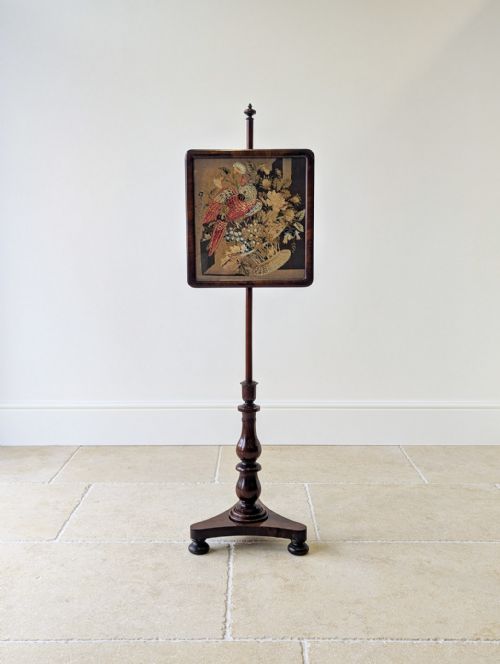
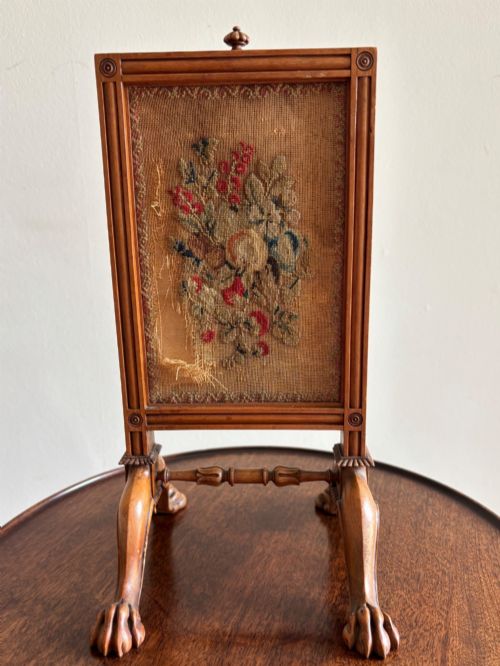
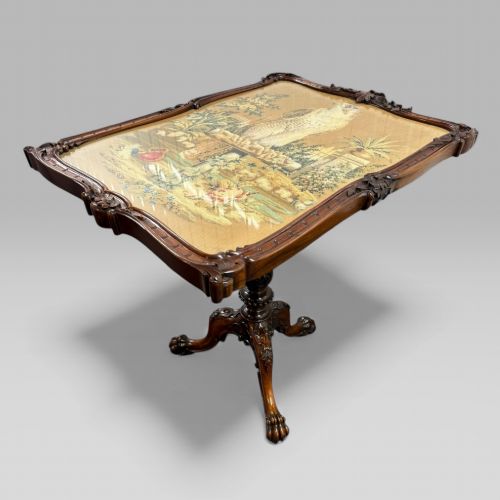
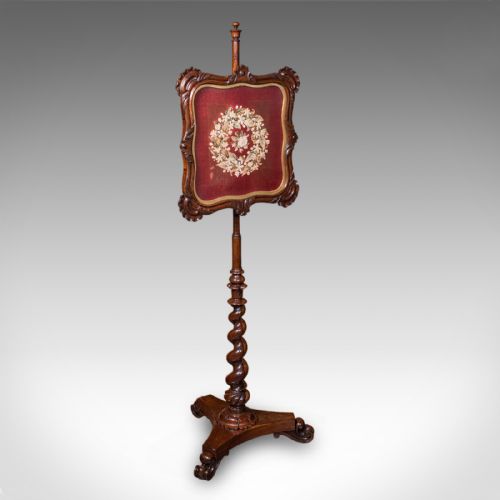
The pole screen variant is most common on this page, featuring a vertically adjustable panel mounted on a tripod base or pillar stand. Other forms include multi-panel privacy screens and table screens designed for domestic use near the fireplace.
Materials span rosewood, mahogany, walnut, and palisander, paired with brass fittings and glass elements. The panels themselves display hand-worked wool and textile compositions from the eighteenth and nineteenth centuries.
What varies in quality
The selection of timber dictates the foundational quality, with finely figured rosewood and mahogany indicating superior workshops. Precision in the turning of the support column and the stability of the tripod base further distinguish finer examples.
The complexity and density of the needlepoint or tapestry panel separate standard items from superior pieces. Original hand-worked wools that retain their colour and structural integrity elevate the piece significantly.
Victorian callers adjusted their brass pole screws daily to save their wax complexions from melting.
Gillows
The Regency Tapestry Screen Glossary
- Pole screen
- A freestanding wooden stand featuring a vertically adjustable panel designed to shield a person from fireplace heat. The panel slides along a central pillar and is held in position by a screw or friction mechanism.
- Needlepoint
- A form of counted thread embroidery stitched onto a stiff open-weave canvas foundation. It forms the primary decorative surface for the panels found on these screens.
- Tripod base
- A three-legged support structure commonly utilised on pole screens for stability on uneven floors. These legs are often curved and terminate in carved feet.
- Palisander
- A dense, dark tropical timber valued for its rich grain patterns and durability in high-status nineteenth-century furniture. It appears on select tapestry fire screens from the period.
- Tilt top
- A tabletop mechanism that allows the surface to pivot to a vertical position when not in use. This feature appears on combined table screens within the collection.
Regency Tapestry Screen: Frequently Asked Questions
How do I use a pole screen today?
These pieces function well beside seating areas as decorative room accents or subtle space dividers. Their adjustable panels allow you to position the textile work at eye level.
In modern rooms, they serve to introduce period texture and colour without requiring floor space for large furniture.
What is the difference between a pole screen and a room divider?
A pole screen consists of a single adjustable panel mounted on a central pillar with a tripod base. They were originally placed near hearths to protect the face from excessive heat.
Room dividers feature multiple folding panels connected by hinges to partition a space or create privacy. Both forms utilise needlepoint or tapestry panels as their central decorative element.
Are the tapestry panels usually original?
The needlepoint and tapestry panels on these pieces typically date from the period of manufacture. Wool and textile work from the eighteenth and nineteenth centuries forms an integral part of the structure.
Examining the reverse of the panel reveals the ageing of the canvas and stitching that corresponds with the era of the wooden frame.
How do I tell a Regency screen from a Victorian one?
Regency and Georgian pieces often display restrained classical proportions, elegant turned rosewood or mahogany pillars, and precise brass fittings. The needlework tends to reflect neoclassical motifs or floral patterns of the early nineteenth century.
Later Victorian examples from around eighteen-fifty often incorporate heavier carving, darker finishes, and distinct upholstery styles that depart from earlier Regency lightness.