



Nineteenth Century Screen
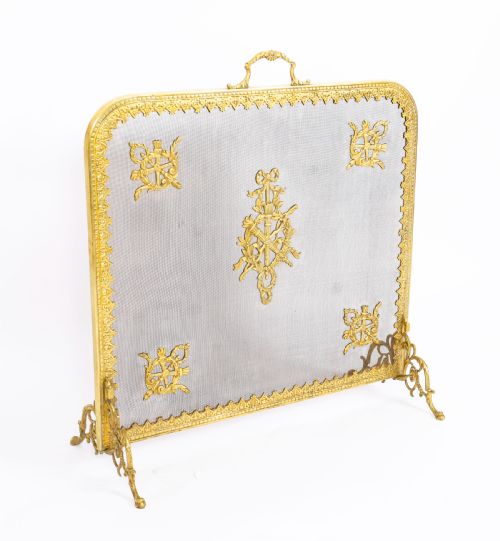
A nineteenth century screen organises a room or protects a gathered circle from the sudden glare of an open hearth.
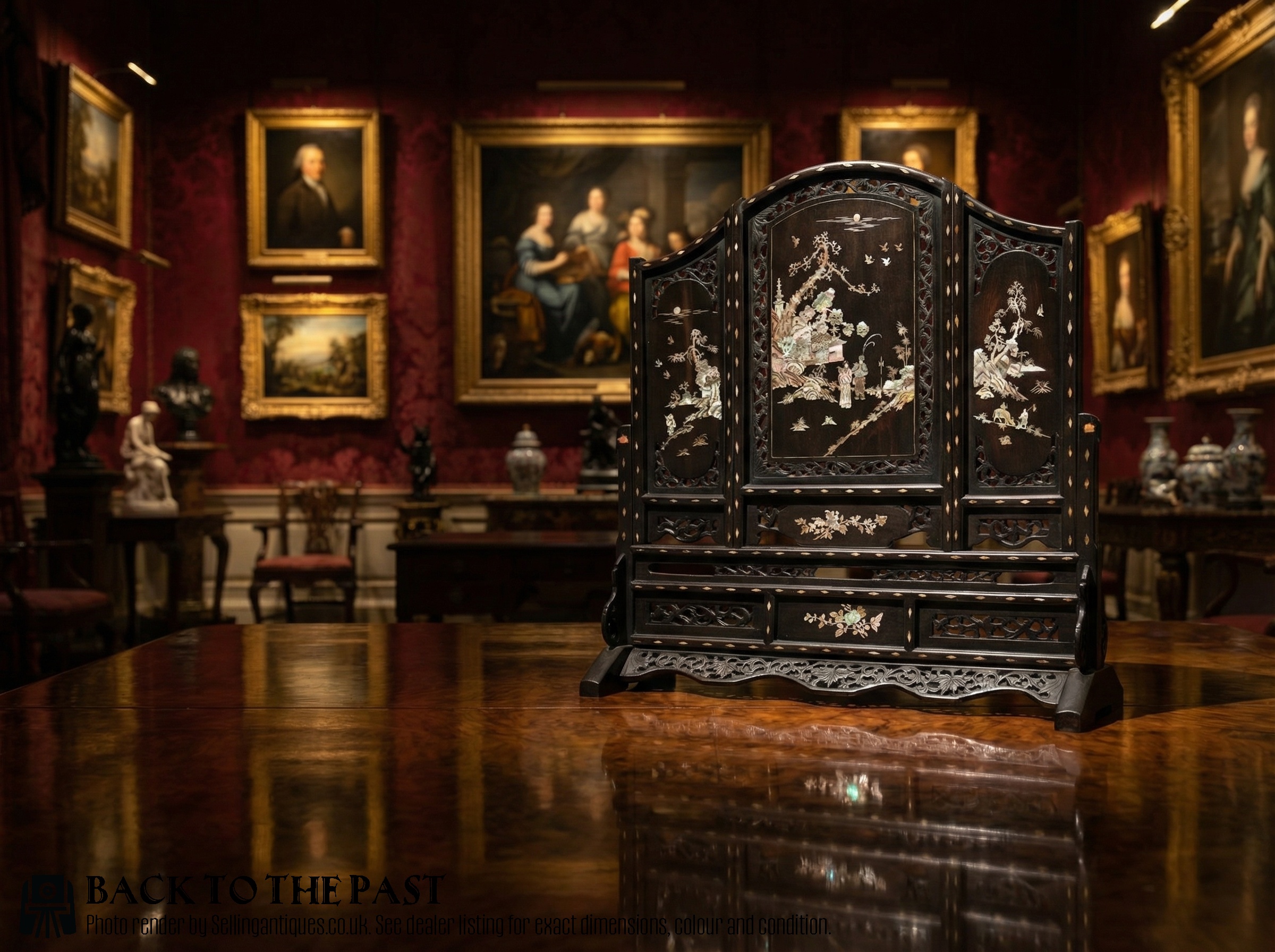
Nineteenth Century Screen
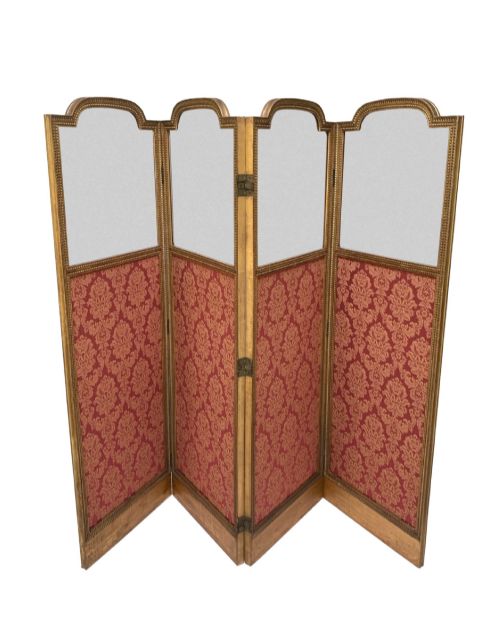
When you search for a nineteenth century screen, you meet a variety of furnishings designed to divide a space or manage the heat and light of a fire. The selection ranges from folding panels in mahogany and rosewood to delicate pole screens and small table screens.
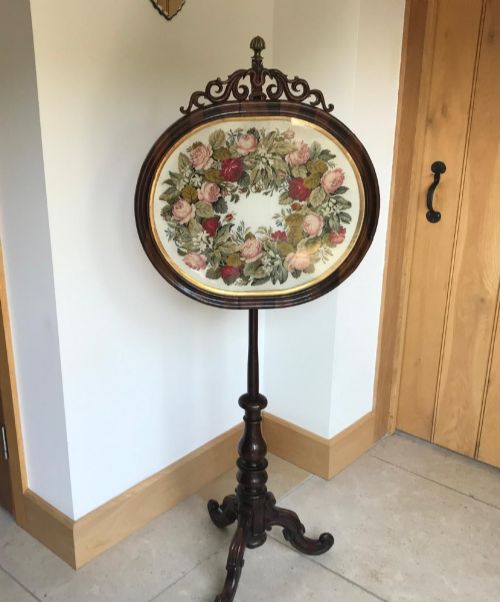
You are most likely to encounter pole screens and multi-fold room dividers on this page. These pieces span the Regency, William IV, and Victorian eras, reflecting the changing domestic habits of the period.
The objects serve practical domestic needs while showcasing the cabinetmaker's skill through turned poles, carved tripods, and inset textile panels.
Materials and construction
Cabinetmakers used dense timbers such as mahogany, rosewood, walnut, and satinwood to build the frames, supports, and folding panels. Turned standards and tripod bases provide stability for upright pole screens.
Decorative elements often incorporate wool tapestry, needlework, painted paper maché, glass, and brass fittings. Fine carving, giltwood, and decoupage finish the surfaces of the more elaborate examples.
Victorian ladies spent hours embroidering floral wool panels just to keep their complexion safe from the drawing room fireplace.
Quality and execution
The distinction between standard domestic items and finer pieces lies in the crispness of the timber carving and the complexity of the internal mechanisms. Solid rosewood or mahogany frames with substantial brass hardware stand apart from simpler softwood constructions.
The execution of the inset panel, whether hand-stitched tapestry or painted detail, dictates the overall refinement of the piece. Well-proportioned tripod bases and balanced folding leaves show superior workshop practice.
Gillows
The Nineteenth Century Screen Glossary
- Pole screen
- A freestanding upright screen with an adjustable panel that slides up and down a central wooden rod. This design allowed occupants to shield their faces from fireplace heat.
- Tripod base
- A three-legged support structure commonly found beneath pole screens and small tables. It provides a stable footprint on uneven floorboards.
- Tapestry panel
- A textile insert worked in wool or silk, often mounted within the wooden frame of a fire screen. These panels display floral, figural, or heraldic designs.
- Face screen
- A small handheld screen held near the face to block radiant heat from the hearth. They often feature painted decoration or decoupage on paper maché.
- Giltwood
- Timber coated with a thin layer of gold leaf. It appears on decorative frames and revival pieces from the period.
Nineteenth Century Screen: Frequently Asked Questions
What is a pole screen used for?
A pole screen protected a person's face from the intense heat of an open coal or wood fire. The adjustable panel could be raised or lowered along the central rod.
In a nineteenth-century drawing room, these items sat near the hearth and doubled as decorative displays for needlework.
How do I tell a pole screen from a table screen?
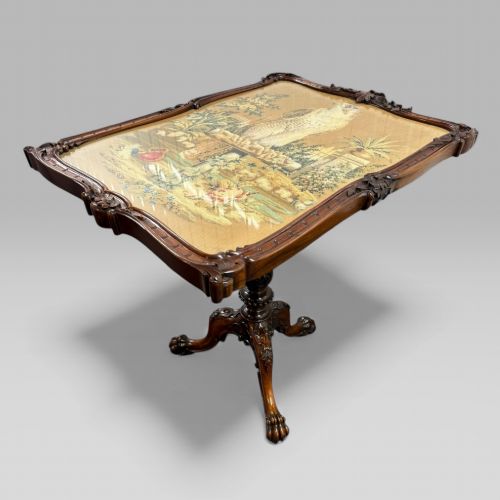
A pole screen stands upright on a floor-standing tripod or weighted base with an adjustable vertical rod. A table screen is much smaller and sits directly on a desk, chest, or side table.
Table screens often feature carved wooden frames or Asian export panels designed for intimate interior settings.
Where were room dividers placed?
Room dividers were positioned in larger parlours and drawing rooms to create private seating areas or block drafts from doorways. Folding panels allowed servants to alter the layout of a room quickly.
Country houses utilised multi-fold screens to segment vast spaces into comfortable living zones.
How do I care for nineteenth century wood?
Keep wooden frames and poles away from direct heat sources and strong sunlight to prevent the timber from drying out. Dust regularly with a dry cloth and apply occasional wax suitable for antique furniture.
Protect textile and tapestry panels from damp environments and prolonged light exposure.