




Oriental Table Screen
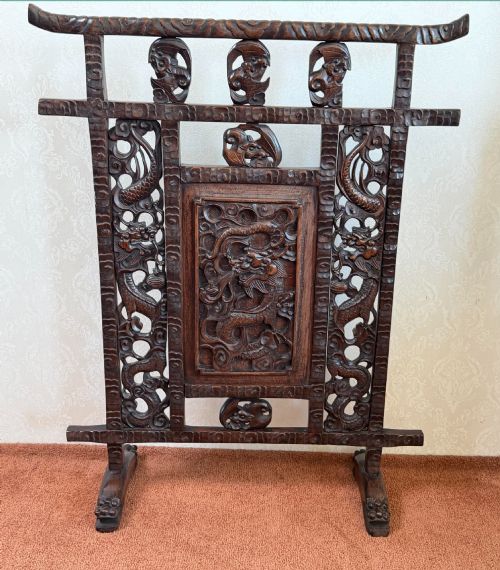
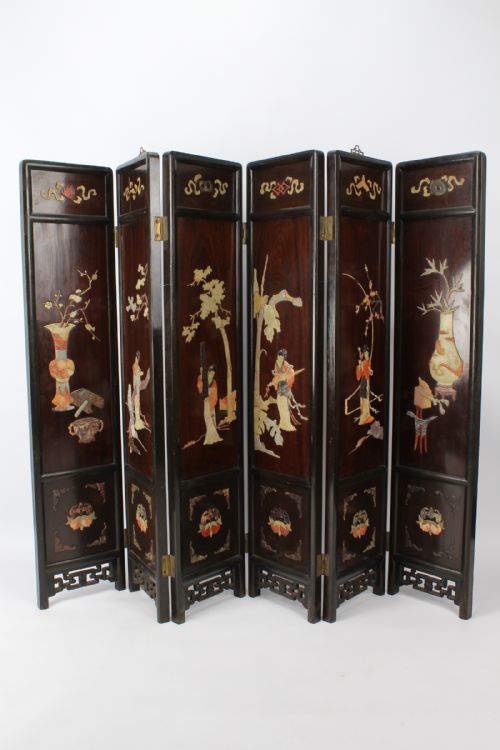
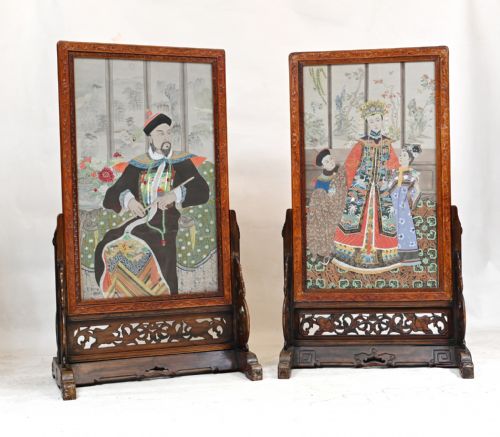
An oriental table screen brings intricate detail to a room, offering miniature panels of carved wood, silk embroidery or painted pith paper.
Oriental Table Screen
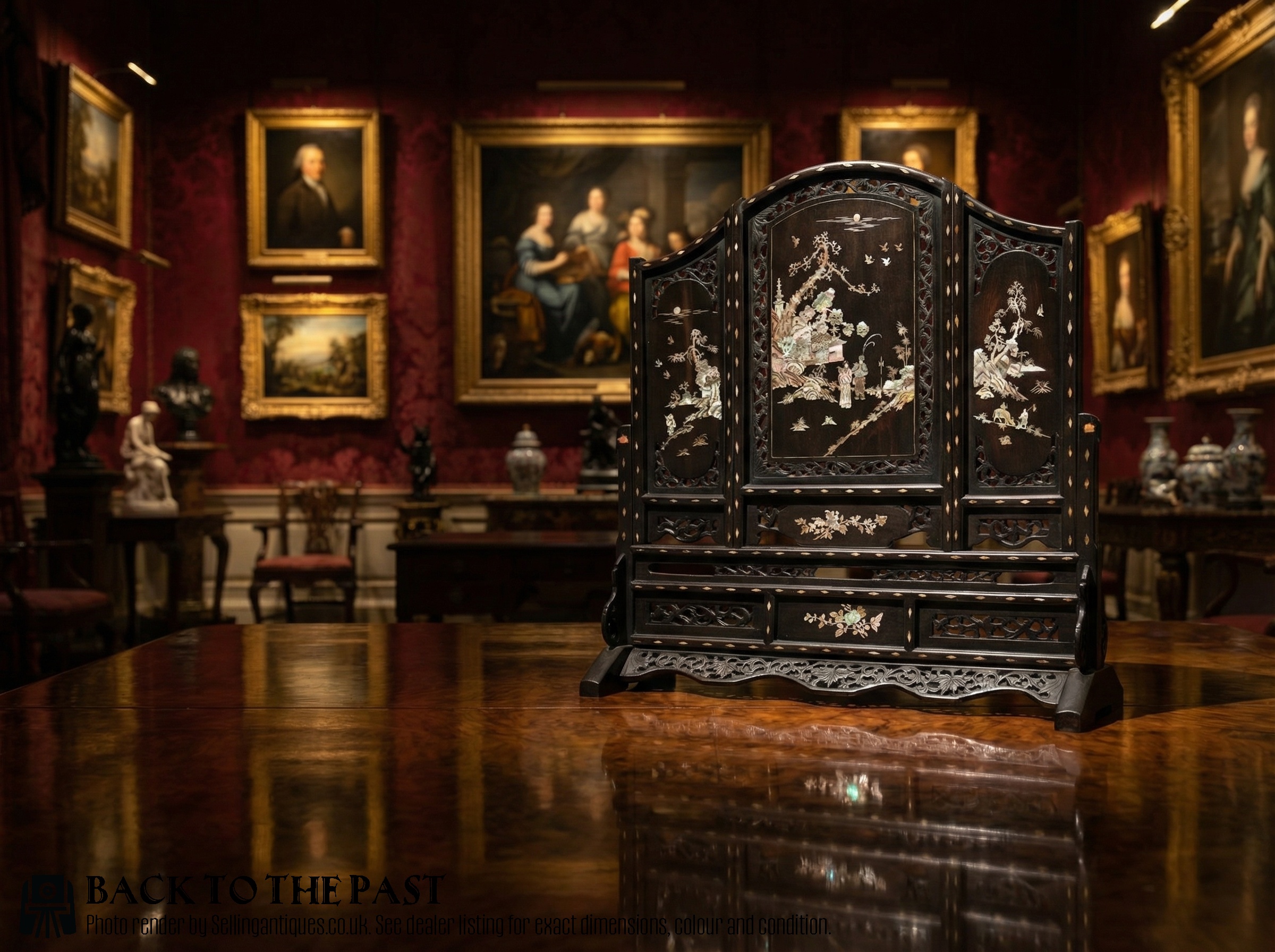
When you search for an oriental table screen, you encounter miniature decorative panels designed for placement on desks, tables or cabinets rather than the floor. These pieces frequently incorporate wood frames paired with silk, glass or painted panels originating from Qing Dynasty, Meiji Period and Chinese Export traditions.
The versions most commonly met on this page span the eighteenth, nineteenth and twentieth centuries, taking the form of static table screens, double-sided rotating displays, and small folding screens. Artisans constructed them to serve as refined focal points in scholars' studios and reception rooms, balancing ornamental craftsmanship with traditional motifs.
How they were made
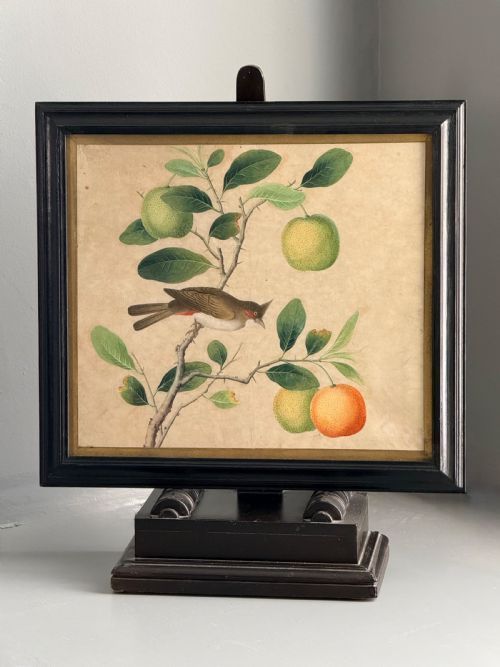
Makers utilised dense timbers such as hardwood to construct the supporting frames and stands, often incorporating intricate fretwork and carved details. These frames frequently house delicate inserts made from woven or embroidered silk, glass, lacquered panels, and painted pith paper.
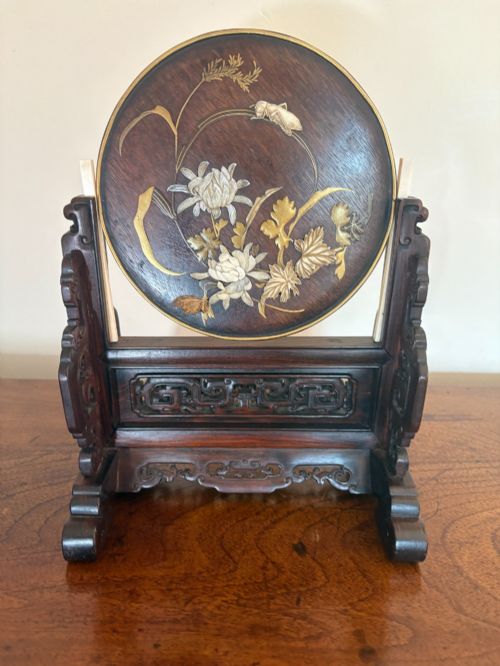
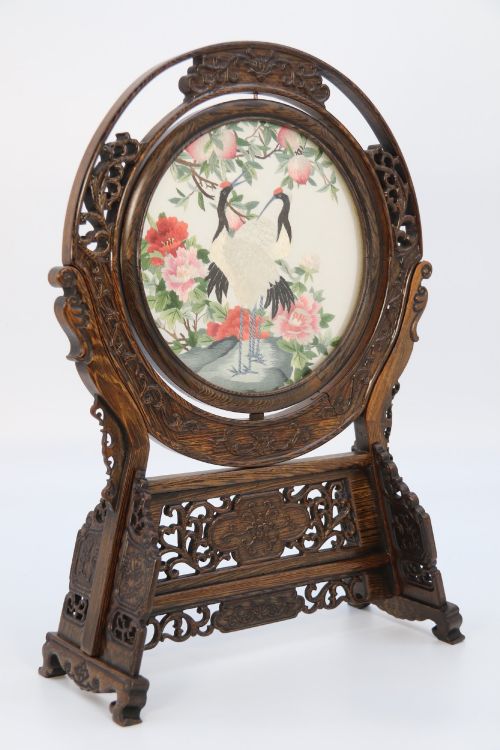
Specialised techniques include delicate bone inlay applied to lacquered surfaces and fine double-sided silk embroidery mounted on rotating hardwood display stands. Artisans also employed gouache painting on fragile pith paper to capture intricate pictorial scenes within the framing.
Current listings feature hardwood, silk, and bone materials across pieces spanning the eighteenth to twentieth centuries.
What varies in quality
Quality rests upon the depth and precision of the woodwork, separating standard production from pieces featuring deeply carved, intricate fretwork and balanced proportions. The execution of the central panel, whether hand-embroidered silk or detailed gouache painting, dictates the visual refinement of the screen.
The integration between the panel and its stand marks the distinction between simpler domestic items and finer scholarly objects. Secure joinery, well-fitted rotating mechanisms, and harmonious material pairings indicate superior workshop standards.
The Oriental Table Screen Glossary
- Hardwood
- Dense timber species utilised for structural frames and carved stands. This material provides the necessary stability for intricate joinery.
- Pith paper
- A delicate material formed from the cellular pith of rice paper plants. Artists applied gouache paint directly to this surface for miniature illustrations.
- Shibayama
- A decorative technique involving the inlay of materials such as bone and ivory into a lacquered base. This method creates textured, multi-coloured pictorial designs.
- Gouache
- An opaque water-based paint medium used on paper panels. It yields saturated colours and fine detail in historical illustrations.
- Fretwork
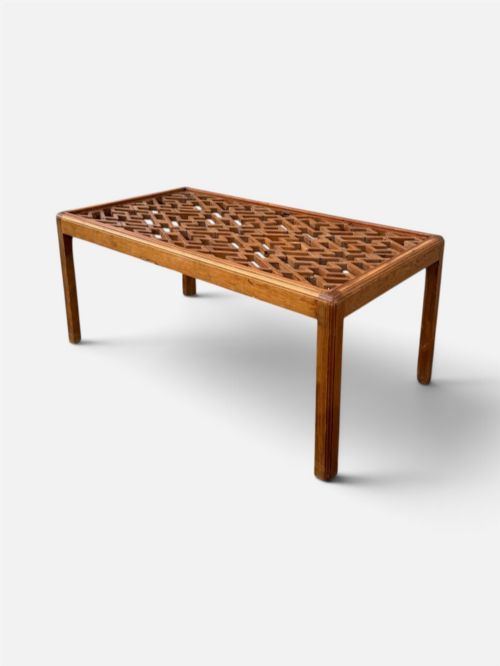
- Openwork ornamentation carved through wood in geometric or organic patterns. It frequently decorates the borders and stands of display panels.
Oriental Table Screen: Frequently Asked Questions
Where were oriental table screens placed?
These screens typically sat upon scholars' desks, low tables, or dedicated display stands within traditional interiors. They functioned as portable decorative focal points rather than architectural room dividers.
Their compact scale allowed owners to reposition them easily to catch the light or complement other scholarly objects in the room.
How do I care for a silk table screen?
Silk panels require protection from direct sunlight to prevent the fading of woven or embroidered threads. Dust them very gently with a soft, dry brush.
Keep them away from high humidity and extreme temperature fluctuations to preserve the integrity of both the fabric and the hardwood frame.
What is the difference between a table screen and a folding screen?
A table screen generally consists of a single panel held upright by a fixed or rotating stand, designed specifically for tabletop placement. A folding screen comprises multiple connected leaves.
While folding screens typically stand on the floor to partition space, table screens operate on a miniature scale for ornamental display.
How are rotating table screens constructed?
Rotating screens feature a central panel mounted on pivots within an outer horseshoe or rectangular frame. This allows the artwork to spin smoothly through a vertical axis.
This engineering enabled viewers to examine double-sided embroidery or paintings from either side without lifting the object.