
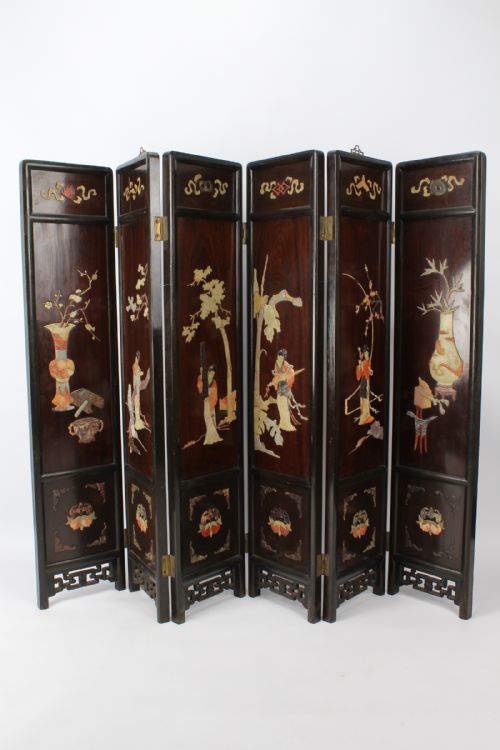


Dark Wood Table Screen
These dark wood table screen examples offer intricate carving and delicate panel inserts for sophisticated interior placement.
Dark Wood Table Screen
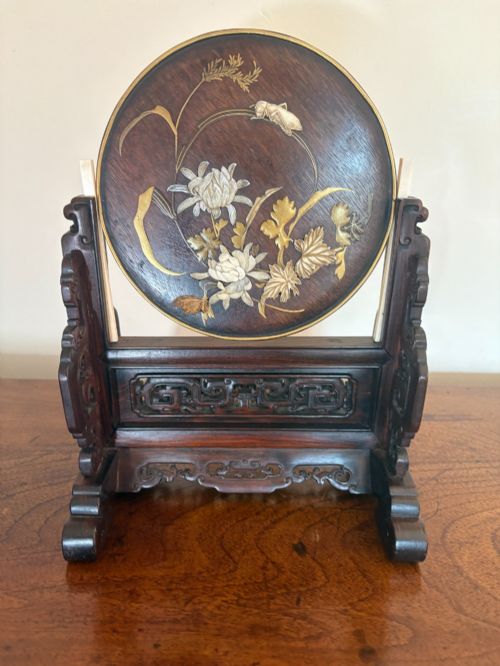
A dark wood table screen combines substantial frames with detailed decorative panels designed for placement on surfaces rather than floors.
The selections span nineteenth century pieces alongside items from the Meiji and Qing periods, featuring hardwood, rosewood, and lacquer.
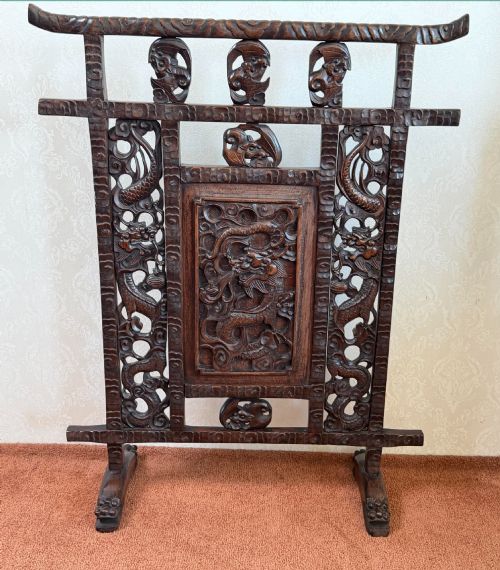
Forms include rotating displays, folding arrangements, and framed panels supported by intricately carved stands.
Materials and construction
Maker workshops utilised dense hardwoods and rosewood to construct stable frames capable of supporting heavy decorative centres.
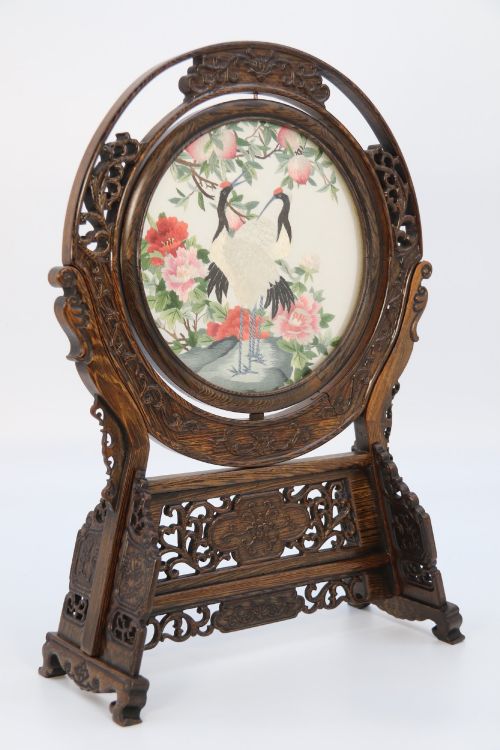
Panels incorporate fine silk embroidery, glass, and lacquer work, occasionally enhanced with bone inlay.
Carved wooden stands and rotating mounts utilise traditional joinery to hold the central panels securely.
Rotate a silk panel slowly to appreciate the double-sided embroidery where skilled hands concealed every knot.
Judging quality
The distinction between standard examples and superior items rests upon the depth of the wood carving and the precision of the joinery.
Panel inserts display varying degrees of refinement, where hand-stitched silk embroidery or detailed bone inlay elevates the overall piece.
Proportion and stability in the supporting stands indicate the level of craftsmanship invested in the construction.
Gillows
The Dark Wood Table Screen Glossary
- Hardwood
- Dense timber species selected for durability and dark colouration in furniture frames. These materials resist warping over decades of display.
- Shibayama
- Japanese decorative technique employing inlay of shell, bone, and ivory upon a wooden base. This method creates textured, multi-coloured pictorial surfaces.
- Tilt top
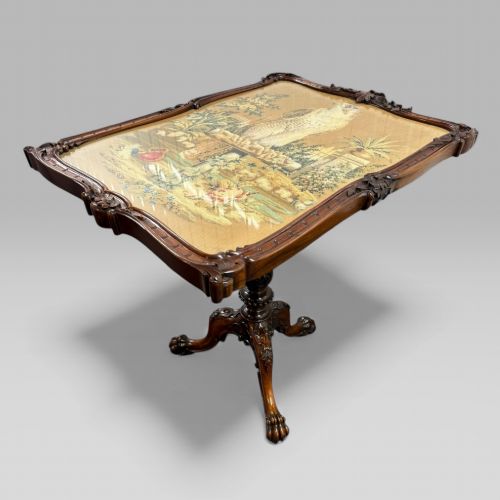
- A mechanism allowing the upper surface of a stand to pivot into a vertical position when not in use. This design originated in British Regency workshops.
- Lacquer
- Protective and decorative coating applied in multiple layers to wood surfaces. It produces a smooth, glossy finish typical of Asian decorative arts.
- Embroidery
- Decorative needlework using silk threads on a textile ground. Such panels form the central viewing element in many table screens.
Dark Wood Table Screen: Frequently Asked Questions
What is a dark wood table screen used for?
These decorative objects served to block drafts, obscure light, or simply provide an ornamental focal point upon a desk or surface.
In period interiors, smaller screens added layered visual texture to rooms without occupying floor space.
How do I date a table screen?
Dating relies upon identifying wood types, decorative styles, and construction methods characteristic of specific eras such as the nineteenth century or the Meiji period.
Subtle shifts in carving depth and material combinations help distinguish between earlier production and later pieces.
Where should I place a table screen?
Position these pieces on side tables, desks, or cabinets where their detailed panels and carved stands can be viewed closely.
Keeping them away from direct sunlight protects delicate silk embroidery and lacquer finishes from fading.
How do I clean a wood screen?
Dust the wooden frame gently with a dry, soft cloth to prevent accumulation in the carved recesses.
Avoid liquid cleaners and moisture, particularly near textile panels, bone inlay, or lacquer surfaces.