





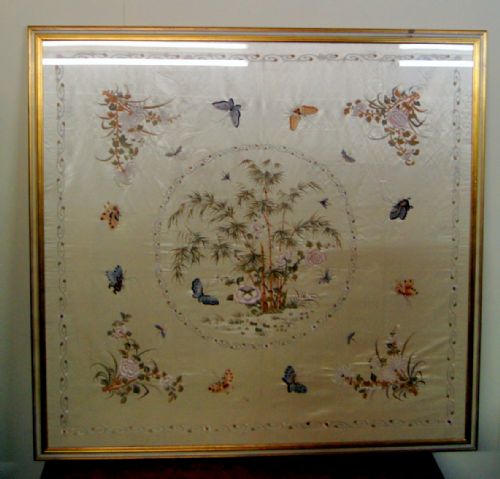
Antique Chinese Embroidery
These antique chinese embroidery pieces are textiles rich in silk and metallic thread, offering a glimpse into Qing Dynasty and Republic period craftsmanship.
Antique Chinese Embroidery
When you search for antique chinese embroidery, you are looking at textile art spanning the eighteenth century through the early twentieth century. The selections on this page include framed wall art, rank badges, child's robes, and double-sided panels set on rotating hardwood display stands.
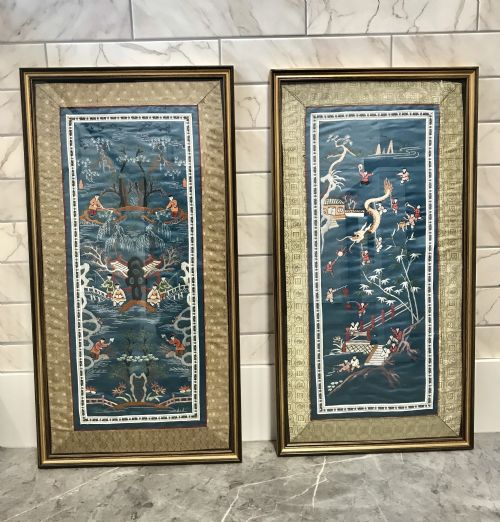
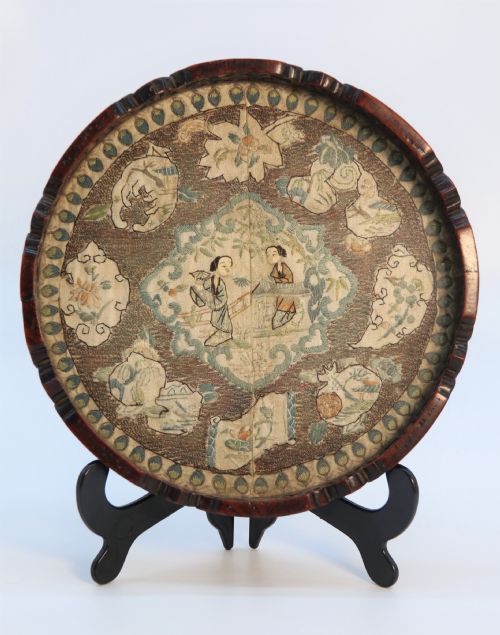
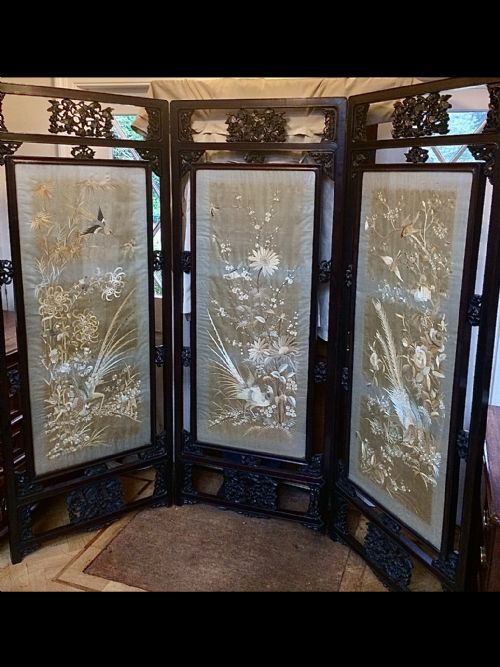
You are most likely to meet nineteenth-century examples featuring birds, flowers, trees, and figures worked in fine silk. Many of these textiles are mounted behind glass or framed within carved hardwood trays, firescreens, and folding screens.
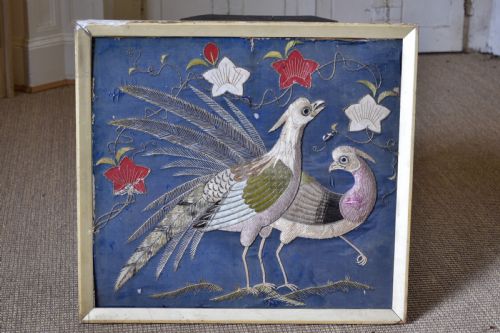
The range encompasses diverse formats, from small framed pictures depicting chickens and garden birds to large panels and table screens. Each piece reflects the traditional aesthetic of the Qing Dynasty and the Chinese Republic period.
How they were made
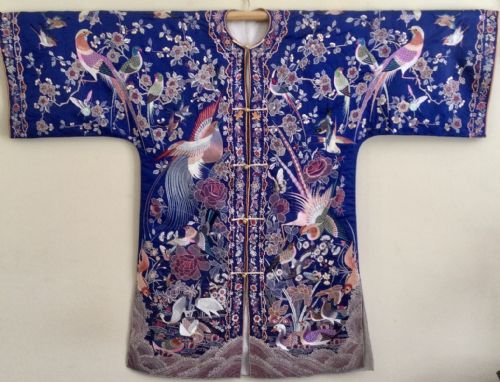
These works rely on silk thread hand-sewn onto a silk ground, frequently enhanced with metallic thread for added detail and contrast. Artisans utilised precise needlework to render intricate subjects such as dragons, figures, and botanical motifs.
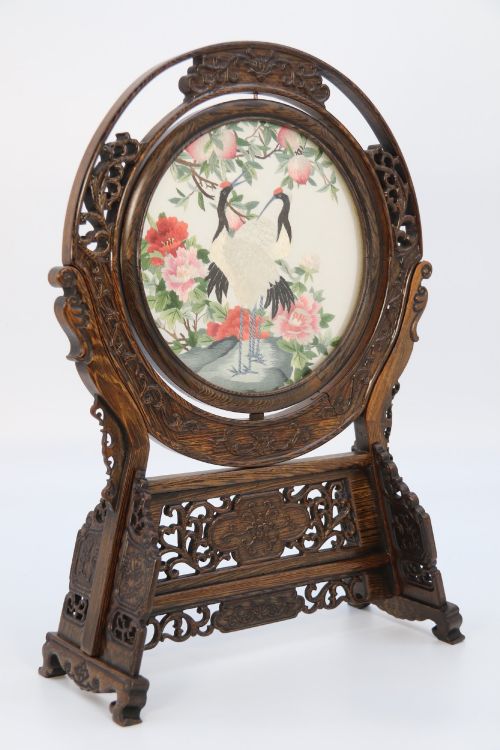
Many textiles are housed within custom wooden frames or integrated into functional objects such as trays, firescreens, and rotating display stands using carved hardwood and gilt wood. Double-sided needlework required stitching that looked finished from both sides, often displayed under glass to protect the delicate fibres.
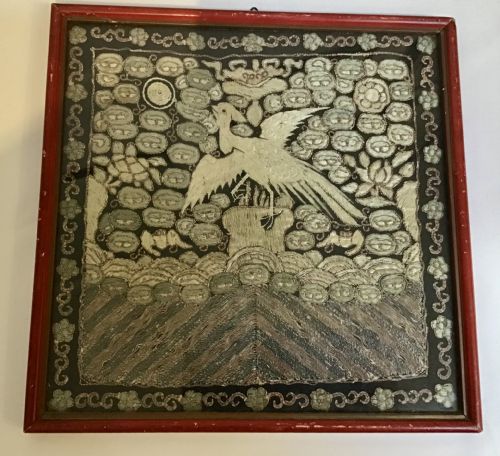
Object types seen here range from framed textile art and rank badges to functional wooden trays and firescreens.
What varies in quality
The distinction between ordinary and superior work lies in the density and precision of the hand-sewn stitches. Finer examples display meticulous control over silk and metallic threads, creating intricate depth and realistic detail in figures and birds.
Quality is also determined by the craftsmanship of the accompanying mount or frame. Pieces integrated into carved hardwood stands, firescreens, or trays demonstrate a higher level of overall luxury compared to simple fabric fragments.
The Antique Chinese Embroidery Glossary
- Rank badge
- A square embroidered patch worn by officials to denote their social standing and civil or military rank. These badges typically feature distinct birds or animals.
- Qing Dynasty
- The final imperial dynasty of China, lasting from the mid-seventeenth century until the early twentieth century. Many textiles on this page date from this era.
- Chinoiserie
- A European artistic style reflecting Chinese motifs and techniques. It appears across various decorative objects influenced by Asian aesthetics.
- Table screen
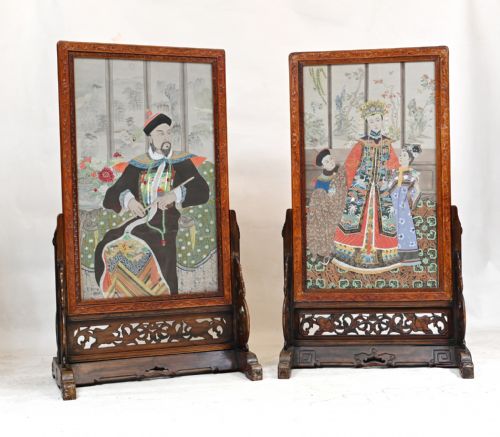
- A decorative panel supported by a stand, designed to sit on a desk or table. These often feature silk embroidery framed in carved hardwood.
Antique Chinese Embroidery: Frequently Asked Questions
How were these silk panels used?
These textiles served various decorative and functional purposes in elite interiors, appearing as wall art, rank badges on garments, or decorative panels inset into furniture.
Many examples were mounted into firescreens, folding screens, and table screens, combining textile artistry with carved hardwood framing.
How do I care for antique silk?
Keep textile art away from direct sunlight to prevent the silk and metallic threads from fading over time. Displaying pieces behind glass helps protect the delicate fibres from dust and handling.
Maintain a stable indoor environment with minimal humidity fluctuations to preserve the condition of both the fabric and any wooden mounts.
What periods do these pieces cover?
The selection primarily encompasses the eighteenth, nineteenth, and early twentieth centuries. This spans the Qing Dynasty and the Chinese Republic period.
Dates range from eighteenth-century works associated with the Qianlong Emperor era to pieces created around nineteen-twenty.
What subjects appear in the embroidery?
Common motifs include garden birds, mandarin ducks, chickens, and pheasants paired with detailed trees and flowers. Other popular subjects feature human figures and traditional dragons.
These natural and imperial themes reflect the classical imagery favoured by artisans of the period.