



Chinoiserie Wall Art
Chinoiserie wall art brings decorative elegance to interiors through historical pieces crafted in silk, glass, and wood.
Chinoiserie Wall Art
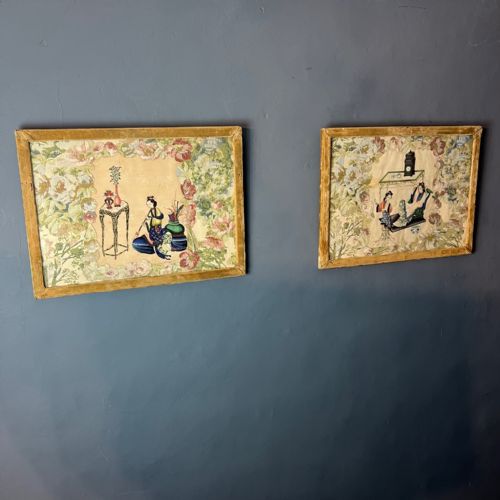
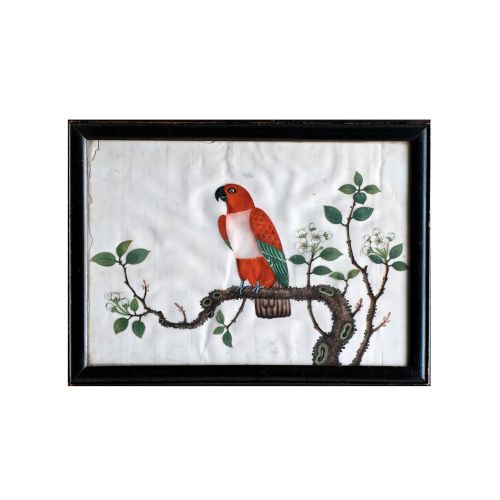
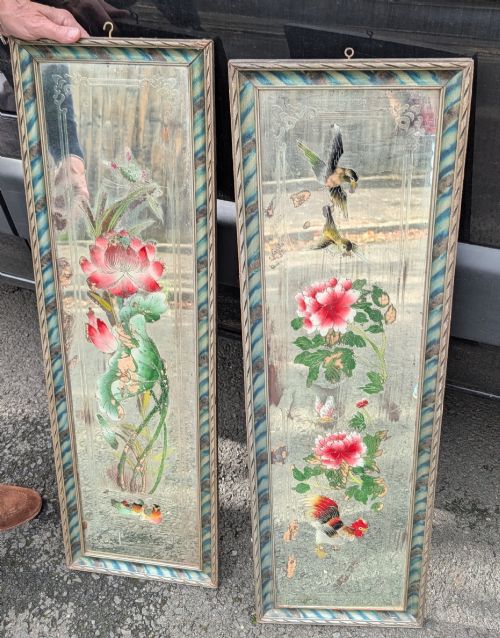
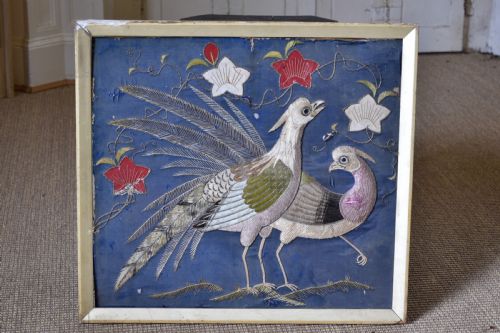
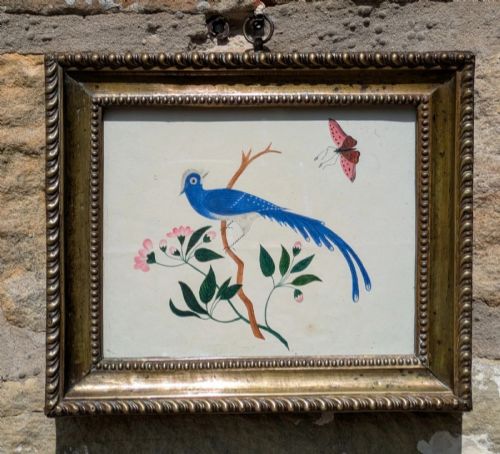
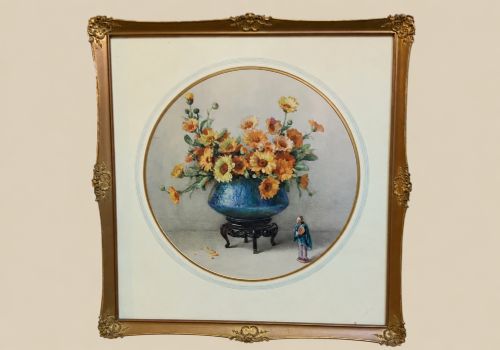
Chinoiserie wall art encompasses framed paintings, embroidered panels, and reverse glass works that interpret East Asian aesthetic traditions. Buyers searching for chinoiserie wall art encounter pieces spanning the nineteenth century through to the mid-twentieth century.
Materials and Technique
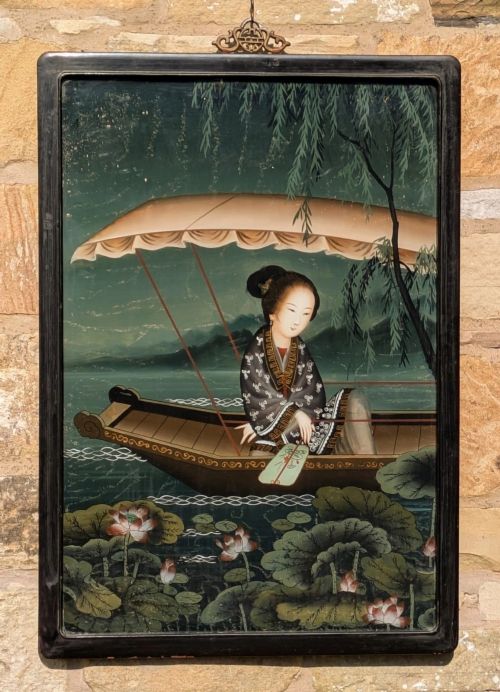
Artisans applied oil paint and pigments directly onto reverse glass or delicate silk grounds to achieve lasting visual depth. Wooden frames frequently incorporated gilt and brass fittings to complement the detailed imagery.
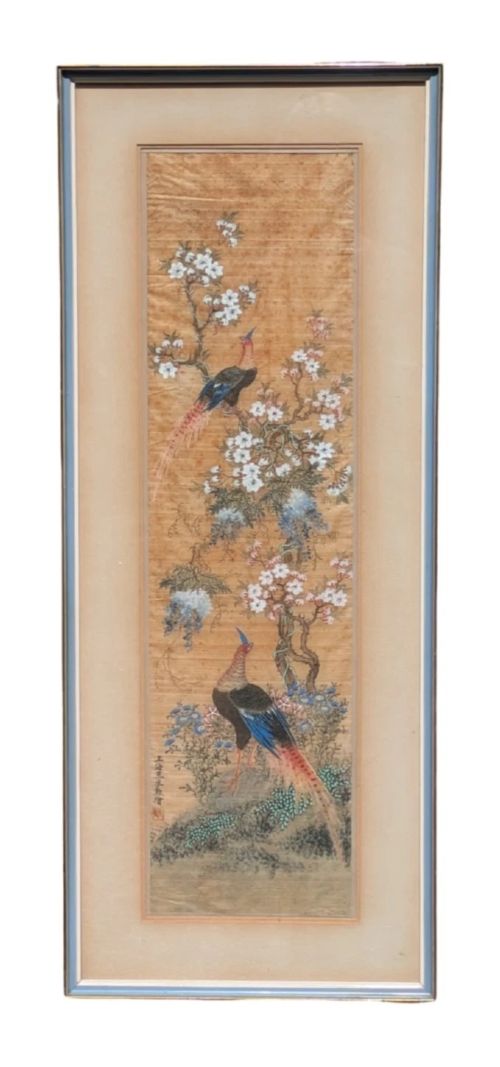
Needlework pieces utilised fine silk threads hand-embroidered to rigorous standards. Watercolour works on paper or silk demonstrated precise brushwork executed by skilled practitioners.
Chinoiserie Wall Art Retail Price Guide 2026
Typical asking prices for chinoiserie wall art among the pieces listed under this phrase on Sellingantiques today, from the lower quarter to the upper quarter. They describe what is for sale here now, not the wider market.
One determined artisan once spent weeks coaxing a single silk panel to life with a needle, only for it to end up admiring someone's hallway.
Assessing Quality
Superior examples distinguish themselves through the intricacy of the hand embroidery and the precision of the brushwork on silk or glass. The finest pieces demonstrate exceptional control over pigment and thread to create rich, layered compositions.
Secondary quality is evident in simpler decorative applications where the detail is less refined and the materials lack the same depth. The integration of original framing elements, such as gilt wood and brass, also elevates the standing of a piece.
The Chinoiserie Wall Art Glossary
- Chinoiserie
- European interpretation and imitation of Chinese and East Asian artistic traditions, prominent in decorative arts. This style heavily influences the visual vocabulary of the panels and paintings found here.
- Reverse painting on glass
- Technique where the artist paints directly onto the back of a glass pane to be viewed from the front. This method creates a glossy, luminous surface finish characteristic of the period.
- Gilt wood
- Timber treated with gold leaf or a gold-coloured gilt preparation for decorative enhancement. It provides a rich border for framed wall art.
- Watercolour
- Paint consisting of pigment suspended in a water-based solution, frequently applied to silk grounds in these listings. It allows for delicate, translucent washes of colour.
Chinoiserie Wall Art: Frequently Asked Questions
How do I hang antique silk panels?
Silk panels require careful handling and should be mounted away from direct sunlight to prevent the natural fibres and pigments from fading over time.
Professional framing with conservation-grade glass helps protect delicate textile and watercolour surfaces from dust and atmospheric moisture.
What periods do these artworks represent?
The available pieces predominantly date from the nineteenth century, including specific works from eighteen ninety, alongside mid-twentieth-century examples.
Earlier items often feature traditional watercolour on silk or reverse glass techniques, while later pieces reflect evolving decorative trends.
Are reverse glass paintings fragile?
Reverse paintings on glass require secure wall fixings and careful transport because the pigment sits directly on the fragile glass substrate.
Displaying them on sturdy internal walls away from high-traffic zones ensures the painted surface remains undisturbed.