

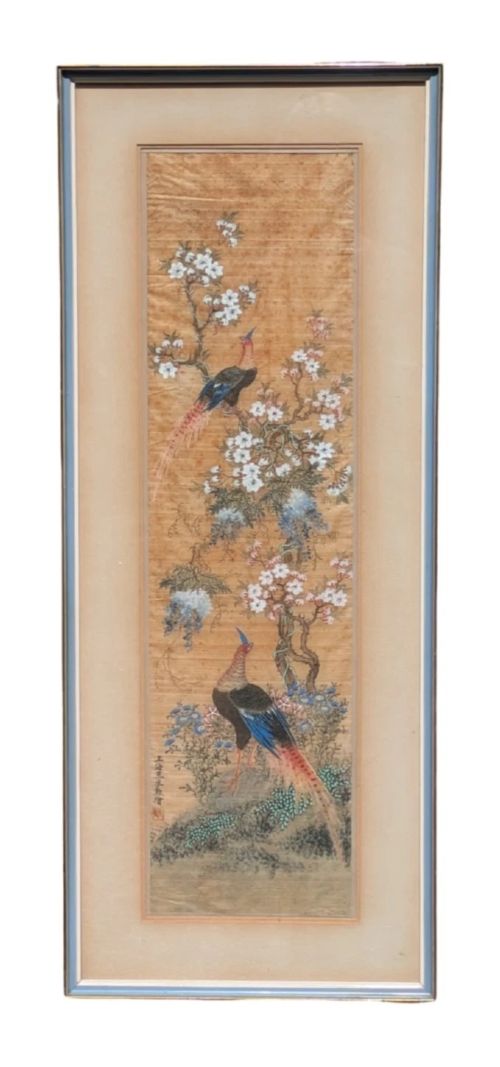
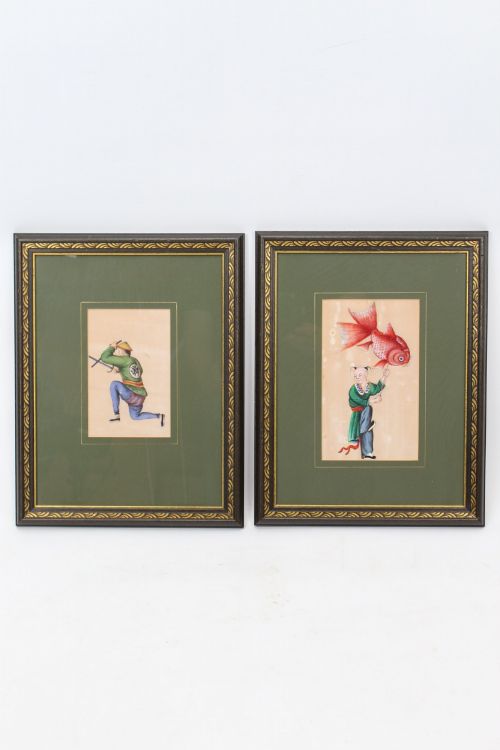


Framed Chinese Watercolour
A framed chinese watercolour brings delicate pigments on paper, silk, or pith straight from traditional studios into your home.
Framed Chinese Watercolour
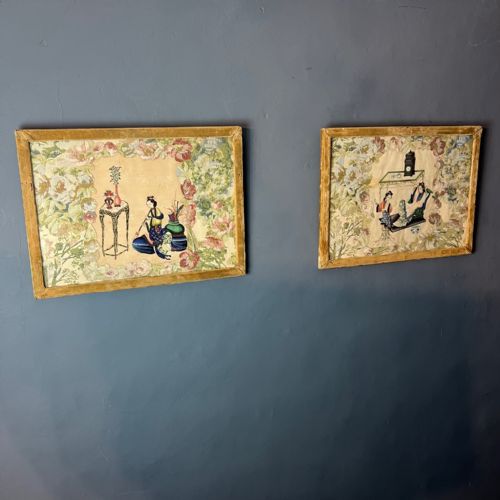
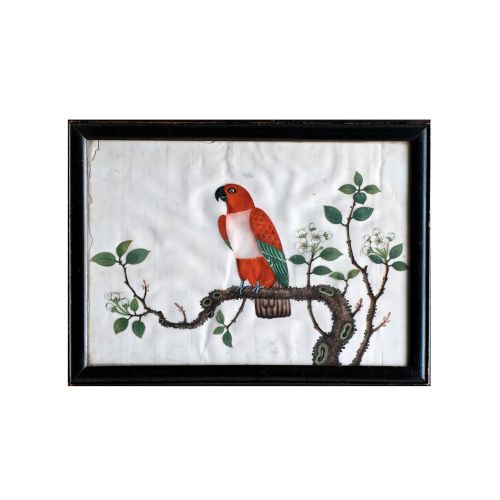
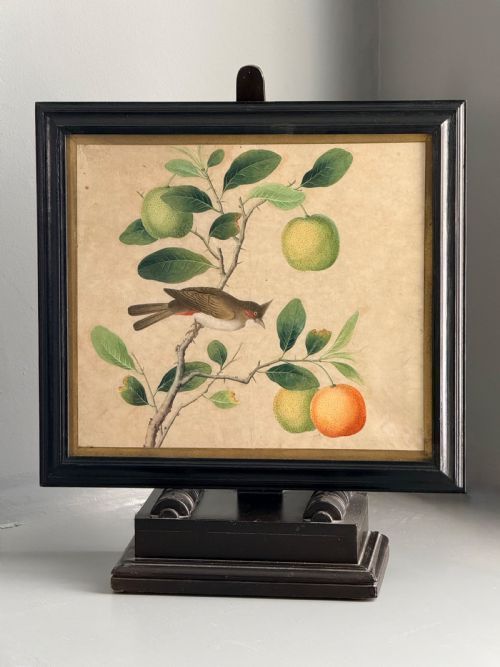
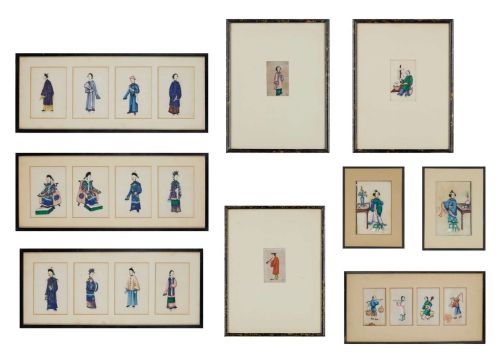
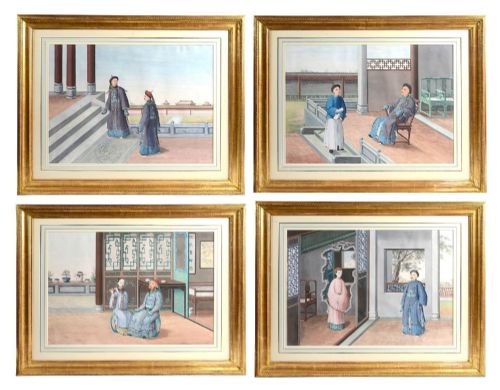
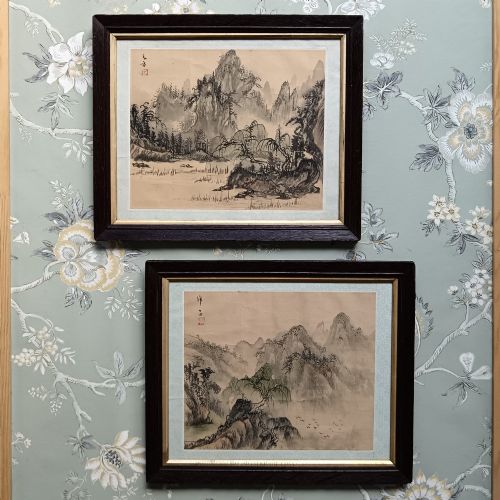
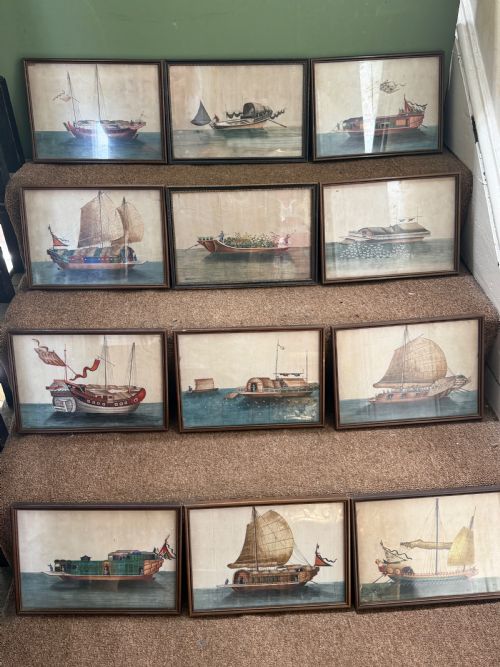
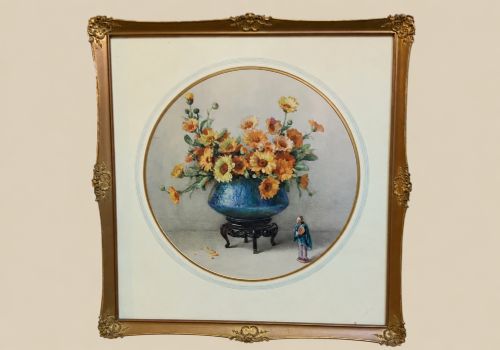
When you search for framed chinese watercolour, you encounter everything from single botanical studies to large sets depicting court figures, junks, and landscapes. The pieces on this page span several eras, though nineteenth-century works and Qing Dynasty export art appear most frequently.
You will find works executed on traditional silk, standard paper, and fragile pith paper, often referred to historically as rice paper. These paintings frequently arrive in period wood frames behind glass, preserving the delicate pigments applied by hand.
Materials and methods
Artists built these images using ink, gouache, and watercolour pigments applied directly to delicate supports like silk or pith paper. Pith paper, cut from the spongy internal pith of the tetrapanax papyrifer plant, yields a unique velvety surface that absorbs opaque watercolours with remarkable brilliance.
The mounting and framing often utilise wood and glass to protect the sensitive media from moisture and handling. Many surviving works retain their original frames, which complement the traditional Chinese export style of the paintings within.
Framed Chinese Watercolour Retail Price Guide 2026
Typical asking prices for framed chinese watercolour among the pieces listed under this phrase on Sellingantiques today, from the lower quarter to the upper quarter. They describe what is for sale here now, not the wider market.
Several nineteenth-century artists clearly delighted in painting delicate butterflies and insects on fragile pith paper to charm foreign buyers.
Assessing quality in framed Chinese watercolours
The sophistication of the brushwork and the precision of the detail separate ordinary decorative pieces from finer examples. Works depicting complex court scenes, figures, or identifiable flora and fauna usually display superior artistic execution compared to repetitive export output.
Condition plays a major role in quality, particularly given the fragile nature of pith paper and silk over centuries. Well-preserved pigments retain their vivid colour without heavy flaking, and intact original frames add considerable integrity to the piece.
The Framed Chinese Watercolour Glossary
- Pith paper
- A delicate material derived from plant pith, commonly used in the nineteenth century for export paintings. It has a spongy texture that accepts gouache and watercolour with vibrant opacity.
- Gouache
- An opaque watercolour paint consisting of pigment mixed with a water-binding agent. It provides the dense, matte colour blocks seen in many traditional export works.
- Shan Shui
- A style of traditional Chinese painting that depicts scenery or natural landscapes. These works use brush and ink rather than conventional western oil methods.
- Chinese Export
- Art produced in China specifically for western markets from the eighteenth to the twentieth centuries. These pieces often blend traditional techniques with subjects tailored for European buyers.
- Qing Dynasty
- The last imperial dynasty of China, spanning from the seventeenth to the early twentieth century. Many surviving watercolours and pith paintings originate from the late phase of this period.
Framed Chinese Watercolour: Frequently Asked Questions
What is pith paper?
Pith paper is a fragile, velvety material cut from the central pith of a specific Asian shrub, rather than pressed from rice. Artists used it extensively during the nineteenth century for brightly coloured export paintings.
Because of its unique cellular structure, pith paper absorbs watercolours and gouache in a way that gives the pigments a luminous, three-dimensional quality. It requires careful protection behind glass to prevent crumbling.
How should I hang these watercolours?
Watercolours, silk paintings, and pith works are exceptionally sensitive to direct sunlight and high humidity. Hang them on interior walls away from bright windows to prevent the pigments from fading.
Keep them behind glass in stable environmental conditions to protect the paper or silk supports from drying out or absorbing moisture over time.
Are these works hand-painted?
Yes, every piece represented here is an original hand-painted artwork rather than a printed reproduction. Artists utilised fine brushes, ink, and mineral pigments to create each individual study.
Close inspection often reveals subtle brush strokes, variations in ink density, and the artist's signature or studio stamp within the composition.