
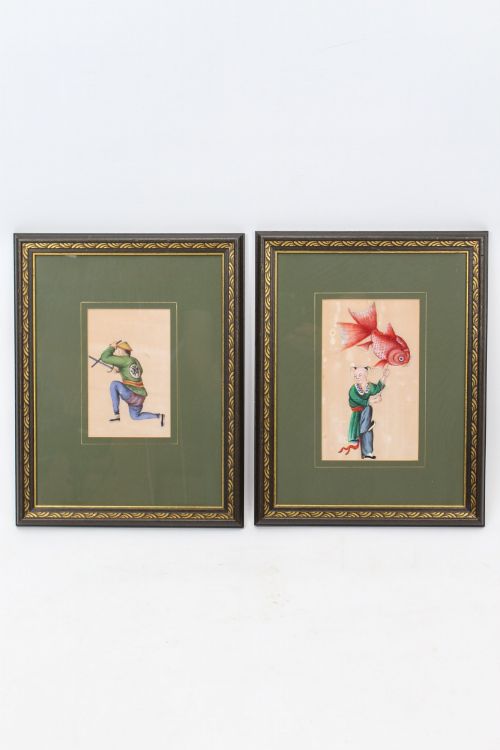


Chinese Export Pith Painting
These Chinese export pith painting works are delicate watercolours and gouache on pith paper, capturing traditional scenes for Western buyers.
Chinese Export Pith Painting
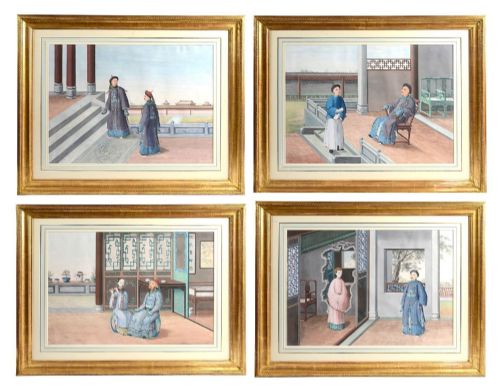
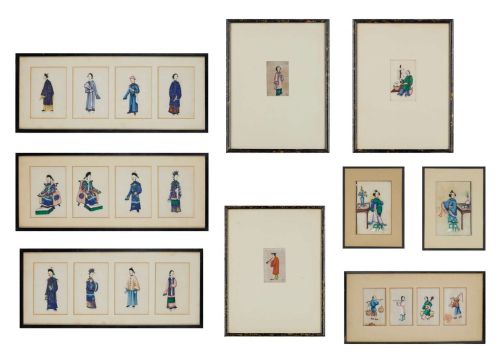
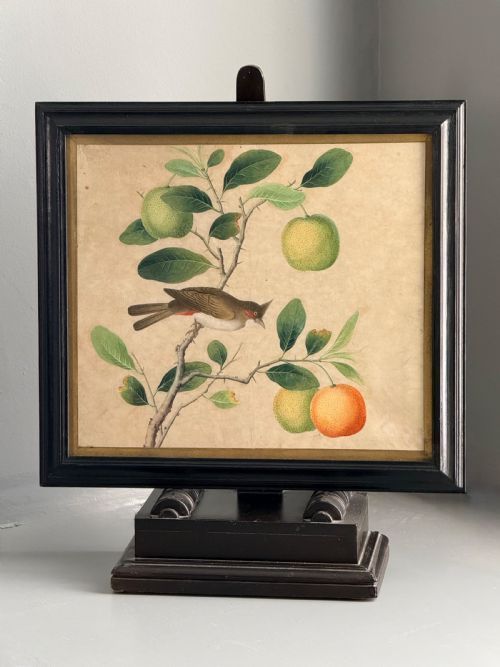
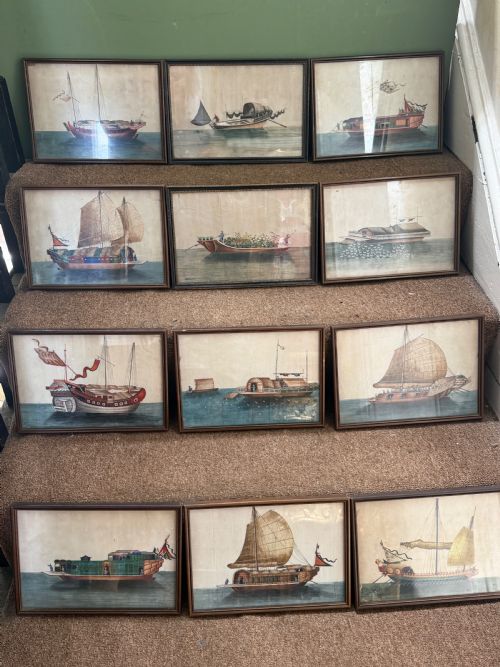
A Chinese export pith painting is a delicate artwork produced primarily during the nineteenth century for Western markets, capturing local trades, flora, fauna, and maritime scenes. You will most frequently encounter nineteenth-century examples and late Qing dynasty pieces on this page, often presented in framed formats or sets.
The subjects range from single figural studies and floral arrangements to detailed groupings of junks and other ships. These works reflect the cross-cultural exchange between China and the West during the Qing dynasty export art period.
Materials and Techniques
Artists created these works by applying gouache and watercolour onto pith paper, a spongy material traditionally misidentified as rice paper. The cellular structure of the pith accepts pigment with a distinctive velvety depth and luminosity.
Many surviving examples are housed in wood frames, sometimes with glass protection, and occasional pieces incorporate gilt wood or silk elements to suit Western interior tastes of the Regency and Edwardian eras.
Several pieces capture meticulous details of beetles and butterflies, proving that nineteenth-century entomology made just as striking a wall display as a fleet of trading junks.
Assessing Quality
Quality in these works rests upon the fineness of the brushwork and the vibrancy of the gouache pigments used to render figures, butterflies, insects, and botanical details. Pieces that maintain crisp lines and rich, unblemished colour display the highest level of artisan skill.
The scale and completeness of a set also determine distinction, as intact groups of multiple paintings offer a more comprehensive narrative than isolated single sheets.
The Chinese Export Pith Painting Glossary
- Pith paper
- A delicate, spongy material sliced from the pith of the Tetrapanax papyrifer plant. It was widely used in nineteenth-century Chinese export art as a surface for watercolour and gouache paintings.
- Gouache
- An opaque water-based paint that provides solid, vibrant colours on paper and pith surfaces. It allows artists to achieve rich tones in figural and floral compositions.
- Qing dynasty
- The final imperial dynasty of China, spanning from sixteen forty-four to nineteen twelve. Most export art on this page originates from the later decades of this era.
- Chinese export art
- Goods manufactured in China specifically for Western consumers from the eighteenth through the early twentieth centuries. These items blended traditional Chinese craftsmanship with European aesthetic preferences.
- Junk
- A traditional Chinese sailing ship with battened sails, frequently depicted in nineteenth-century export paintings of maritime scenes.
Chinese Export Pith Painting: Frequently Asked Questions
What is pith paper?
Pith paper is a natural plant material derived from the pith of a specific shrub native to southern China. It has a porous, velvety texture that absorbs water-based pigments in a unique manner.
Artists utilised this delicate substrate to achieve luminous colour effects that distinguish these export works from standard paper paintings.
How old are these paintings?
The pieces available here primarily date from the nineteenth century, spanning the Regency period through the late Qing dynasty and into the Edwardian era. A smaller number originate from the eighteenth century.
Exact dating relies on stylistic conventions, framing, and the historical context of trade between China and the West during those decades.
Why are they called export art?
These paintings were specifically commissioned and created in Chinese port cities like Canton for foreign merchants, travellers, and collectors. The subject matter was chosen to appeal to Western tastes and curiosities.
They document trades, flora, fauna, and landscapes for buyers returning to Europe and America.