

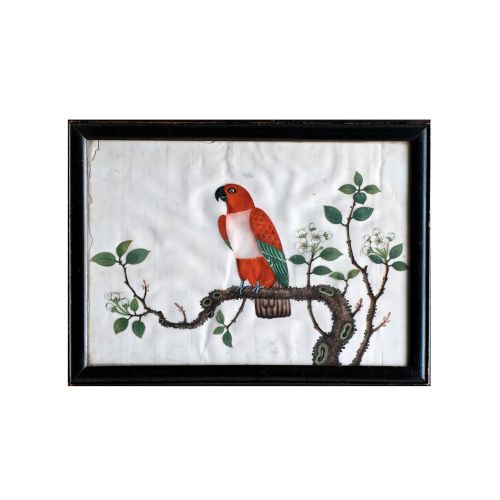
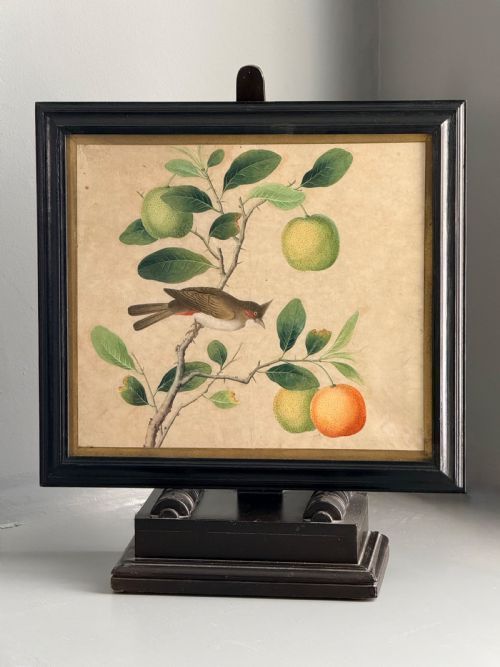
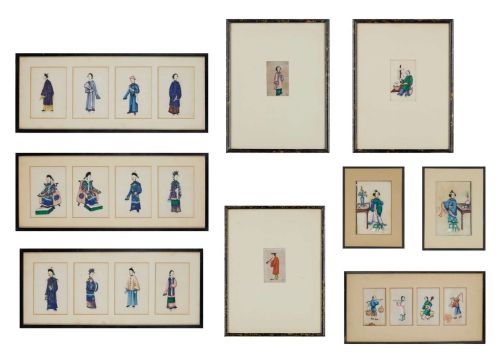
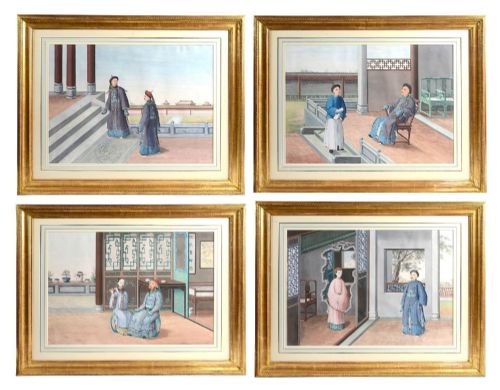


Framed Pith Paper Art
Framed pith paper art brings delicate botanical and figural studies into your home, offering a glimpse into historic Chinese export craftsmanship.
Framed Pith Paper Art
When you search for framed pith paper art, you encounter historical works created primarily during the 18th century, Regency period, 19th century, Edwardian era, and around 1900. These pieces typically take the form of wall art, framed paintings, and original watercolour artworks.
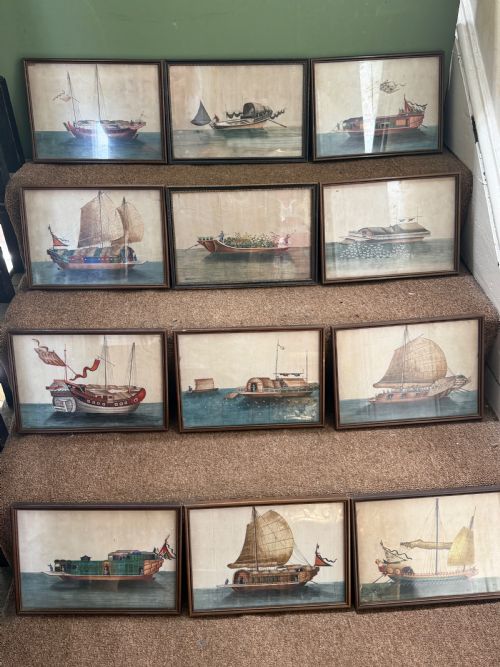
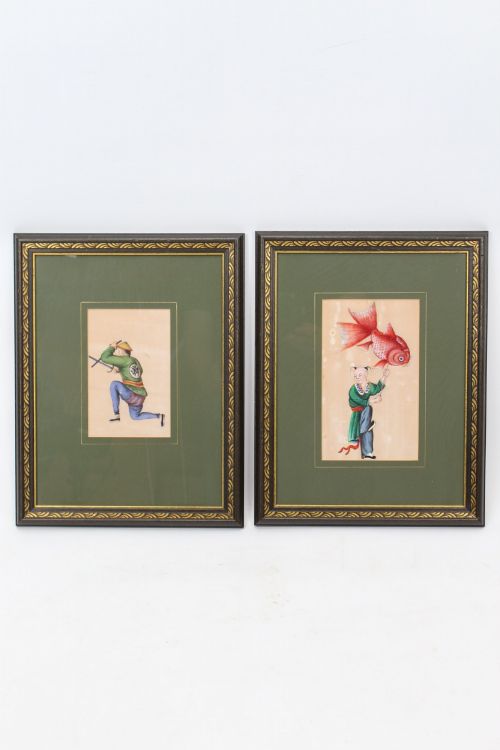
The most common examples on this page are Chinese export paintings and sets depicting figures, junks and other ships, butterflies, insects, and floral subjects. Originating as Qing dynasty export art, these works were tailored for Western markets and framed for domestic display.
Many of these historic items arrive in sets, ranging from pairs to groups of twelve or twenty-one individual paintings. Their survival in framed formats helps protect the fragile support material from modern environmental damage.
How they were made
These artworks utilise pith paper, often historicised as rice paper, which is carefully sliced from the pith of the Tetrapanax papyrifer plant. This unique cellular material possesses a velvety, sponge-like texture that absorbs water-based pigments with exceptional brilliance.
Artists applied gouache and watercolour directly onto the delicate pith sheets to render vibrant scenes of native flora, fauna, and maritime trade. The resulting paintings were subsequently mounted and secured behind glass within wood or gilt wood frames for protection.
Framed Pith Paper Art Retail Price Guide 2026
Typical asking prices for framed pith paper art among the pieces listed under this phrase on Sellingantiques today, from the lower quarter to the upper quarter. They describe what is for sale here now, not the wider market.
Listings feature works spanning the 18th century, Regency period, 19th century, Edwardian era, and 1900, rendered in gouache and watercolour on pith paper.
What varies in quality
The distinction between standard and superior examples often rests upon the precision of the brushwork and the preservation of the pigments. Finer pieces retain intense colour saturation in the gouache and show meticulous detail in subjects like butterfly wings or shipping rigging.
The completeness and uniformity of historical sets also influence the character of the grouping, alongside the craftsmanship of the original framing materials such as gilt wood. Condition remains paramount due to the intrinsic fragility of pith paper.
The Framed Pith Paper Art Glossary
- Pith paper
- A delicate, spongy material sliced from the pith of the Tetrapanax papyrifer plant and used as a painting surface. It is frequently misidentified as rice paper due to its appearance.
- Gouache
- An opaque water-based paint composed of pigment, water, and a binding agent such as gum arabic. It provides the dense, matte colour fields seen in these historical export works.
- Chinese Export
- Art goods produced in China specifically for export to Western markets from the 18th through the early 20th centuries. These works often blended traditional Eastern techniques with Western aesthetic preferences.
- Qing Dynasty
- The final imperial dynasty of China, ruling from 1644 until 1912. Much of the export art on this page originates from the later decades of this historical period.
- Junk
- A traditional Chinese sailing ship featuring battened sails. These vessels frequently appear as subjects in 19th-century export paintings.
Framed Pith Paper Art: Frequently Asked Questions
How should I hang these framed works?
Display these framed paintings away from direct sunlight and areas prone to high humidity. Ultraviolet rays can rapidly fade delicate gouache and watercolour pigments.
Ensuring stable indoor environmental conditions helps prevent the brittle pith support from warping or degrading within its frame.
Why are they called export art?
Export art describes items manufactured in China specifically to satisfy the European and American appetite for exotic souvenirs. Workshops tailored their subjects to appeal to foreign traders and travellers.
These pieces document maritime scenes, local flora, and traditional figures intended for display in Western homes.
Are these paintings done on rice paper?
Historical trade naming conventions often referred to pith paper as rice paper due to a persistent early misconception. The material actually derives from a woody shrub rather than cultivated rice.
Despite the historical misnomer, the unique spongy substrate remains a defining characteristic of these 18th and 19th-century works.