
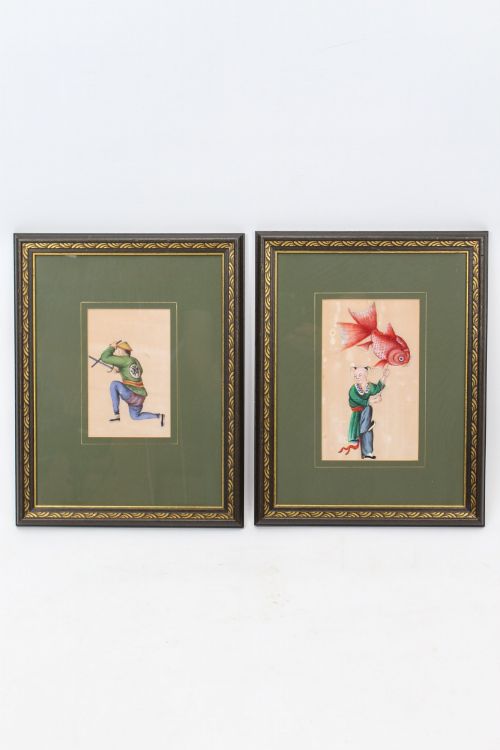


Qing Dynasty Pith Art
These Qing Dynasty pith art pieces are delicate painted works on plant-derived material that capture historical Chinese subjects for collectors today.
Qing Dynasty Pith Art
When you search for qing dynasty pith art, you are looking at fragile historical paintings created primarily during the nineteenth century. These works capture traditional Chinese life, flora, fauna, and maritime vessels for foreign markets.
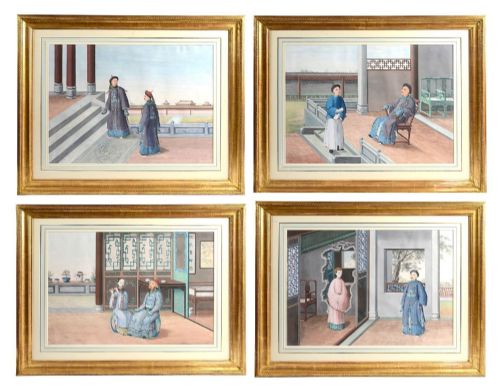
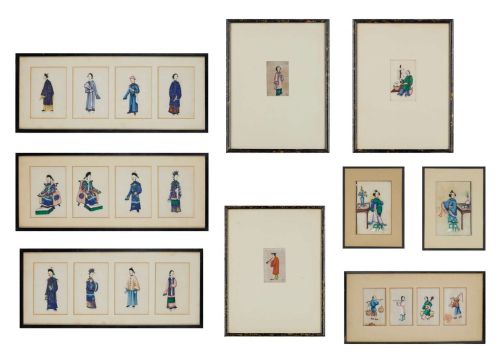
You will most commonly meet framed artwork and mounted watercolours originating from the Chinese Export art tradition. Sets of multiple paintings, ranging from small pairs to larger groups, frequently appear on this page.
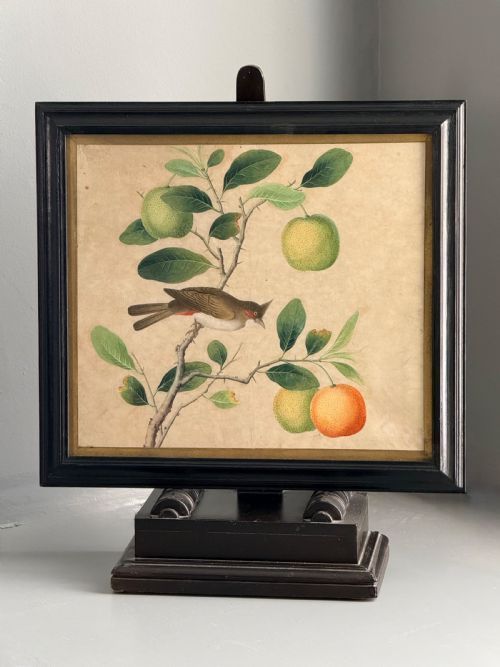
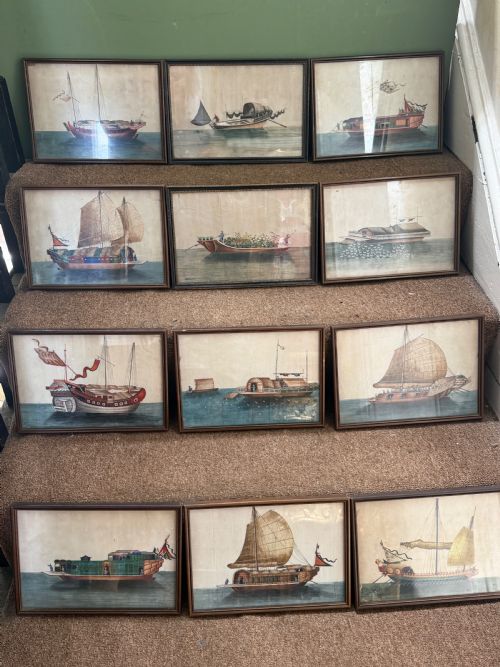
The subjects span figural studies, botanical illustrations of butterflies and insects, and detailed depictions of junks and other ships. Most examples date from the late nineteenth century, alongside occasional earlier eighteenth-century or Regency period pieces.
How they were made
Artists painted these works using gouache and watercolour mediums applied directly onto pith paper, historically known as rice paper. Pith paper comes from the spongy cellular interior of the Tetrapanax papyrifer plant, yielding a velvety, slightly luminous surface that absorbs bright pigments intensely.
Makers often mounted these delicate sheets onto standard paper backing or framed them behind glass within wood and gilt wood frames to protect the fragile organic material from damage.
Historic artists occasionally painted delicate butterflies on pith so lifelike that viewers instinctively reach out to brush them away.
What varies in quality
The standard of execution in the brushwork and the preservation of the vibrant gouache pigments determine the distinction between average and superior examples. Finer pieces display meticulous detail in figures, flora, and ship rigging without fading.
The completeness of original sets, such as groups of twelve or twenty-one paintings, heavily influences desirability among collectors. Original framing and the structural integrity of the underlying pith paper further separate standard items from exceptional survivals.
The Qing Dynasty Pith Art Glossary
- Pith paper
- A delicate painting material made from the pith of the Tetrapanax papyrifer plant rather than pressed rice pulp. It possesses a unique spongy texture that catches watercolour and gouache pigments in a characteristic manner.
- Gouache
- An opaque watercolour medium used extensively on Chinese export paintings to achieve rich, saturated colours. It provides the dense highlights seen on costumes and sails.
- Chinese Export
- Artworks produced in China specifically for Western markets during the Qing dynasty and subsequent periods. These items often combined traditional Chinese subjects with formats suited to European tastes.
- Junk
- A traditional Chinese sailing ship frequently depicted in nineteenth-century export paintings. These vessels appear with characteristic battened sails in maritime watercolours.
- Regency
- A British historical period spanning the early nineteenth century that occasionally aligns with the dating of these imported paintings. Pieces from this era reflect early trade connections.
Qing Dynasty Pith Art: Frequently Asked Questions
What is pith paper made from?
Pith paper is cut from the spongy central pith of the Tetrapanax papyrifer shrub native to southern China. It is not made from rice, despite the older misnomer rice paper.
The material has a cellular structure that gives painted gouache a velvety depth and subtle three-dimensional relief.
Are these paintings Chinese export art?
Most works matching this description were created in workshops in Canton and other treaty ports for Western merchants and travellers. They documented local customs, trades, flora, and fauna for foreign buyers.
This production formed a major part of the nineteenth-century export trade between China and the West.
How do I date these paintings?
Dating relies on costume details, framing styles, and historical records associated with the Canton trade. The majority of surviving examples date from the nineteenth century.
Earlier eighteenth-century pieces are scarcer, while late nineteenth-century and Edwardian examples show distinct stylistic shifts in export production.