




Chinese Export Pith Watercolours
Chinese export pith watercolours are delicate botanical and figural works on spongy pith paper, prized by collectors for their brilliant pigments and intricate detail.
Chinese Export Pith Watercolours
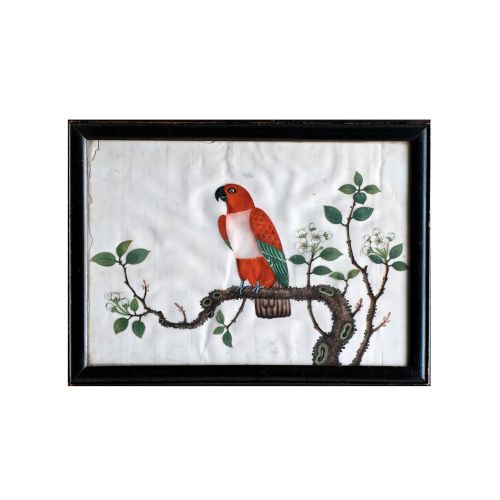
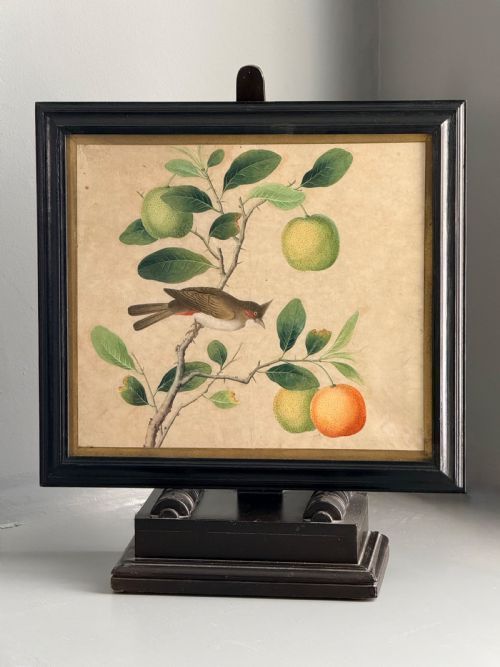
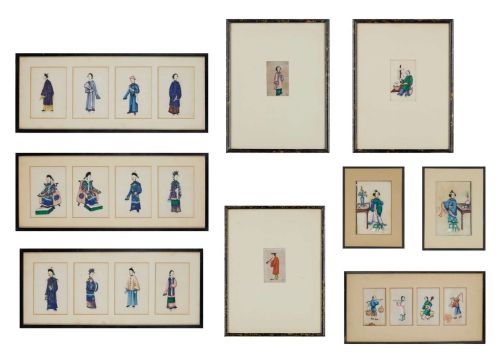
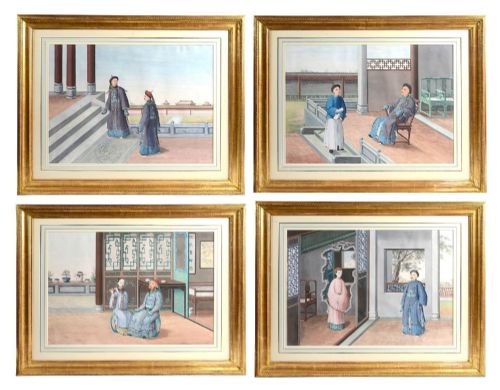
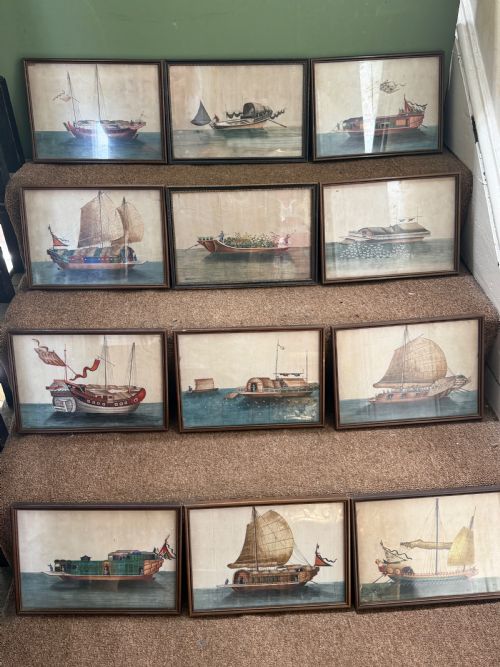
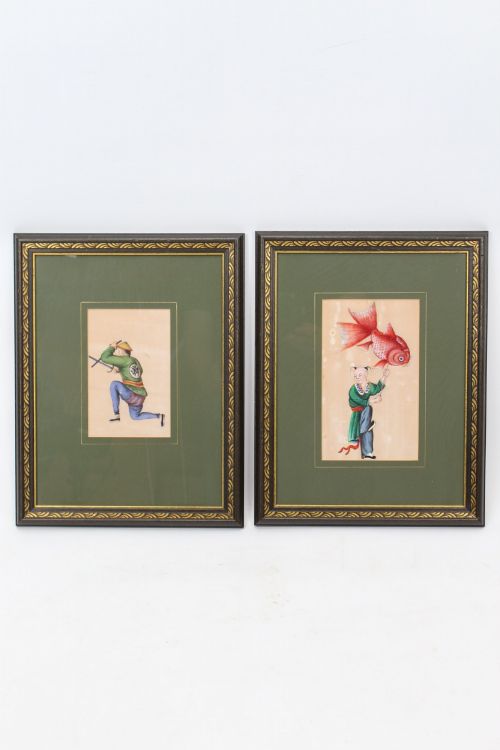
Chinese export pith watercolours are delicate paintings produced during the Qing dynasty for Western markets, capturing trade scenes, flora, and fauna. Buyers searching for Chinese export pith watercolours encounter single framed sheets and larger sets depicting ships, butterflies, and floral subjects.
The material itself is often misnamed as rice paper due to its fibrous, spongy texture, but it actually derives from the pith of the Tetrapanax papyrifer plant. Surviving examples date predominantly from the nineteenth century, ranging from individual cabinet pieces to sets of twelve or twenty-one paintings.
Most pieces seen here originate from nineteenth-century workshops in Canton, created specifically to satisfy European and American demand for exotic souvenirs. They frequently arrive framed in period wood, sometimes retaining their original glass and gilt surrounds.
Materials and technique
Makers sliced the spongy pith of the Tetrapanax plant into thin sheets, creating a delicate, velvety surface that absorbed water-based pigments with exceptional brilliance. This unique substrate gives the colours a luminous, almost velvety depth unlike ordinary paper.
Artists applied gouache and watercolour directly onto the pith paper, utilising opaque pigments that sat on the surface to create vivid depictions of Junks, insects, and figures. The natural cellular structure of the pith reacts uniquely to moisture, requiring great skill to prevent warping while retaining sharp detail.
Chinese Export Pith Watercolours Retail Price Guide 2026
Typical asking prices for chinese export pith watercolours among the pieces listed under this phrase on Sellingantiques today, from the lower quarter to the upper quarter. They describe what is for sale here now, not the wider market.
Nineteenth-century butterfly paintings on pith paper were sometimes arranged so delicately that the insect wings appeared to flutter under shifting candlelight.
Distinctions in quality
Quality rests primarily in the precision of the brushwork and the vibrancy of the remaining gouache pigments, which should remain rich and unfaded. Finer examples display meticulous control in botanical subjects or maritime scenes like Junks, whereas lesser works show hasty execution.
The condition of the fragile pith paper itself dictates value, as the material is highly susceptible to splitting, damp damage, and surface abrasion. Intact sets with strong colour retention and original framing sit firmly at the upper end of the range.
The Chinese Export Pith Watercolours Glossary
- Pith paper
- A delicate material sliced from the pith of the Tetrapanax papyrifer plant, often mistakenly called rice paper. It possesses a spongy texture that accepts water-based pigments with intense colour saturation.
- Gouache
- An opaque water-based medium composed of ground pigments and a binding agent. It provides the dense, matte colour layers seen across nineteenth-century export paintings.
- Qing dynasty
- The final imperial dynasty of China, lasting from sixteen-forty-four to nineteen-twelve. Most export watercolours originate from the latter half of this period.
- Chinese export art
- Goods manufactured in China specifically for Western export markets from the seventeenth to the early twentieth century. These objects combined traditional Chinese craftsmanship with European tastes.
- Junk
- A traditional Chinese sailing ship with battened sails, frequently depicted in nineteenth-century export paintings and maritime artwork.
Chinese Export Pith Watercolours: Frequently Asked Questions
What is pith paper made from?
Pith paper is sliced from the spongy cellular core of the Tetrapanax papyrifer plant, native to southern China and Taiwan. It is entirely unrelated to actual rice.
The unique cellular structure gives the material a velvety texture that absorbs water-based pigments in a way that enhances colour brilliance.
How were these paintings used?
These works were produced in Canton and other treaty ports as commercial art and souvenirs for Western traders, diplomats, and travellers. They were often compiled into bound albums or framed for display in European homes.
Subjects ranged from detailed studies of butterflies and flowers to bustling harbour scenes featuring traditional ships and local figures.
How do I care for pith watercolours?
Protect the paintings from direct sunlight, high humidity, and extreme temperature fluctuations, which can cause the fragile pith paper to crack or warp. UV-filtering glass is essential for preventing the gouache pigments from fading.
Keep the framed works in a stable indoor environment and avoid touching the exposed surface, as the material is exceptionally delicate.
How do I date these watercolours?
Dating relies heavily on stylistic markers, costume details, and the historical context of the Qing dynasty, specifically the nineteenth century. Regency and Edwardian framing styles also offer clues regarding when the works were imported or mounted.
Later nineteenth-century examples often appear in sets, whereas earlier eighteenth-century pieces are considerably scarcer and feature distinct compositional traits.