


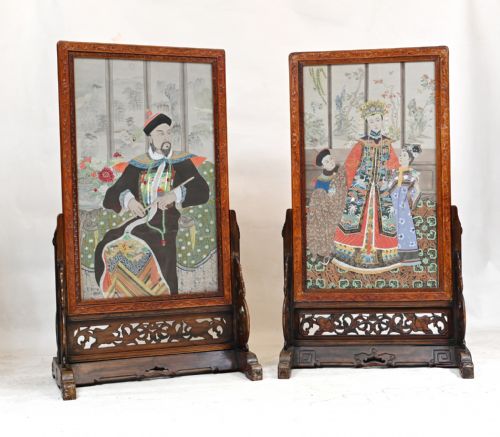


Oriental Artwork Pair
An oriental artwork pair brings together balanced composition and traditional craft, offering a matching duo for decorative walls or table placement.
Oriental Artwork Pair
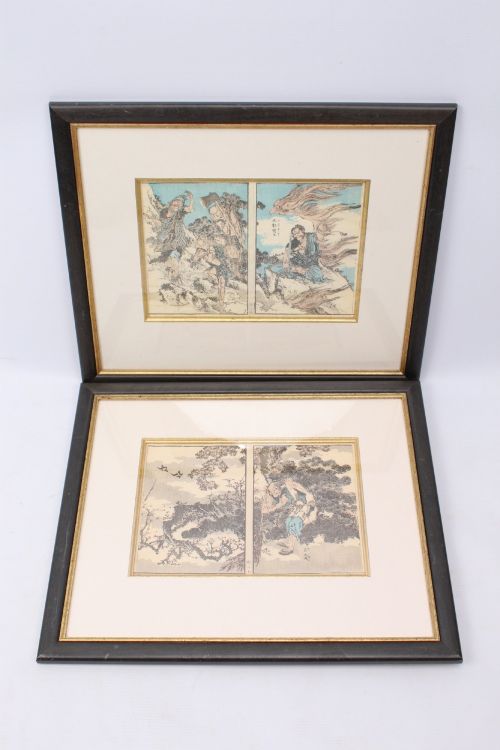
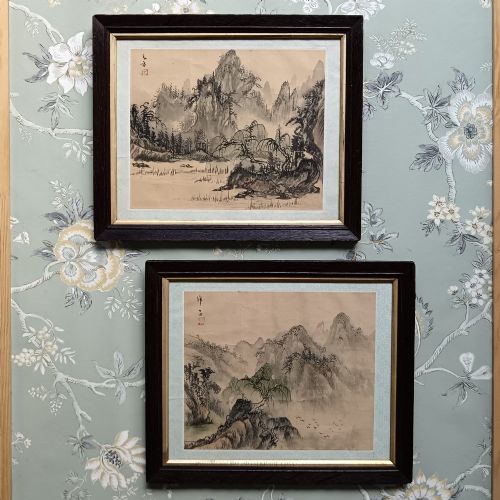
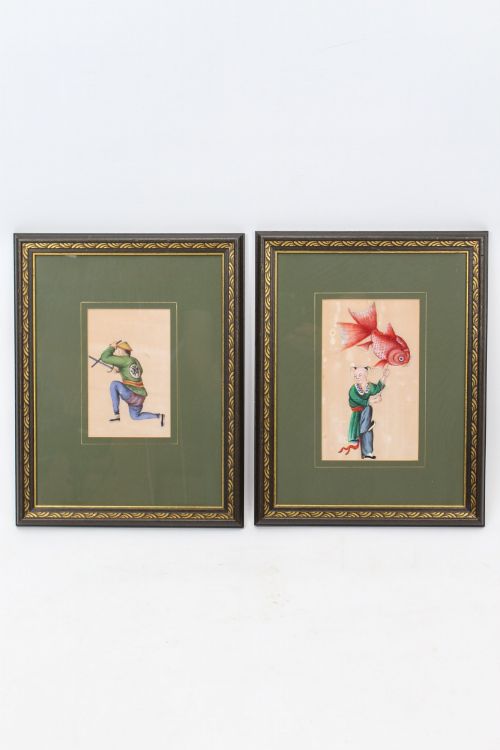
An oriental artwork pair covers matched groupings spanning Chinese and Japanese traditions, taking the form of framed paintings, wall panels, and table screens. Buyers encounter woodblock prints, silk paintings, and pith paper watercolours alongside lacquered panels inlaid with mother of pearl and abalone.
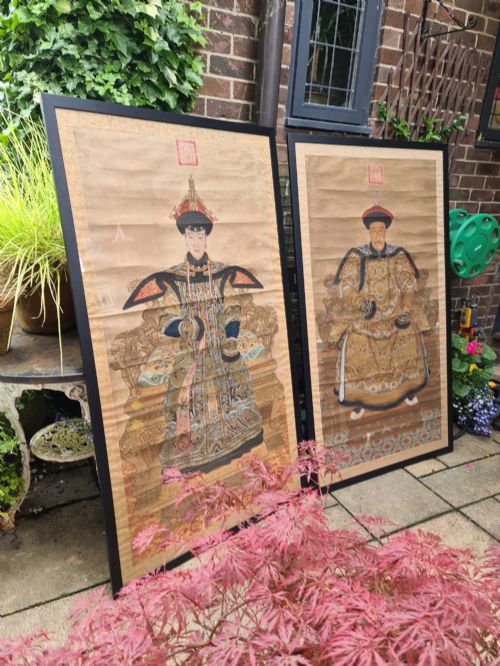
The pieces on this page draw from the eighteenth, nineteenth, and twentieth centuries, reflecting periods such as the Qing Dynasty, Meiji Period, and Edo Period. Traditional Chinese and Japanese motifs dominate the selection, ranging from ancestral scrolls and garden birds to dramatic battle scenes.
Smaller formats like roundels and watercolours sit alongside large framed ancestral scrolls and embroidered panels depicting garden birds and mandarin ducks. Table screens integrate silk woven panels within hardwood frames, demonstrating the varied structural formats available within the category.
Materials and techniques
Makers utilised organic and delicate grounds, painting and printing directly onto silk, paper, pith paper, and glass. Ink, watercolours, and oils provide the pigment, while wood and lacquer serve as structural supports for panels and screens.
Intricate surface decoration relies on mother of pearl and abalone inlay, foilage details, and silk embroidery. Original frames frequently house these works, using hardwoods that complement the traditional subjects depicted.
Listings feature works spanning the eighteenth to the twentieth century, incorporating silk, pith paper, and lacquered wood.
Judging quality in matched pairs
Quality rests on the precision of the brushwork and the preservation of delicate materials like silk and pith paper. The integration of inlay work, such as mother of pearl and abalone, distinguishes finely articulated panels from simpler designs.
The survival of original frames and the harmony between the two pieces determine the strength of the pairing. Depth of detail in subjects like foliage and figures marks the upper tier of execution.
Richard Wilson·Hokusai
The Oriental Artwork Pair Glossary
- Pith paper
- A delicate material formed from the pith of the Tetrapanax papyrifer plant, commonly used for nineteenth-century Chinese watercolours. It possesses a velvety texture that absorbs watercolour pigments with exceptional vibrancy.
- Shan Shui
- A style of traditional Chinese painting that depicts scenery or natural landscapes, using a brush and ink. These works often feature mountains, rivers, and waterfalls rendered through subtle tonal gradations.
- Woodblock print
- A technique for printing text, images or patterns used widely across East Asia. The design is carved into a wooden block, inked, and transferred onto paper.
- Reverse painting on glass
- An art form where the artist paints directly onto the back of a glass pane, viewed from the unpainted front side. This technique produces a luminous finish with high gloss.
- Meiji Period
- A Japanese era lasting from eighteen sixty-eight to nineteen twelve, characterised by the opening of Japan to Western influence alongside the continuation of traditional crafts. Works from this time often show refined detail in panels and prints.
Oriental Artwork Pair: Frequently Asked Questions
How should I hang wall plaques?
These panels require stable wall fixings that match their weight, particularly pieces set in hardwood or heavy lacquer frames. Keep them away from direct sunlight to protect delicate silk, paper, and watercolour pigments from fading.
Positioning the pair at eye level ensures balanced viewing, maintaining the symmetry intended by the maker.
What are ancestral scrolls?
Ancestral scrolls depict portraits of forebears, traditionally displayed to honour family lineages in Chinese culture. They are executed on silk or paper and mounted within protective fabric or wooden frame borders.
These large works form striking focal points, combining historical weight with detailed traditional portraiture.
How do I care for silk paintings?
Silk requires stable environmental conditions with minimal humidity fluctuations to prevent the fabric from warping or degrading. Professional framing under glass shields the delicate textile ground from dust and atmospheric moisture.
Gentle dusting of the outer frame is sufficient, avoiding any direct contact with the painted or embroidered surface.
What is a table screen?
A table screen consists of a decorative panel supported by a wooden stand, traditionally placed on desks or tables in scholar's studios. They serve an ornamental purpose while offering a portable format for detailed artwork.
Examples incorporate silk woven panels or lacquered surfaces within carved hardwood structures.