


Framed Orientalist Artwork
Framed orientalist artwork brings distant landscapes and cultural scenes into interiors through period paintings, watercolours and prints.
Framed Orientalist Artwork
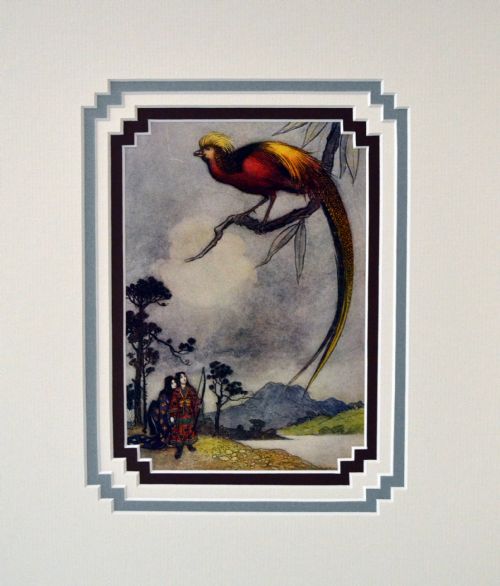
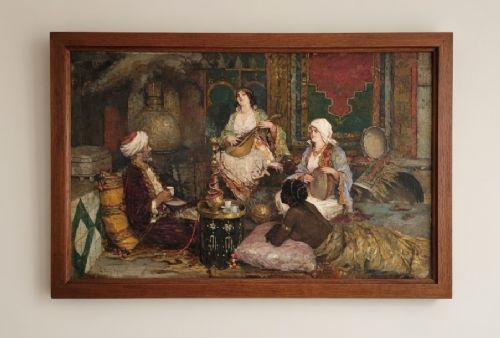
Framed orientalist artwork spans oil paintings, watercolours, gouache, drawings and prints created during the nineteenth and twentieth centuries.
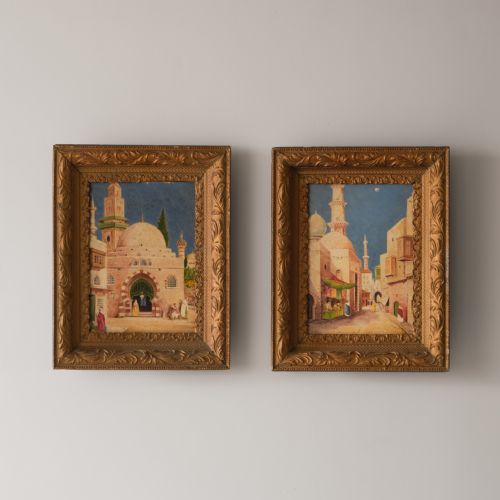
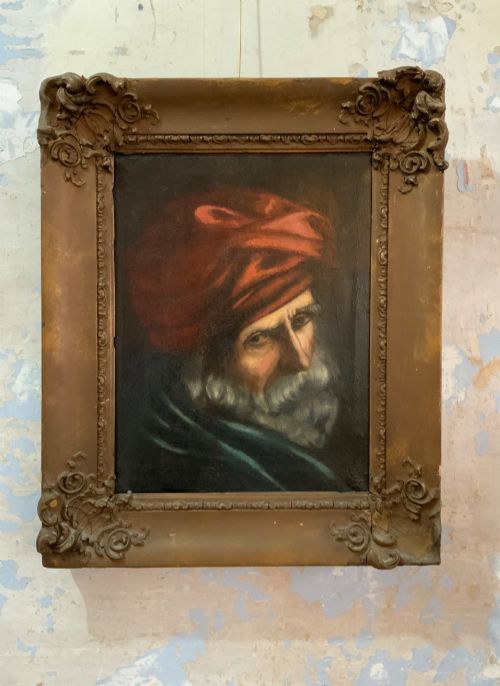
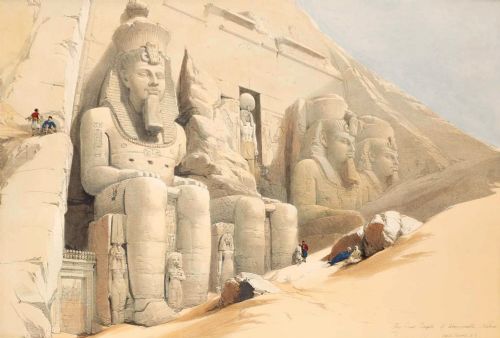
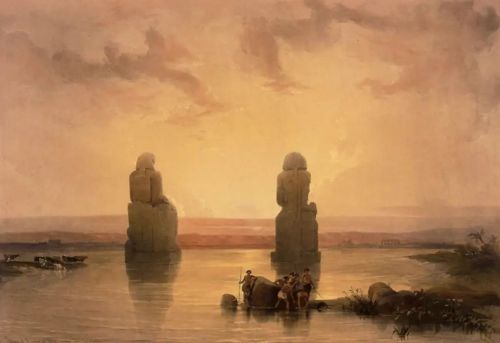
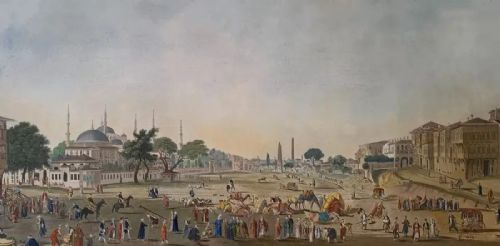
The most common examples on this page are nineteenth-century oil paintings and watercolours depicting Middle Eastern landscapes, portraits of local figures and architectural scenes.
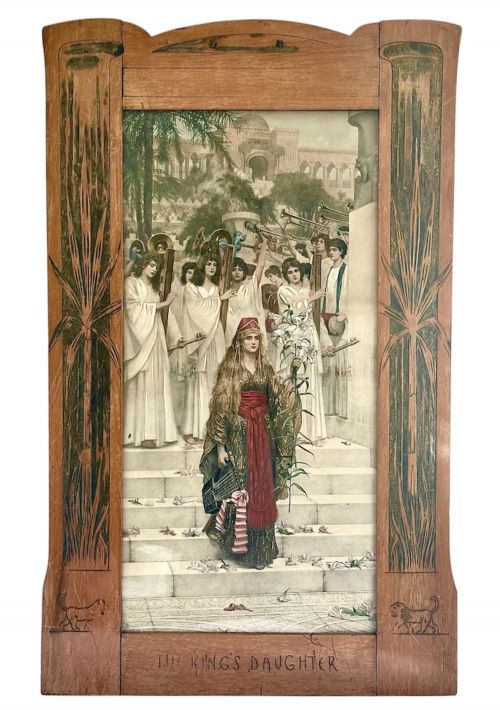
Pieces frequently arrive in period frames made of wood, giltwood or ebonised mouldings that complement the graphic style of the subject matter.
How they were made
Artists worked primarily with oil paint on canvas, board or panel, and applied watercolours, gouache, charcoal and ink onto paper.
Framing materials combined traditional wood joinery with gilt or ebonised finishes to protect the fragile surfaces of paper, canvas and board.
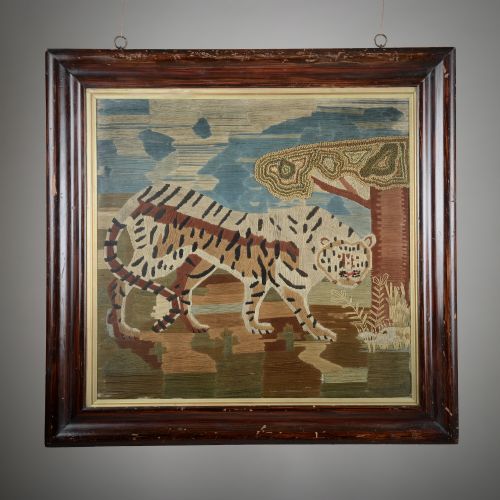
A wool work tiger watches over the collection.
What varies in quality
Quality rests in the precision of brushwork, draughtsmanship and the artist's ability to render light and atmosphere within the composition.
The sophistication of the secondary support, particularly the choice of period framing and the stability of the canvas or paper, separates standard decorative pieces from finer examples.
David Roberts·Warwick Goble·Edwin Lord Weeks·Otto Pilny·Abdul Kadir Al Rassam
The Framed Orientalist Artwork Glossary
- Orientalism
- Artistic representation of Middle Eastern, North Asian and East Asian subjects by Western artists. This style dominated much of the nineteenth and early twentieth centuries.
- Gouache
- An opaque water-based paint that dries to a matte finish. It is often combined with watercolour on paper.
- Encaustic
- A technique involving heated beeswax mixed with coloured pigments. The resulting mixture is applied to canvas or panel.
- Photogravure
- A printmaking process that produces photographic images from an etched copper plate. It creates continuous tones similar to a photograph.
Framed Orientalist Artwork: Frequently Asked Questions
What periods do these artworks cover?
The selection spans from the nineteenth century through the mid-twentieth century, including Victorian and Edwardian examples.
Production methods and subjects evolved across these decades while maintaining a focus on regional scenes and portraits.
How should I hang these frames?
Display the pieces away from direct sunlight to protect watercolours, gouache and oil pigments from fading over time.
Ensure wall fixings match the weight of the timber, giltwood or ebonised frames holding the canvas or board.
Are the frames original to the pieces?
Many works retain period frames made of wood, giltwood or ebonised finishes that match the era of the artwork.
Checking the backing boards and joinery helps determine if the framing dates from the same period as the painting.
What mediums were used by the artists?
Artists utilised oil paint, watercolours, gouache, charcoal and lithography on supports such as canvas, paper, board and panel.
Some compositions also incorporate mixed media techniques like wool work or encaustic applications.