


Antique Chinese Pith Paintings
Antique chinese pith paintings are delicate works on natural cellular plant material, capturing trade era subjects for Western collectors.
Antique Chinese Pith Paintings
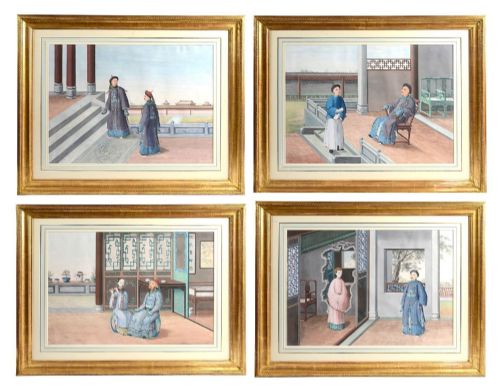
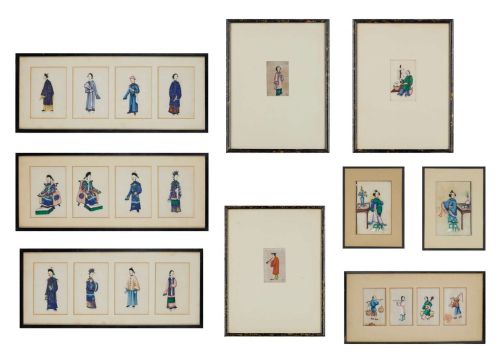
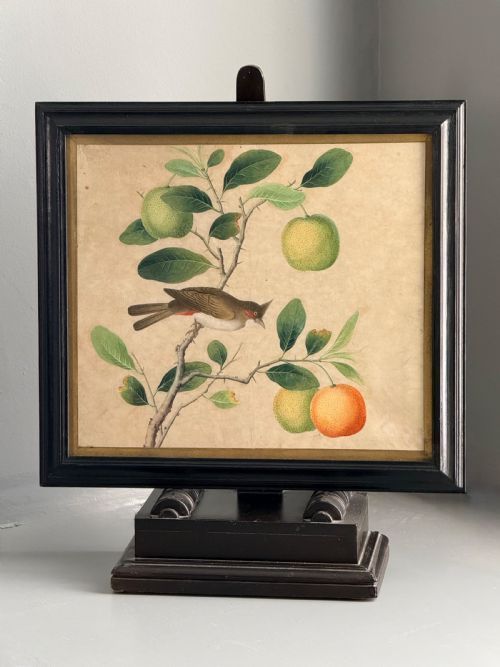
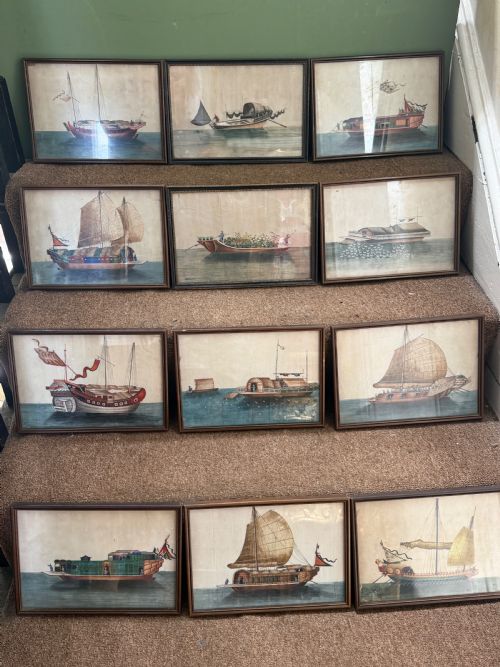
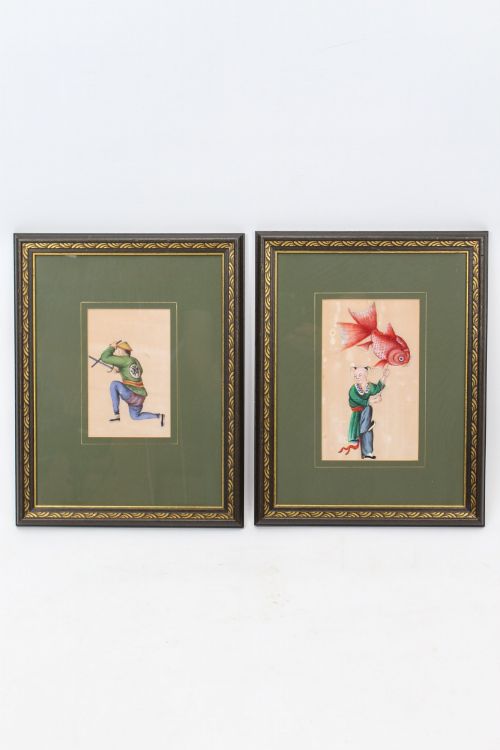
When you search for antique chinese pith paintings, you encounter delicate works created during the Qing dynasty for the export market. These artworks portray traditional subjects such as figures, dignitaries, junks, birds, and floral studies.
The most common format you will meet on this page is the nineteenth century single sheet or framed set, executed in vibrant gouache and watercolour. They capture a vanished world of Chinese export art intended specifically for European and British visitors.
The material itself derives from the pith of the Tetrapanax papyrifer plant, giving the surface a unique velvety texture that absorbs water-based pigments with remarkable brilliance.
How they were made
The base material is cut from the spongy interior of pith paper stems, yielding a fragile, absorbent sheet that resembles thin cork or fine paper. Artists applied opaque gouache and watercolour directly to this delicate surface without preliminary sketches.
Surviving examples frequently utilise wood frames, sometimes with glass protection, while older pieces might incorporate silk borders or paper mounts. The pigments remain remarkably vivid due to the way pith fibres hold colour pigments on the surface rather than absorbing them deeply.
Listings feature works spanning the eighteenth century, Regency period, nineteenth century, nineteen hundred, and Edwardian era.
What varies in quality
The distinction between ordinary and superior pieces rests on the precision of the brushwork and the complexity of the composition. Group studies depicting numerous figures or detailed botanical subjects demand greater skill than simpler single flower motifs.
Condition plays a central role in valuation, as pith paper is inherently fragile and prone to cracking or moisture damage. Intact sets with strong, original colour retain greater visual impact than scattered, faded single sheets.
The Antique Chinese Pith Paintings Glossary
- Pith paper
- A delicate material sliced from the spongy pith of the Tetrapanax papyrifer plant rather than pressed from wood pulp or rags. It possesses a characteristic velvety texture.
- Gouache
- An opaque water-based paint composed of pigment, water, and a binding agent such as gum arabic. It provides the dense, vibrant colour seen in export paintings.
- Qing dynasty
- The final imperial dynasty of China, spanning from sixteen forty-four to nineteen twelve. Most export paintings date from the later decades of this period.
- Chinese export art
- Goods manufactured in China specifically for Western markets, encompassing paintings, porcelain, and textiles. These items blended traditional Chinese techniques with European tastes.
- Junk
- A traditional Chinese sailing vessel frequently depicted in nineteenth century export watercolours. These ships appear alongside other maritime subjects in framed sets.
Antique Chinese Pith Paintings: Frequently Asked Questions
What is pith paper?
Pith paper is not true paper at all, but thin slices of spongy plant cellular tissue. Artists in nineteenth century China used it as a luminous surface for bright gouache colours.
Because of its cellular structure, it gives painted figures and butterflies a velvet-like depth that standard paper cannot replicate.
Are they all from the nineteenth century?
The vast majority originate from the nineteenth century during the height of the Qing dynasty export trade. Occasional pieces date to the eighteenth century or early twentieth century.
Stylistic details and framing clues help distinguish the earlier Regency era productions from later Edwardian survivals.
What subjects do they show?
The common subjects include official dignitaries, domestic figure scenes, botanical studies of flowers, and detailed illustrations of butterflies and insects. Maritime scenes featuring Chinese junks also appear frequently in matched sets.
These varied themes were specifically produced to satisfy Western curiosity about daily life and natural history in China.