




Vintage Chinese Wall Art
Vintage chinese wall art brings centuries of refined handwork, delicate silk, and polished wood directly into your home.

Vintage Chinese Wall Art
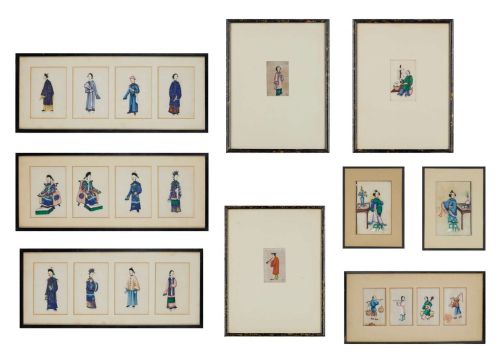
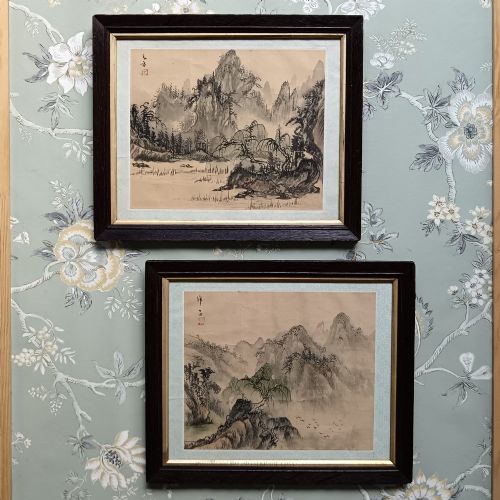
Vintage chinese wall art encompasses framed paintings, embroidered textiles, carved wooden panels, and reverse glass works dating from the nineteenth century through the mid-twentieth century. Buyers searching for these pieces encounter traditional subjects such as Shan Shui landscapes, ancestor portraits, and garden birds rendered with meticulous care.
The selections span distinct historical epochs, notably the Qing dynasty and the Republic period, alongside export styles created for Western markets. Framed scrolls, embroidered panels, and porcelain plaques dominate the range, offering diverse textures and visual depth for interior display.
How they were made
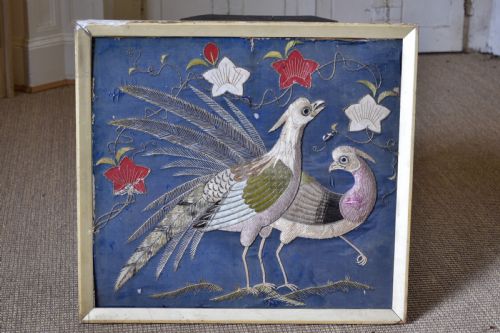
Artisans employed natural materials including silk, paper, pith, and wood, applying ink, watercolour, pigment, and gold leaf by hand. Many textiles feature intricate needlework using fine silk threads, while panels combine carved wood with mother-of-pearl and abalone inlay.
Framing often utilised traditional joinery or period mouldings to protect fragile surfaces like reverse glass paintings and delicate embroideries. Pigments were derived from minerals and plants, ensuring lasting colour across silk scrolls and oil paintings.
Vintage Chinese Wall Art Retail Price Guide 2026
Typical asking prices for vintage chinese wall art among the pieces listed under this phrase on Sellingantiques today, from the lower quarter to the upper quarter. They describe what is for sale here now, not the wider market.
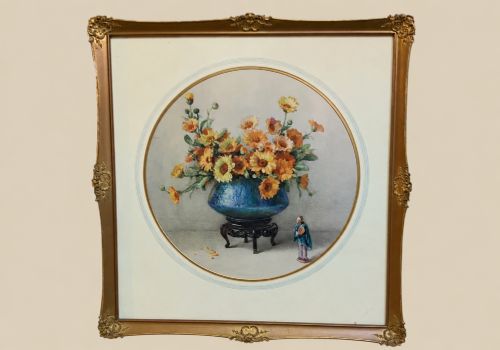
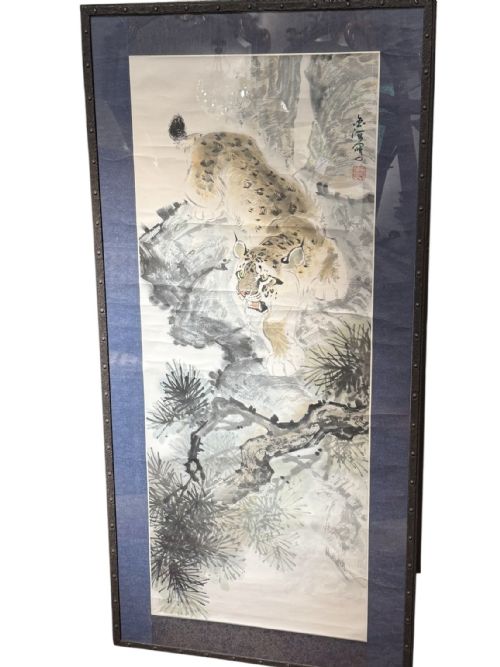
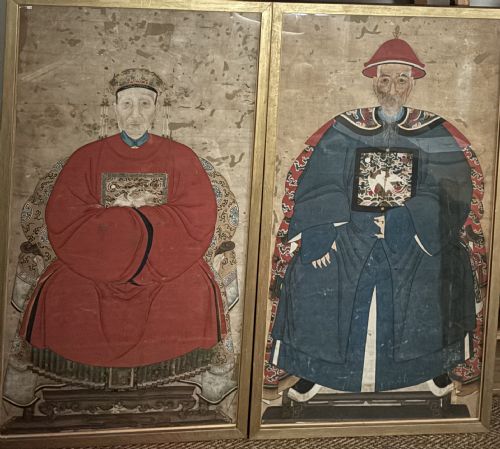
Snow leopards and maritime steam ships occasionally share wall space with traditional mandarins.
What varies in quality
Quality rests upon the precision of the brushwork, the tightness of the silk embroidery stitches, and the crispness of the wood carving. Pieces executed during transitional periods or by master workshops display superior anatomical accuracy in figures and animals, along with more harmonious compositions.
The choice of ground material and mounting also dictates value, with original frames, intact silk mounts, and unblemished reverse glass surfaces marking the upper echelon of craftsmanship. Lesser examples show fading, clumsy restoration, or coarser execution in repetitive decorative motifs.
The Vintage Chinese Wall Art Glossary
- Shan Shui
- Traditional Chinese landscape painting style featuring mountains, rivers, and waterfalls. These works capture natural harmony through disciplined ink and brush techniques.
- Pith painting
- Watercolour artwork executed on the spongy inner pith of the Tetrapanax papyrifer plant. These delicate sheets were widely produced in the nineteenth century for export.
- Reverse painting on glass
- Technique where the image is painted directly onto the back of a glass panel and viewed from the front. This method imparts a brilliant, glossy finish to the subject.
- Ancestor portrait
- Formal depiction of family forebears created for veneration and ancestral halls. They record official attire, rank badges, and seated postures with striking symmetry.
- Chinoiserie
- European decorative style reflecting Chinese artistic influences. It reinterprets traditional motifs through Western design sensibilities.
Vintage Chinese Wall Art: Frequently Asked Questions
What is a pith painting?
Pith paintings are delicate watercolours created on a spongy plant material harvested from the pith plant.
Originating largely in the nineteenth century for trade, they possess a unique luminescent quality that mimics ivory.
How do I date a carved wooden wall panel?
Dating relies on the depth of the carving, tool marks left on the reverse, and the specific iconography used.
Nineteenth-century Qing examples often feature intricate openwork and naturalistic asymmetry compared to later decorative items.
Are reverse glass paintings fragile?
Reverse glass paintings are structurally robust due to the protective glass surface, but the paint layer behind remains vulnerable to flaking.
Avoid hanging them in damp environments or areas subject to thermal shock.
What subjects are typical in these works?
Common subjects include scholarly landscapes, exotic birds among plum blossoms, imperial figures, and maritime scenes.
Each motif carried symbolic meaning relating to longevity, scholarly pursuits, or official status.