
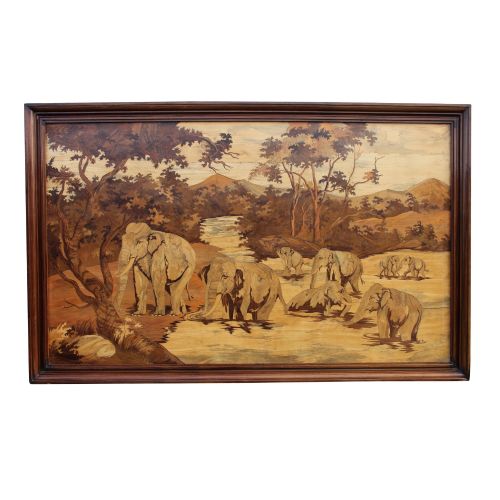
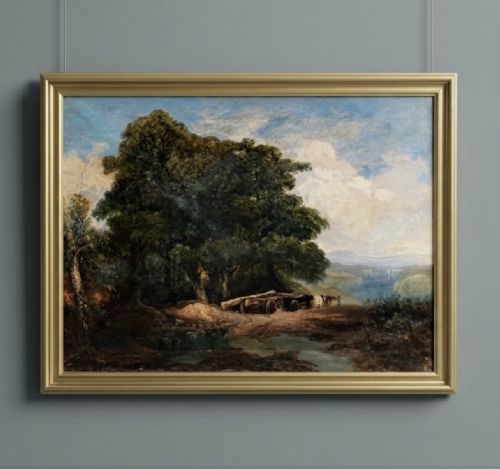

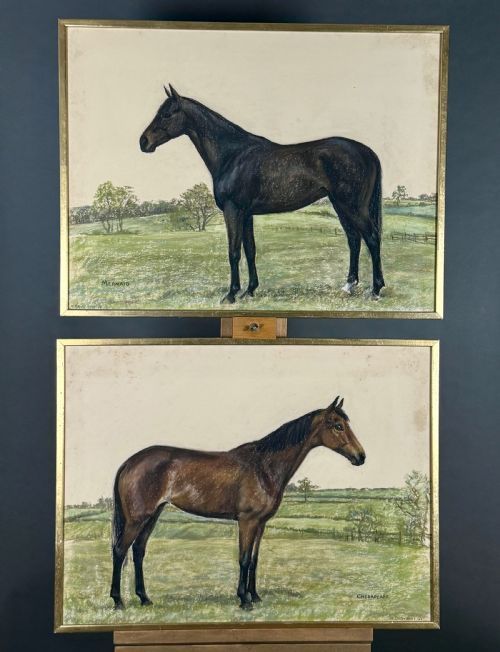
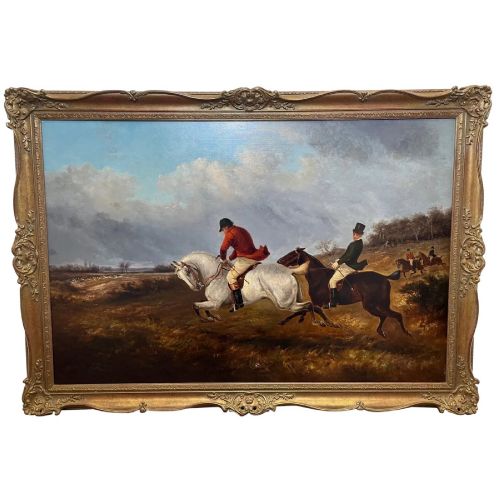
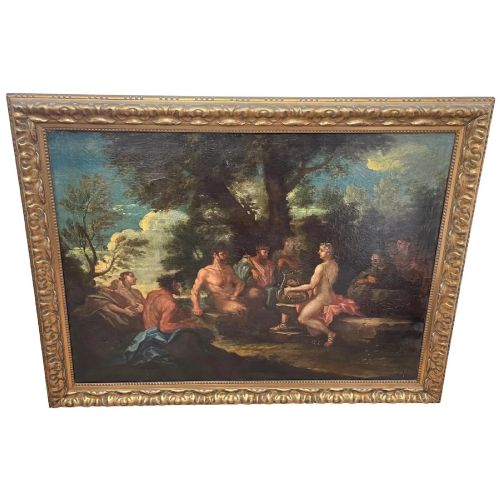
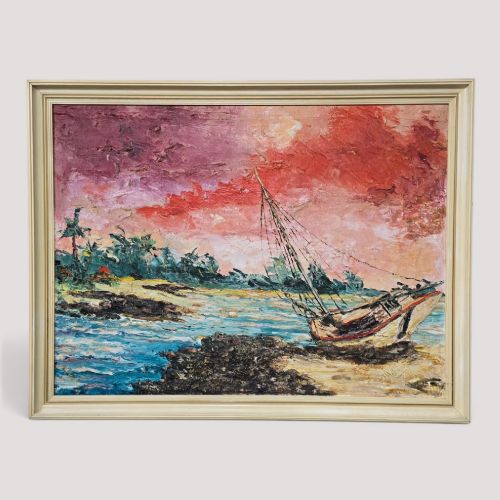
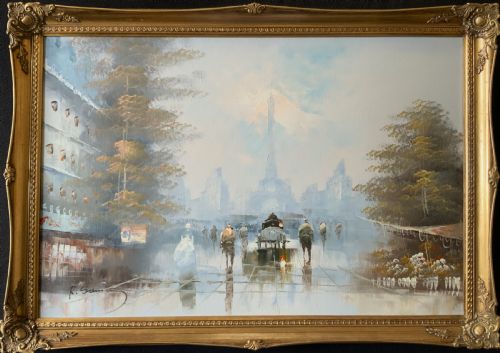

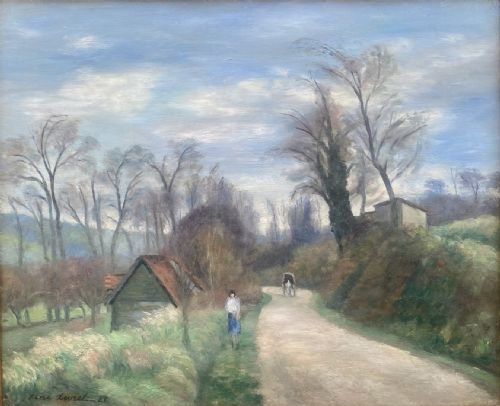


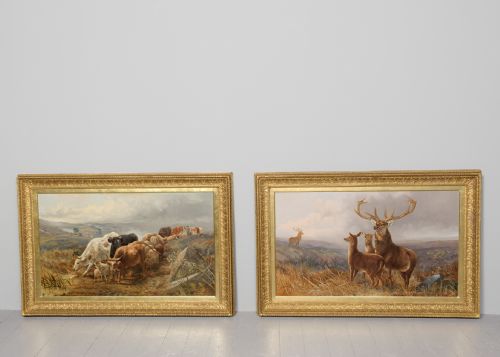
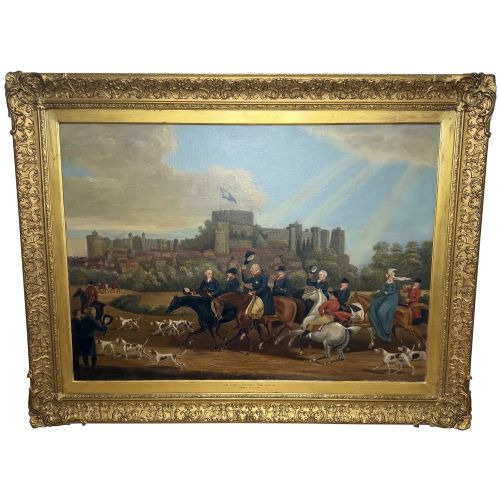
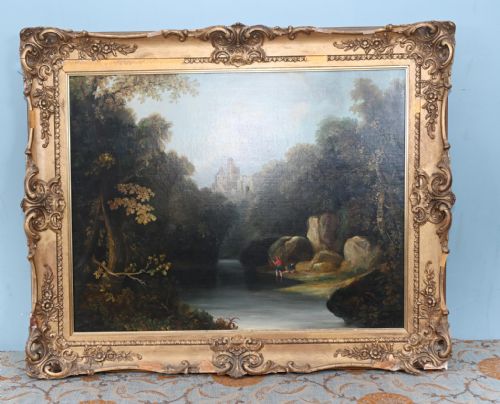
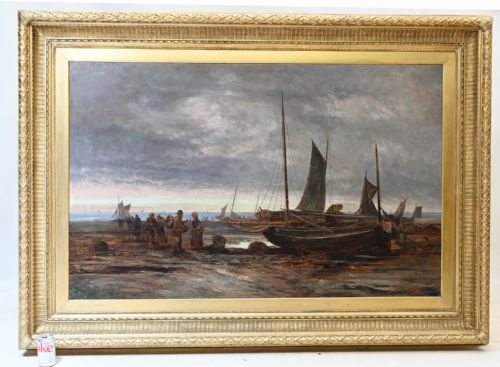
Large Framed Landscape Art
Large framed landscape art brings expansive rural scenes and cityscapes into a room, framed to define the view.

Large Framed Landscape Art
Large framed landscape art encompasses substantial paintings, watercolours, prints, and panels depicting natural views, rivers, and coastal scenes. Buyers looking for large framed landscape art find works spanning from the eighteenth century through the nineteenth century and into the mid-twentieth century.
How these works were made
Artists painted primarily in oil on canvas or applied watercolour and pastel to paper, utilising oil paint, gesso, and ink. Canvases were stretched across wooden frames and secured within heavier wood or giltwood surrounds.
Frames often incorporated moulded gesso ornamentation to create ornate gilded borders that complemented the scale of the artwork within.
Listings feature works created across three centuries, spanning the eighteenth, nineteenth, and twentieth centuries in oil, watercolour, and pastel.
What varies in quality
Quality rests in the handling of light, brushwork precision, and the integrity of the original frame. Works by recognised nineteenth-century or mid-century painters demonstrate superior draughtsmanship and atmospheric depth compared to unsigned decorative pieces.
The preservation of the canvas, the stability of the wood or gesso frame, and the clarity of the medium distinguish finer examples from standard decorative works.
Richard Sebastian Bond·Donald Grant·Thomas Smythe·Rene Levrel·Erich Mercker·Robert Cleminson·Joseph Knight·John Moxon·Alexandre Le Bihan·William Henry Mander·Thomas Sidney Cooper·Gabriel Dauchot·Thomas Bromley Blacklock·Stuart Lloyd·Herbert Royle·William Littlejohn·David Cox Jnr·Carl Adolf Mende·Herbert Charles Nye·Kevin Platt
The Large Framed Landscape Art Glossary
- Giltwood
- Wood carved and coated with gold leaf or a gold-coloured finish. This material is frequently found on nineteenth-century picture frames.
- Gesso
- A plaster-like mixture applied to wood frames to create a smooth surface for moulding decorative details. It forms the base for subsequent gilding or painting.
- Canvas
- Heavy woven fabric used as a surface for oil painting. It is typically stretched tightly over a wooden stretcher frame.
- Pastel
- A dry medium made from powdered pigment and a binder, used to create coloured drawings on paper. Pastels require framing behind glass to prevent smudging.
- Impasto
- Paint applied thickly to a canvas, leaving visible brush or palette knife marks that stand out from the surface.
Large Framed Landscape Art: Frequently Asked Questions
How do I hang a heavy framed landscape?
Heavy works require secure picture hooks fixed directly into wall studs or solid masonry using appropriate wall plugs.
Ensure the hanging wire or brackets on the back of the heavy wood or gilt frame match the weight distribution of the piece.
Are these frames original to the artwork?
Many nineteenth and twentieth-century pieces retain their original wood or giltwood frames, which show appropriate signs of age.
Some works have been reframed over time to suit contemporary interior tastes or to protect vulnerable edges.
How do I clean an oil painting?
Dust surfaces gently with a soft, dry brush or cloth without applying pressure to the canvas or paint layer.
Professional conservators should handle deeper cleaning of discoloured varnish or accumulated grime on oil paintings.
What lighting suits these large landscapes?
Position pieces away from direct, harsh sunlight to prevent fading of watercolours, pastels, and oil pigments.
Gentle picture lights or indirect ambient room lighting help reveal the depth and brushwork without causing glare on the glass or varnish.