





Vintage Oriental Wall Decor
These vintage oriental wall decor pieces bring distinctive global craftsmanship into a room, spanning carved wood panels and hand-painted plates.

Vintage Oriental Wall Decor
Vintage oriental wall decor encompasses a diverse range of hanging objects designed to adorn interior vertical surfaces, drawing from Asian and global traditions. Buyers seeking vintage oriental wall decor will encounter items originating from multiple periods, notably the nineteenth and early twentieth centuries. These span several distinct forms, including decorative plates, mirrors, framed art, and carved panels.
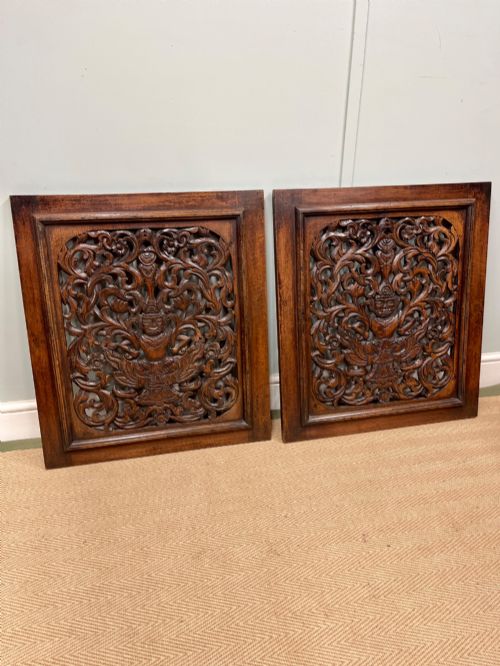
The assortment of items associated with vintage oriental wall decor ranges from Japanese Imari porcelain chargers to Edwardian Chinoiserie mirrors and Burmese wood panels. Pieces from this category often incorporate traditional motifs such as garden birds, phoenixes, and landscape scenes executed in various media. Regional styles represented in the selection include Meiji era Japanese works and Anglo-Indian carving traditions.
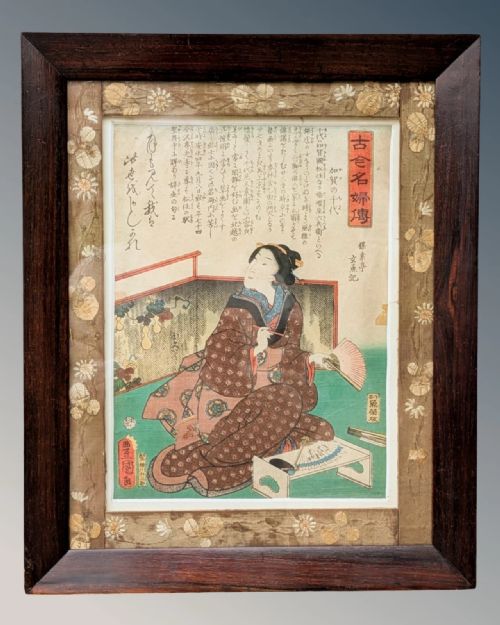
The physical form of vintage oriental wall decor varies from roundels and plaques to large oil paintings and embroidered textiles. Framing techniques frequently complement the visual subjects, utilising rosewood frames, silk brocade mounts, and lacquered surfaces. Each piece contributes a distinct cultural aesthetic derived from specific historic manufacturing centres.
How they were made
Makers of vintage oriental wall decor utilised a specific palette of materials including wood, porcelain, brass, glass, and enamel. Wood is frequently carved or lacquered, as seen in panels, roundels, and mirror frames from various periods. Porcelain and brass serve as the primary substance for decorative plates, chargers, and plaques.
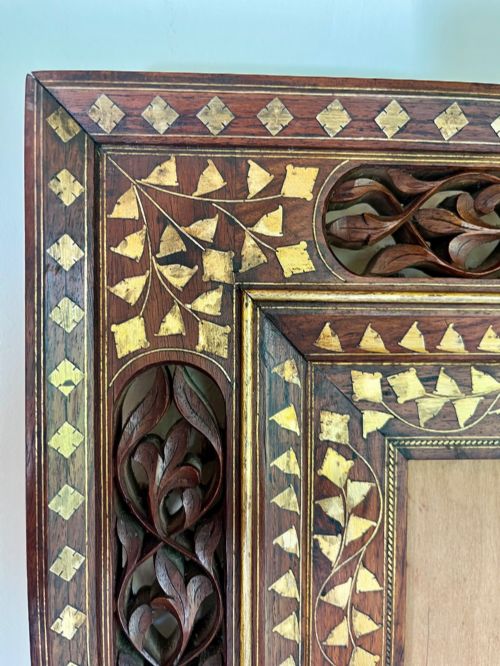
Surface decoration relies on techniques such as hand-painting, reverse glass painting, woodblock printing, and embroidery with silk thread. Gold leaf is also applied to enhance specific design elements on panels and plaques. Enamel work, notably cloisonne, provides intricate surface detail on metal plaques.
Object forms include oil paintings, embroidered textiles, aneroid barometers, and carved wooden mirror frames.
What varies in quality
The standard of vintage oriental wall decor depends heavily upon the precision of the hand execution, whether in the brushwork of a silk painting, the intricacy of an embroidered garden scene, or the carving depth of a wooden panel. Finely detailed cloisonne work and carefully preserved lacquer surfaces distinguish superior examples from simpler decorative output.
Material selection and mounting contribute significantly to overall execution, with higher quality pieces employing rosewood frames, silk brocade mounts, and substantial brass or bronze components. The fidelity of traditional motifs and the preservation of original pigments across glass, porcelain, and textiles govern the relative standing of individual items.
The Vintage Oriental Wall Decor Glossary
- Imari
- A style of Japanese porcelain featuring a distinctive palette of underglaze blue and reddish-orange, often highlighted with gold. These plates and chargers were produced for both domestic use and export.
- Chinoiserie
- European artistic styles that reflect Chinese artistic influences, prevalent in British interior design during periods like the Edwardian era. It frequently manifests in lacquered mirror frames and decorative furniture.
- Cloisonne
- An enamelling technique where metal wire is soldered to a base to form compartments, which are then filled with coloured enamel paste and fired. This method creates detailed pictorial plaques.
- Roundel
- A circular panel or decorative motif used in various forms of wall art and architectural ornamentation. These wooden or lacquered pieces are designed specifically for suspension.
- Woodblock print
- A technique for printing text, images or patterns used widely in East Asia. In this selection, such prints are frequently completed with silk brocade mounts and rosewood frames.
Vintage Oriental Wall Decor: Frequently Asked Questions
How do I hang a heavy charger?
Heavy ceramic chargers and brass plates require secure wall fixings rated for their specific weight, usually involving specialised wall brackets or spring-loaded plate hangers designed to distribute the load evenly.
Ensuring the fixing engages directly with wall studs or uses appropriate masonry anchors prevents slipping and protects the piece from accidental falls.
Where should I place wall panels?
Wall panels and carved wooden plaques suit prominent vertical spaces such as hallways, living room focal points, or above mantelpieces where their detailed carving can be appreciated at eye level.
Keeping them away from direct heat sources and strong sunlight preserves the wood and prevents lacquer or paint degradation over time.
How do I clean antique silk embroideries?
Antique silk embroideries and textile pieces require minimal intervention, generally limited to very gentle surface dust removal using a soft brush or low-suction vacuum through a protective mesh.
Moisture and chemical cleaners should be avoided entirely to prevent water staining and damage to delicate silk threads and historic backing materials.
What is an Imari plate?
An Imari plate is a Japanese porcelain item characterised by hand-painted underglaze blue and iron red designs, frequently accented with gold leaf. These decorative plates were made in large quantities for export.
Collectors look for crisp brushwork and well-preserved colours that indicate the age and origin of the piece within the Meiji period or earlier.