



Chinese Ancestor Painting
These Chinese ancestor painting examples bring dignified presence to a room, spanning Qing Dynasty and Republic Period works on silk, paper, and glass.
Chinese Ancestor Painting
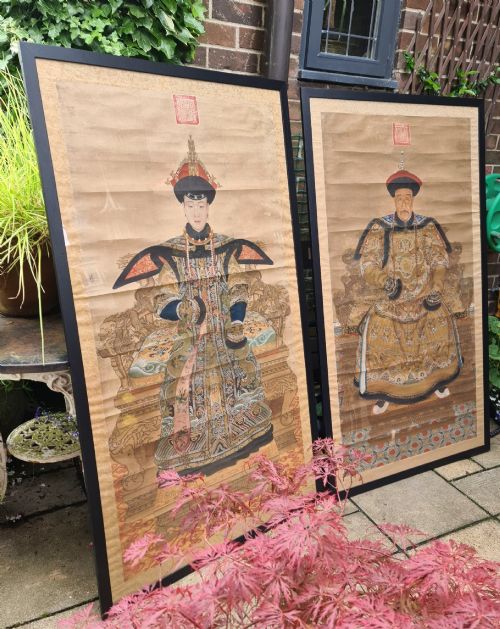
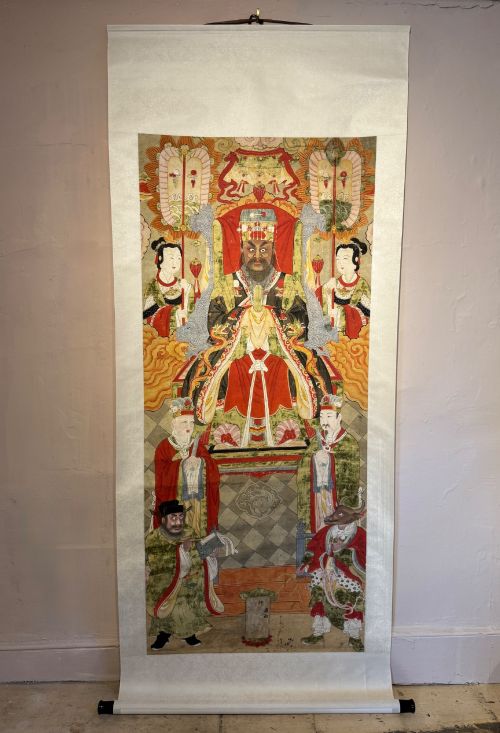
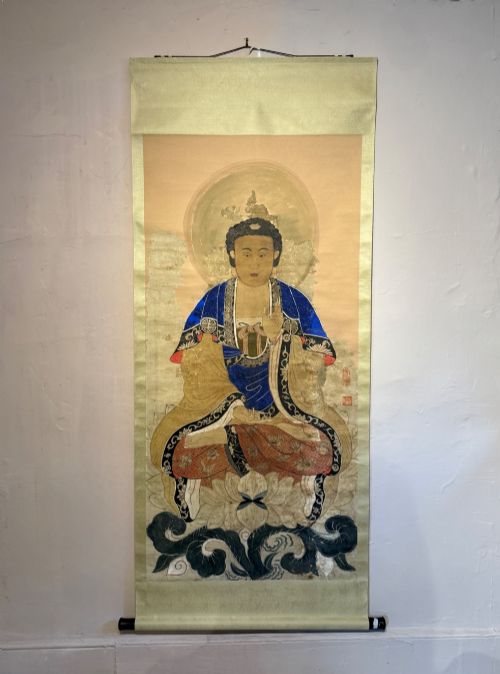
When you search for chinese ancestor painting, you are looking at formal portraits and scrolls depicting revered forebears, scholars, emperors, and immortals. The pieces on this page span the nineteenth century and the early twentieth century, including the Qing Dynasty and the Republic Period.
You will encounter framed artworks, hanging scrolls, and reverse glass paintings executed in pigment, ink, and watercolour. These works range from individual ancestral portraits and pairs to large group portraits and framed porcelain plaques.
The subjects wear traditional robes and sit in formal postures, reflecting ancestral veneration and scholarly status. Many retain their original frames or mountings, preserving the historical integrity of the piece.
How they were made
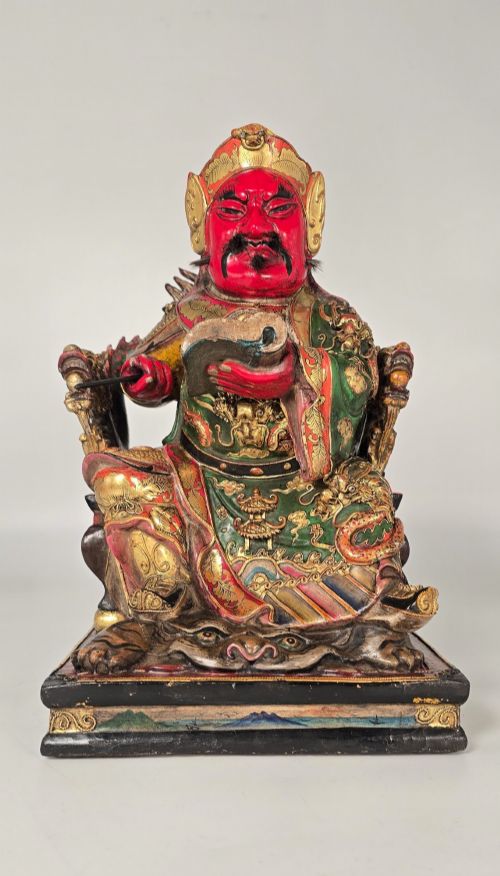
Framed pieces and scrolls utilise wood for structural mounting and framing, sometimes incorporating carved lacquer or gesso details. Reverse glass paintings require the artist to paint directly onto the rear of the glass pane so the finished image appears correctly when viewed from the front.
Chinese Ancestor Painting Retail Price Guide 2026
Typical asking prices for chinese ancestor painting among the pieces listed under this phrase on Sellingantiques today, from the lower quarter to the upper quarter. They describe what is for sale here now, not the wider market.
Listings feature periods from eighteen fifty to nineteen thirty, using materials including silk, paper, glass, pigment, ink, lacquer, and gesso.
What varies in quality
The distinction between average and exceptional works lies in the delicacy of the brushwork and the vibrancy of the pigments. Superior examples display finely rendered facial expressions and intricate detailing on ceremonial garments.
The condition of the original silk or paper support and the presence of original frames or scrolls significantly influence the character of the piece. Works that retain bright, vibrant colours without excessive degradation demonstrate higher artistic preservation.
The Chinese Ancestor Painting Glossary
- Qing Dynasty
- The last imperial dynasty of China, lasting from sixteen forty-four to nineteen twelve. Many ancestral portraits date from the later years of this period.
- Republic Period
- The era in Chinese history following the fall of the Qing Dynasty in nineteen twelve, extending through the early decades of the twentieth century.
- Reverse Glass Painting
- An artistic technique where the painting is executed on the reverse side of a glass sheet and viewed from the front.
- Scroll Painting
- A traditional Asian painting format designed to be rolled up when not displayed, typically mounted on silk or paper backings.
- Pigment
- Finely powdered colour material mixed with a binder to create the opaque paints used on these scrolls and portraits.
- Gesso
- A plaster mix used in framing or surface preparation to provide a smooth base for carved wood and decorative elements.
Chinese Ancestor Painting: Frequently Asked Questions
What is a chinese ancestor painting?
These are formal portraits commissioned by families to honour deceased forebears and ensure their continued presence in the household.
They depict subjects in official or scholarly attire, reflecting the social standing and lineage of the family.
How were these paintings displayed?
Ancestral portraits were traditionally hung in family halls or ancestral shrines during ceremonial occasions and death anniversaries.
Today, they are framed and hung as striking wall art in domestic interiors.
How do I identify the period?
Dating relies on stylistic markers associated with the Qing Dynasty and the Republic Period, alongside materials like silk and paper.
Nineteenth-century works often feature distinct pigment wear and traditional scroll mountings compared to later twentieth-century examples.
Are all pieces painted on paper?
No, while paper and silk are the primary supports, the evidence also includes works on glass and porcelain plaques.
Each material requires different handling and framing methods to ensure its preservation over time.