



Blue Chinese Artwork
Blue chinese artwork brings together centuries of painted silk, pith paper and ink on paper capturing landscapes, maritime scenes and traditional figures.
Blue Chinese Artwork
Blue chinese artwork encompasses framed paintings, textile art, scrolls and decorative plaques created across the eighteenth, nineteenth and twentieth centuries. These pieces reflect diverse cultural intersections, including China Trade works intended for Western markets and traditional Chinese compositions.
The selections on this page range from early oil paintings and gouache sets to hand-sewn silk embroidery panels and pith paper paintings. Buyers encounter varied formats such as albums of sketches, wall art and framed marine views depicting ships on the Pearl River.
Materials and techniques
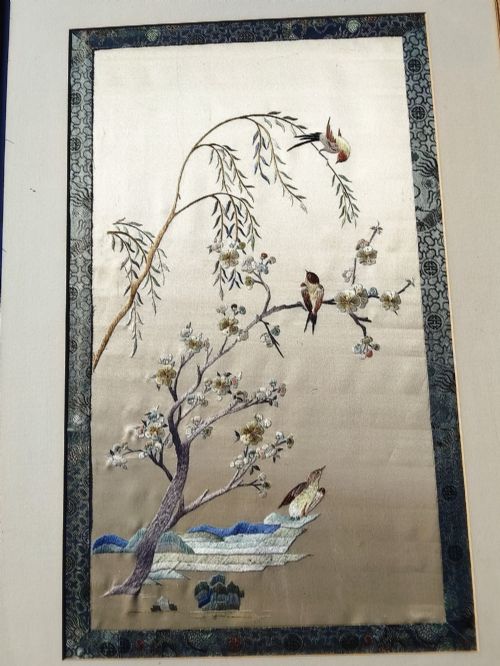
Makers utilised traditional supports including silk, pith paper, canvas and wood, applying ink, watercolour, gouache and oil paint to build the imagery. Many pieces feature delicate hand sewing, demonstrated in silk embroidery panels set under glass.
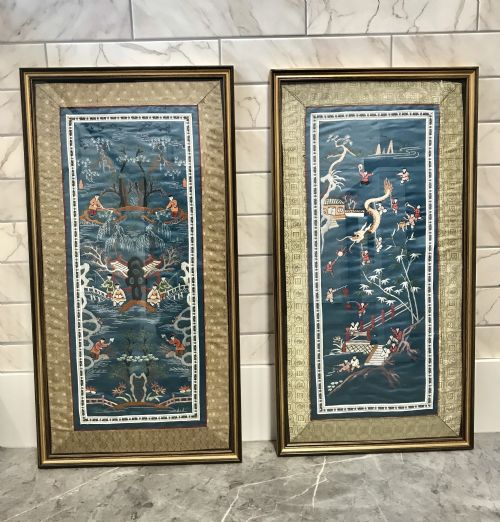
Framed works often incorporate protective glazing and wooden mounts, while textile pieces rely on meticulous needlework to depict figures, dragons, trees and flowers with distinct tonal depth.
Blue Chinese Artwork Retail Price Guide 2026
Typical asking prices for blue chinese artwork among the pieces listed under this phrase on Sellingantiques today, from the lower quarter to the upper quarter. They describe what is for sale here now, not the wider market.
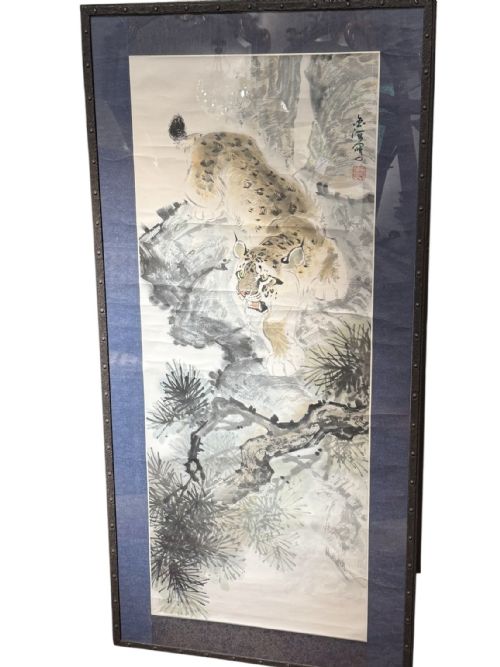
A snow leopard gazes quietly from an early twentieth-century framed scroll.
Quality and craftsmanship
Quality rests in the precision of the brushwork, the stability of the support material such as pith paper or canvas, and the vibrancy of the pigments used in watercolours and oils. Finer examples display meticulous detail in figurative elements and spatial composition.
The preservation of textile threads in silk embroideries and the integrity of early framing contribute significantly to the standing of a piece. Hand-signed albums and works attributed to specific studios hold distinct documentary interest.
Ah Hee Studio·Ya Ming
The Blue Chinese Artwork Glossary
- Pith paper
- A delicate material formed from the pith of the Tetrapanax papyrifer plant, commonly used for nineteenth-century watercolor paintings. It yields a velvet-like texture that absorbs pigments deeply.
- China Trade
- Goods produced in China specifically for export to Western markets during the eighteenth and nineteenth centuries. These items frequently blend Eastern techniques with Western subject matter.
- Gouache
- An opaque water-based paint that dries to a matte finish, frequently employed in sets of mounted Chinese paintings. It allows for rich colour saturation and sharp detail.
- Scroll
- A length of paper or silk rolled on a wooden axis, designed for display or storage. Early twentieth-century examples often feature hanging mounts.
Blue Chinese Artwork: Frequently Asked Questions
What periods do these artworks span?
The pieces on this page extend from the eighteenth century through the nineteenth century and into the mid-twentieth century.
This broad timeline includes Qing Dynasty productions alongside mid-century sketches and maritime trade paintings.
How should fragile pith paper paintings be displayed?
Pith paper requires careful framing behind protective glass to prevent crumbling or moisture damage from affecting the delicate support.
Keeping them away from direct sunlight preserves the original watercolours and gouache pigments.
What subjects appear in these paintings?
Common subjects include marine scenes with junks and steamships on the Pearl River, ancestor group portraits and still lifes.
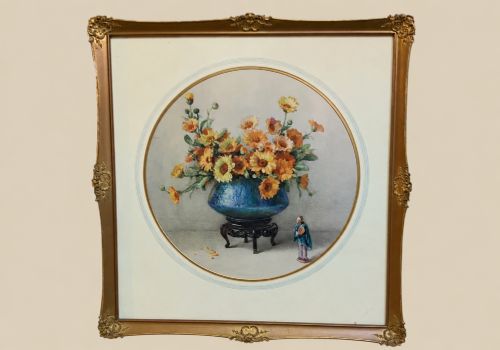
Other works depict snow leopards, dragons, floral arrangements and traditional figures on silk or paper.
How do textile art pieces differ from paintings?
Textile art relies on hand-sewn silk embroidery threads rather than applied paint to render figures, trees and flowers.
These panels are typically presented under glass to protect the fine needlework from dust and handling.