





Framed Silk Artwork
Framed silk artwork brings together delicate needlework, painting, and textile panels preserved behind glass across the centuries.
Framed Silk Artwork
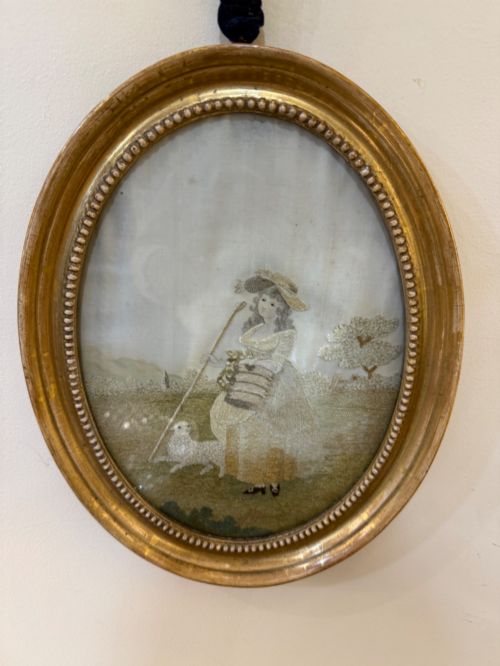
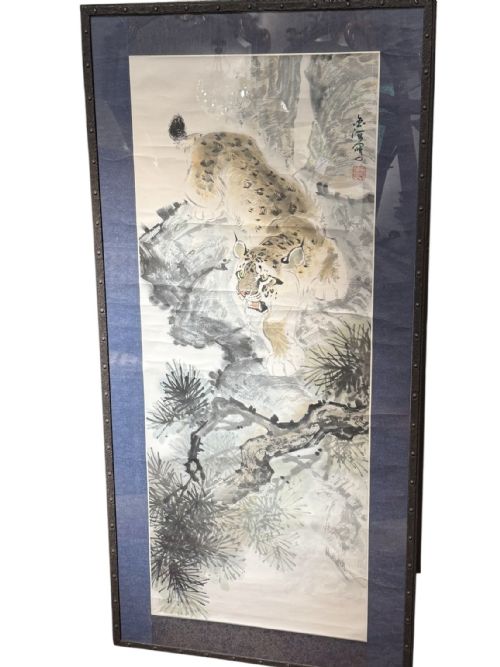
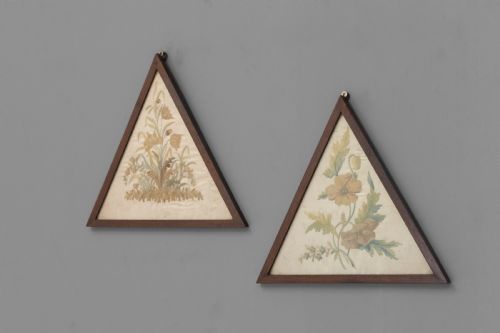
Framed silk artwork encompasses a diverse range of historic textile pieces, including embroidered panels, needlework pictures, and painted scrolls. Buyers searching for framed silk artwork encounter English needlework alongside Asian textile art and European portraits.
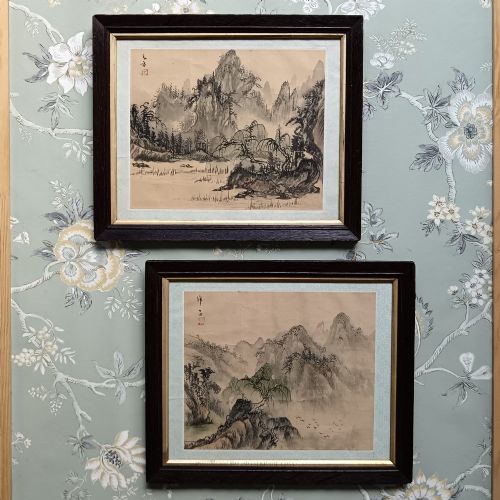
The selection ranges from early seventeenth-century English needlework to nineteenth-century Chinese watercolour paintings on silk and twentieth-century scrolls. Pieces include pastoral farming pictures, ancestor portraits, map samplers, and theatrical silkwork.
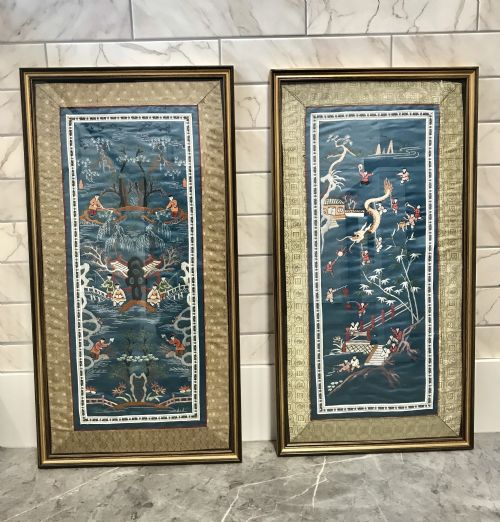
English and Asian traditions dominate the selection, featuring Georgian embroidered pictures, Regency long stitch panels, and Qing dynasty paintings. Many examples arrive in original frames with glass protection for the delicate textiles.
Materials and construction
Artisans worked primarily on silk grounds, utilising wool, ink, pigment, and watercolour alongside fine silk threads for embroidery. Needlework pictures combine silk and wool yarn to build up pictorial depth in pastoral and portrait scenes.
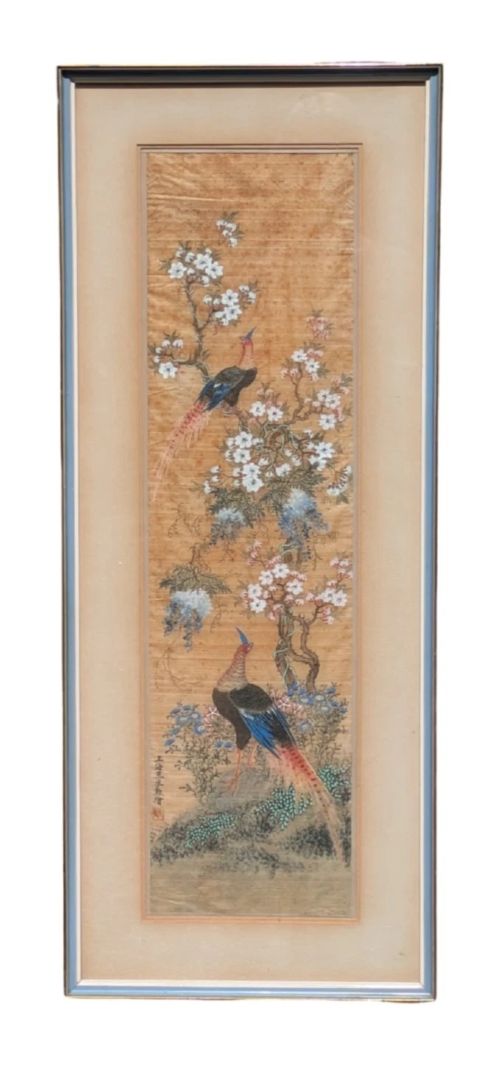
Painters applied gouache and watercolour directly onto silk fabrics, while printers produced works on silk surfaces. Panels often feature hand-sewn embroidery depicting figures, dragons, trees, flowers, garden birds, and mandarin ducks.
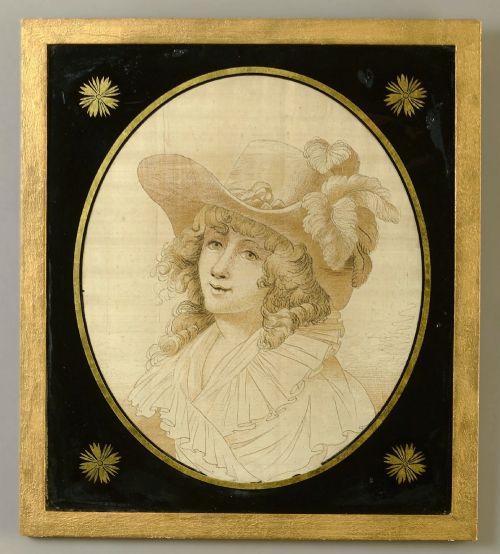
Framing utilised wood, giltwood, and rosewood, frequently incorporating glass protection and specialised surrounds such as Verre Églomisé panels. Silk brocade mounts frequently frame Japanese woodblock prints and textile pieces.
Framed Silk Artwork Retail Price Guide 2026
Typical asking prices for framed silk artwork among the pieces listed under this phrase on Sellingantiques today, from the lower quarter to the upper quarter. They describe what is for sale here now, not the wider market.
Assessing quality and execution
Quality rests upon the precision of the needlework or the finesse of the brushwork applied to the silk surface. Finely executed hand-sewn embroidery displays intricate detail in facial expressions, plumage, and botanical elements.
The preservation of the original frame and the integrity of the glass housing significantly influence the character of the piece. Materials such as original giltwood frames and Verre Églomisé surrounds add distinction to the historic textile.
Thomas Murray
The Framed Silk Artwork Glossary
- Verre Églomisé
- A process of applying gold or silver leaf to glass combined with engraving and painting on the reverse. This technique creates a decorative, reflective border often seen on antique frames.
- Needlework Picture
- A pictorial composition created using needle and thread on a fabric ground. These works frequently employ silk and wool to depict landscapes, figures, and historical scenes.
- Chinoiserie
- European artistic style reflecting Chinese motifs and decorative arts. It appears across various eighteenth-century and nineteenth-century furnishings and pictures.
- Stipple Engraving
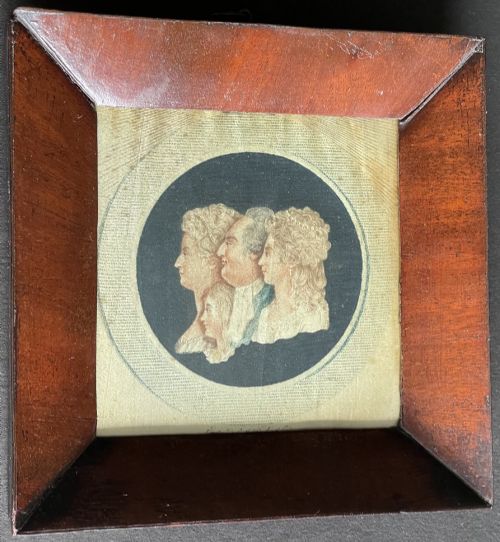
- A printmaking technique using dots to generate tonal gradations rather than continuous lines. Examples on silk represent refined late Georgian print production.
- Crewel Work
- Embroidery executed using wool yarn on a linen or cotton twill fabric. Early nineteenth-century examples show textured floral and foliate designs.
Framed Silk Artwork: Frequently Asked Questions
Where should I hang silk artwork?
Display silk pictures away from direct sunlight and strong artificial spotlights to prevent the fading of delicate pigments and dyed threads.
Choose interior walls with stable humidity and temperature levels to protect the organic textiles and wooden frames from warping or decay.
Are these pieces in original frames?
Many historic pieces retain their period frames, ranging from giltwood surrounds to rosewood mouldings and specialised glass mounts.
Original frames provide historical context, though some antique textiles have been reframed later to ensure proper structural support and conservation.
How do I date an embroidered silk picture?
Examine the stitching technique, the style of dress depicted, and the materials used in the fabric ground and surrounding frame.
Georgian and Regency works often feature specific needlework stitches and subject matters that distinguish them from later nineteenth-century or twentieth-century Asian panels.