


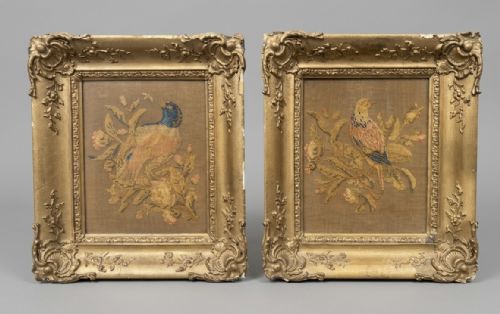


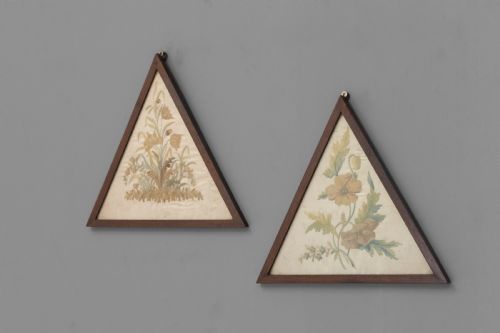

Silk Embroidery Picture
A silk embroidery picture brings together delicate needlework and fine thread to capture everything from pastoral scenes to historical portraits behind glass.
Silk Embroidery Picture
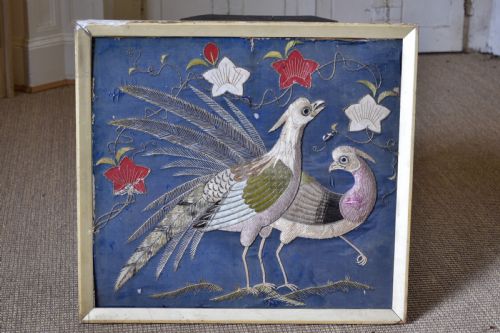
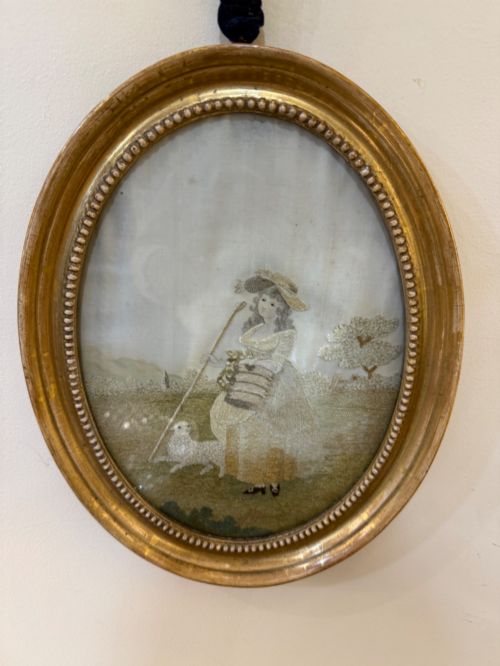
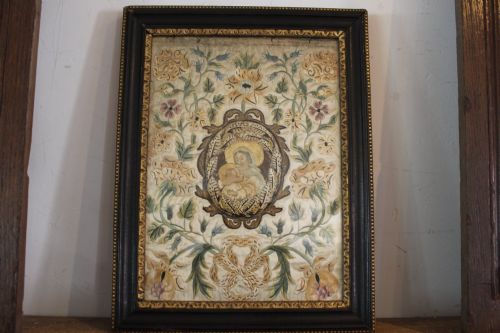
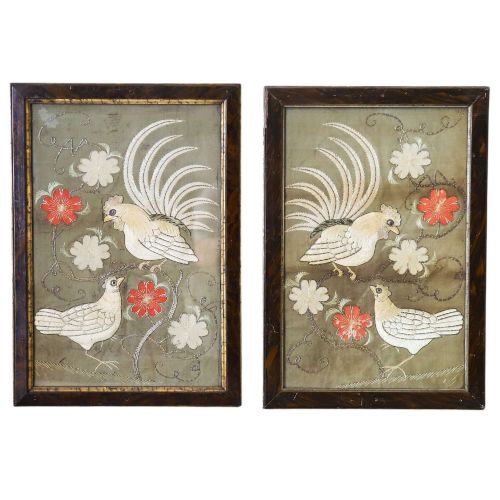
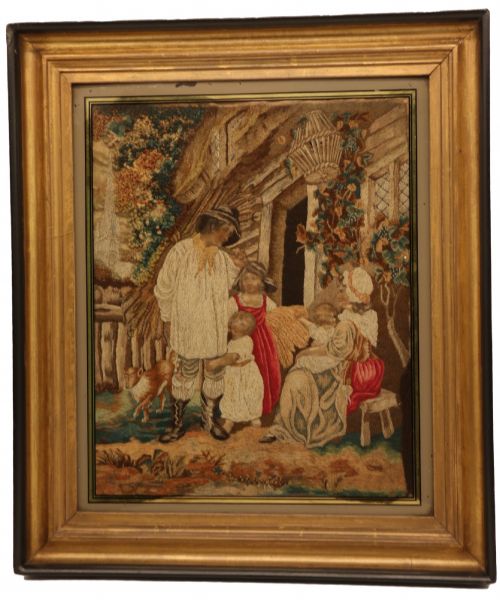
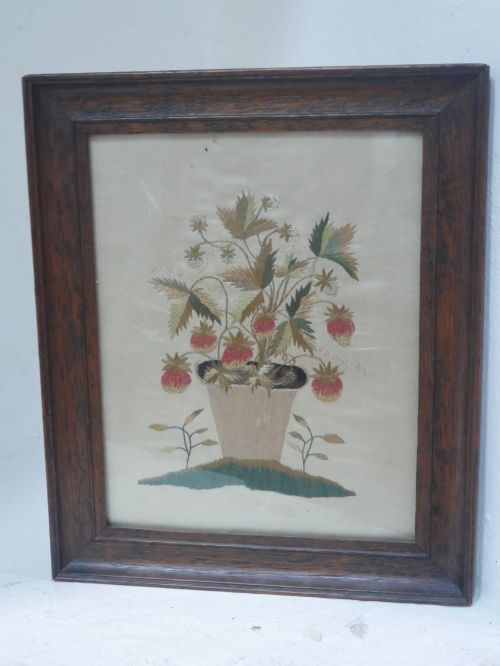
A silk embroidery picture represents a needlework tradition spanning from seventeenth-century panels to Victorian textile art. These framed works depict subjects ranging from birds and garden scenes to classical figures and horse racing tracks.
The nineteenth-century examples appear most frequently on this page, often framed in wood or giltwood alongside earlier eighteenth-century and Regency pieces. Buyers encounter both English needlework pictures and examples originating from China or Japan.
Materials and technique
These works rely on silk thread, wool, and metallic thread stitched onto linen or silk grounds. Artisans often combined long-stitch, crewel work, and stumpwork to build up textured surfaces on the fabric.
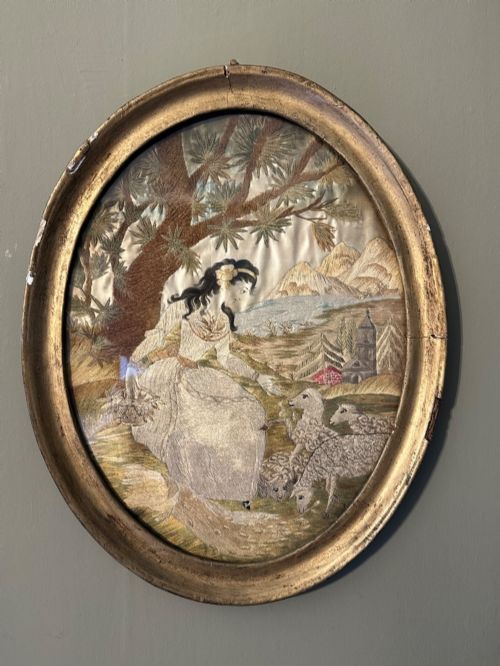
Many historical examples incorporate hand-painted silk sections alongside needlework to define faces, landscapes, or skies. Framed behind glass within wooden, giltwood, or faux tortoiseshell surrounds, the textiles were protected from dust and handling.
Listings feature silk embroidery pictures spanning the seventeenth, eighteenth, nineteenth, and early twentieth centuries, utilising silk, wool, and metallic thread.
Quality variations
The distinction between standard decorative panels and superior works rests on the complexity of the stitching and the condition of the silk thread. Finer examples display intricate long-stitch or raised stumpwork that retains vibrant colour and tight tension.
The quality of the accompanying frame, such as period giltwood or verre églomisé glass panels, influences the overall character of the piece. Superior pictorial depth often results from the successful integration of watercolour painting with detailed needlework.
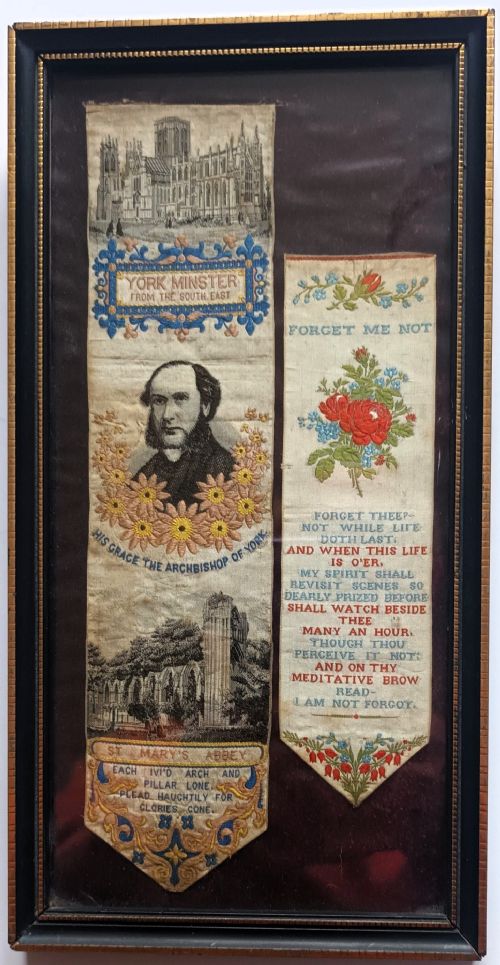
Stevens of Coventry
The Silk Embroidery Picture Glossary
- Stumpwork
- A raised embroidery style popular in the seventeenth century that uses padded foundations to create three-dimensional figures and motifs. This technique frequently appears in historical panels depicting royal or biblical subjects.
- Verre églomisé
- A process of applying gold or silver leaf to glass and engraving a design before painting the reverse. Frames utilising this method often accompany nineteenth-century oval pictures.
- Berlin silk
- A type of needlework wool and silk embroidery worked from printed and hand-coloured grid patterns. These vibrant pieces gained popularity during the Victorian era.
- Crewel work
- Embroidery executed with wool yarn on a heavy linen or cotton ground using traditional stitches. This technique appears on early nineteenth-century panels.
- Sampler
- A piece of cloth featuring various stitches and alphabets worked by a maker to demonstrate skill. Examples range from eighteenth-century maps to nineteenth-century schoolgirl pieces.
Silk Embroidery Picture: Frequently Asked Questions
How should I hang a silk embroidery picture?
Keep these framed textiles away from direct sunlight to prevent the silk threads and watercolours from fading over time. Atmospheric moisture can damage fragile fibres, so choose a stable interior wall.
Ensure the frame hangs securely from appropriate fixings rather than lightweight wire if the piece carries heavy glass. Professional framing with UV-filtering glass offers extra protection for antique textiles.
What is the difference between stumpwork and standard needlework?
Stumpwork involves padding elements such as figures, fruit, or clothing with wool, wood, or hair to raise them above the background fabric. This creates a distinct three-dimensional relief effect.
Standard needlework remains flat against the linen or silk ground, relying purely on stitch direction and thread shading to create perspective.
How do I date an antique embroidery?
Examine the framing style, materials, and subject matter alongside any inscribed dates or signatures on the textile. Eighteenth-century pieces often feature pastoral or religious themes, while Regency and Victorian works frequently show figures in gardens or theatrical scenes.
Early seventeenth-century examples typically display stumpwork panels with monarchs or biblical characters mounted on taut linen.