
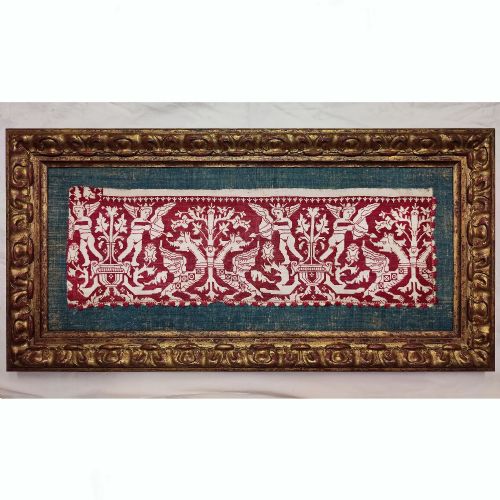


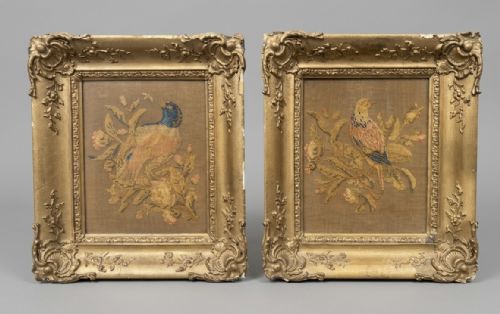


Gilt Framed Needlework
These gilt framed needlework pieces bring centuries of hand-worked silk, wool and metallic thread into interiors with distinct historic presence.
Gilt Framed Needlework
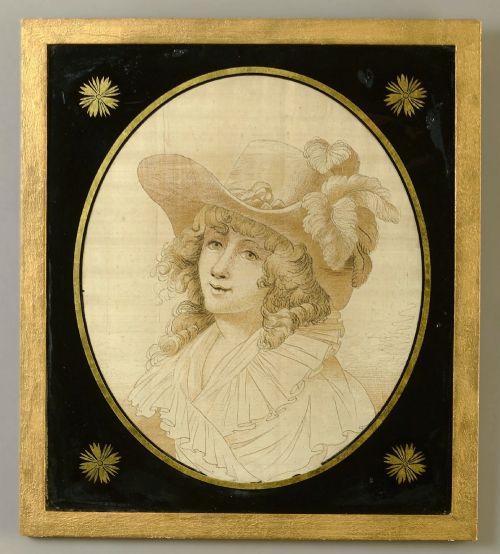
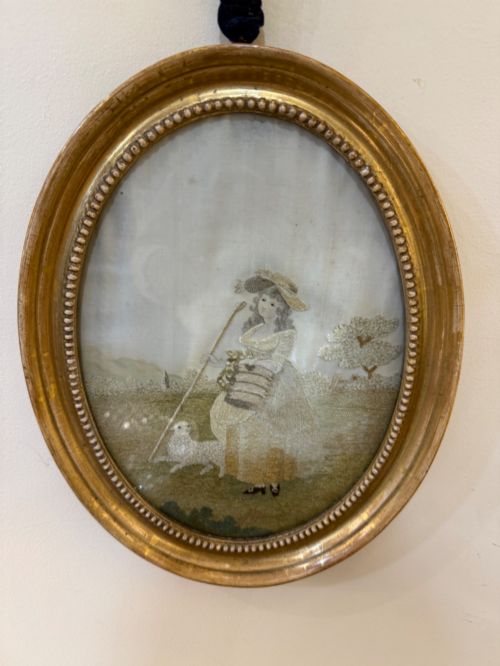
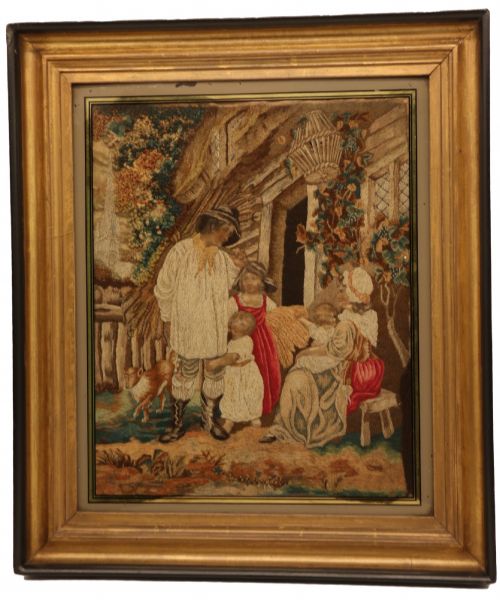
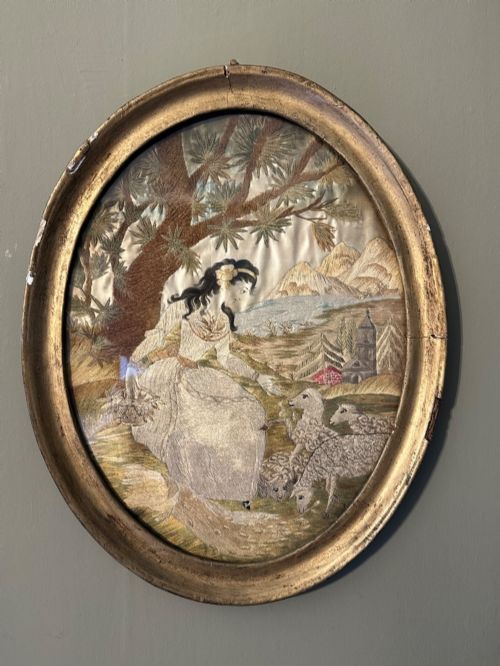
When you search for gilt framed needlework, you encounter historic textile panels, samplers, and pictorial embroideries enclosed within gilded wooden surrounds. The selection spans centuries of needlecraft, encompassing delicate 18th-century silk portraits, pastoral farming scenes, and robust Victorian woolwork.
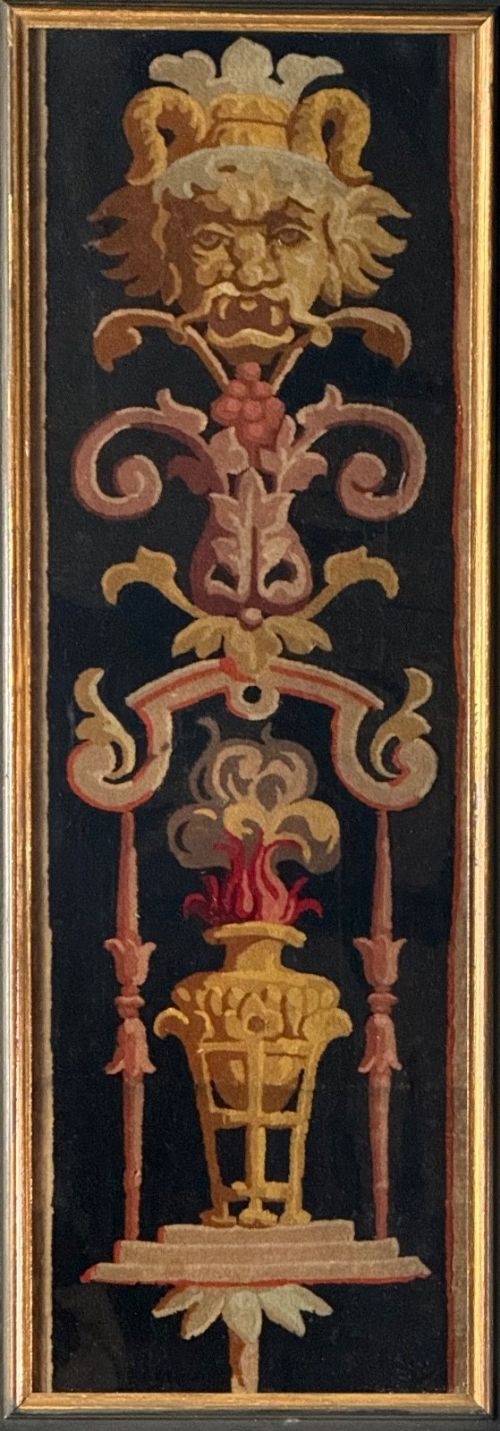
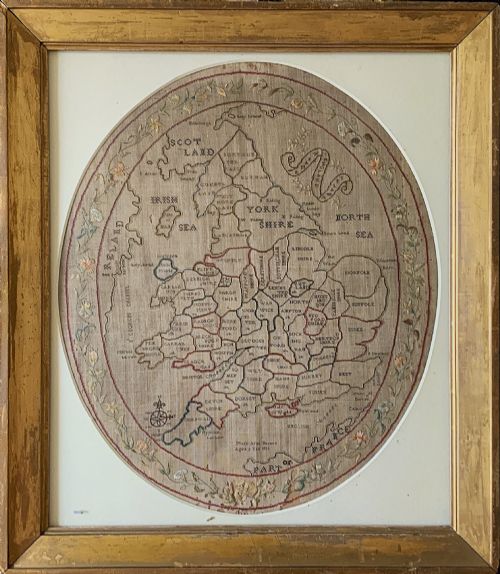
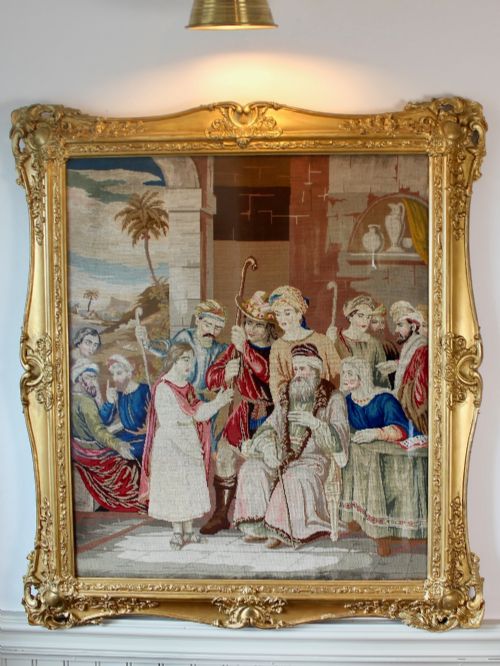
You are most likely to meet 19th-century Berlin woolwork pictures and Georgian silk embroideries on this page. These works range from educational schoolgirl samplers and maps of England to theatrical scenes and classical panels housed beneath glass in their original frames.
How they were made
Artisans and makers utilised natural substrates such as silk, linen, wool, and canvas to stitch detailed pictorial and geometric compositions. Hand-spun threads of silk, wool, and metal were worked using techniques like long stitch, crewel work, and tapestry needlepoint.
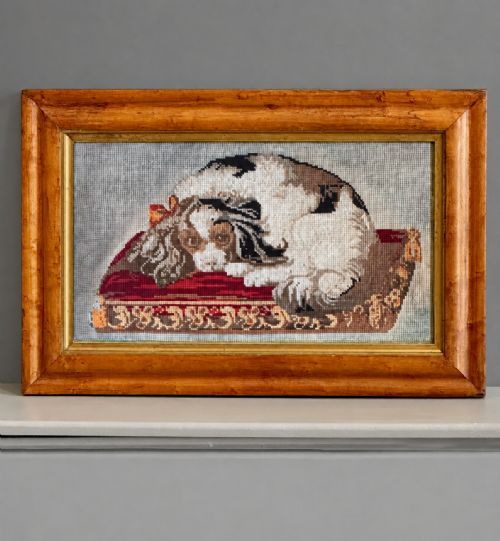
Completed embroideries were protected beneath glass and mounted inside giltwood, burr maple, or verre églomisé frames finished in gold leaf. Many surviving examples retain their original frames, preserving the alignment between the textile art and its exterior housing.
Gilt Framed Needlework Retail Price Guide 2026
Typical asking prices for gilt framed needlework among the pieces listed under this phrase on Sellingantiques today, from the lower quarter to the upper quarter. They describe what is for sale here now, not the wider market.
Materials recorded across current and past listings include silk, wool, linen, canvas, gold leaf, burr maple, and verre églomisé glass.
What varies in quality
The integrity of the surrounding gilt frame and protective glass contributes significantly to the character of the piece. Surviving original frames with untouched gold leaf or specialised glass elevate the contextual value of the textile artwork within.
The Gilt Framed Needlework Glossary
- Berlin work
- A style of counted-thread embroidery popular during the 19th century that utilised hand-painted pattern charts and bright wool threads. This technique allowed makers to produce elaborate pictorial woolwork tapestries and wall hangings.
- Verre églomisé
- A process of applying gold or metal leaf to glass and then engraving designs into the metallic layer. It frequently appears as a decorative border on the glass surrounding Regency and Victorian silk pictures.
- Sampler
- A piece of needlework produced to demonstrate proficiency in various stitches, letters, and motifs. Early examples often record the maker's name, age, and school alongside maps or moral verses.
- Crewel work
- Traditional surface embroidery executed using fine wool yarn on a linen or cotton twill fabric. It produces textured designs common in early textile panels.
- Giltwood
- Timber carved and coated with a thin layer of gold leaf or metallic paint to create a reflective golden surface. It provides the primary framing material for these historical needlework pictures.
Gilt Framed Needlework: Frequently Asked Questions
How do I date a needlework picture?
Dating relies on combining the stylistic evidence of the textile subject matter, the stitch types, and the framing materials. Samplers frequently bear inscribed dates and the maker's age, offering direct chronological markers.
Framing styles also shift across periods, moving from Georgian mouldings to ornate Victorian giltwood and verre églomisé glass borders. Comparing these elements with documented examples helps establish the likely decade of creation.
What is Berlin woolwork?
Berlin woolwork is a counted-thread embroidery style that gained immense popularity in the nineteenth century. It utilised commercially printed pattern grids and vibrant dyed wools to create dense tapestries.
Subjects ranged from domestic animals like King Charles spaniels to grand biblical or literary scenes. These works were frequently mounted as large framed wall hangings.
How should I care for historic textiles?
Historic needlework requires protection from direct sunlight and high humidity to prevent the fading of silk and wool threads. Keeping pieces behind their protective glass shields the delicate fibres from dust and atmospheric pollutants.
Maintaining stable indoor temperatures ensures the wooden gilt frames and backing materials do not warp or degrade over time.
What is a map sampler?
A map sampler is an educational needlework piece where the maker stitched geographical boundaries, counties, and place names. Young makers created these panels to demonstrate both embroidery skill and geographical knowledge.
Examples often feature cartographic representations of England and Wales executed in fine silk or wool stitches.
Are these frames original?
Many listings preserve their original giltwood, burr maple, or specialised glass frames from the Georgian and Victorian eras. Original frames match the period of the textile and show consistent historic wear.
Checking the construction joints and the backing boards helps verify whether the frame has housed the embroidery since its creation.