





Georgian Needlework Picture
A georgian needlework picture brings historic hand embroidery into a room, offering intimate pastoral scenes, portraits and samplers executed in silk and wool.
Georgian Needlework Picture
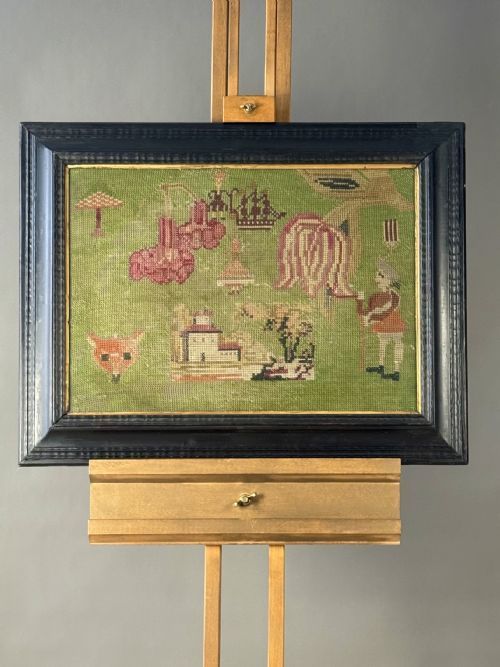
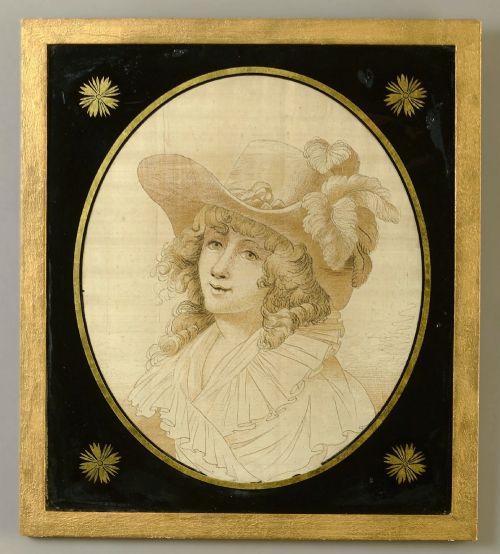
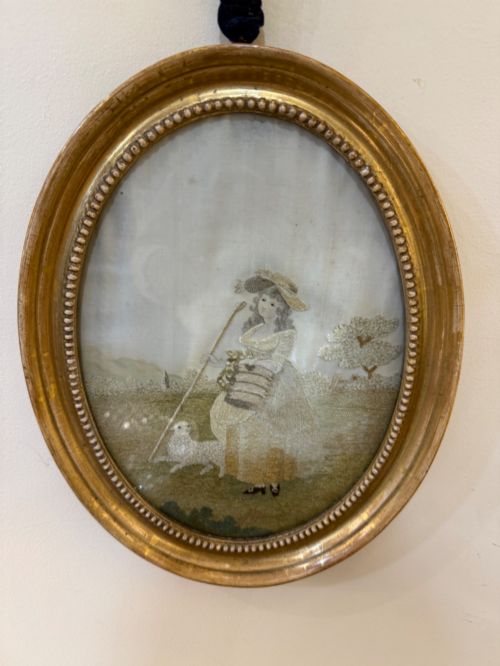
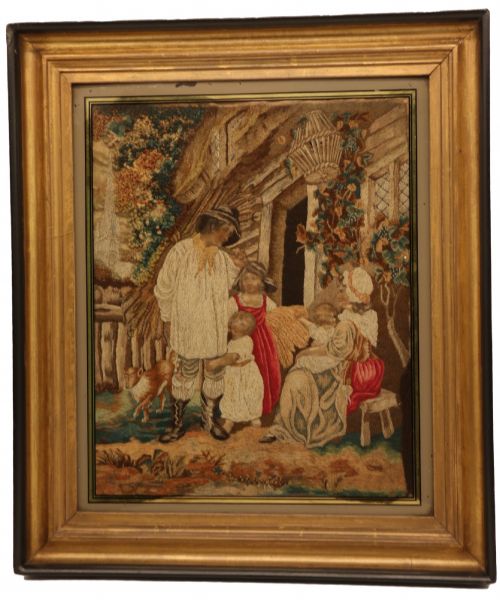
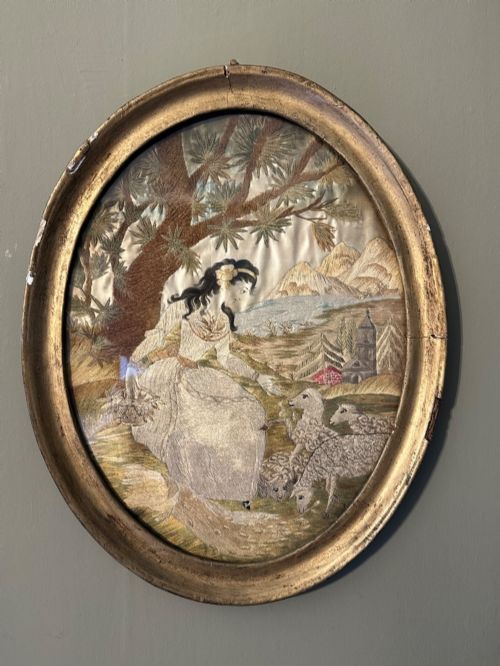
A georgian needlework picture is a piece of textile art originating predominantly from the eighteenth and nineteenth centuries, spanning the Georgian, Regency and early Victorian periods. These framed works encompass pastoral farming scenes, literary narratives, portraits of fashionable ladies and detailed alphabet or map samplers.
Most examples encountered here combine finely worked embroidery with hand painted elements on silk, linen or wool grounds. Textile artwork from this era serves as both a domestic accomplishment and a decorative wall hanging, frequently preserved behind glass in original frames.
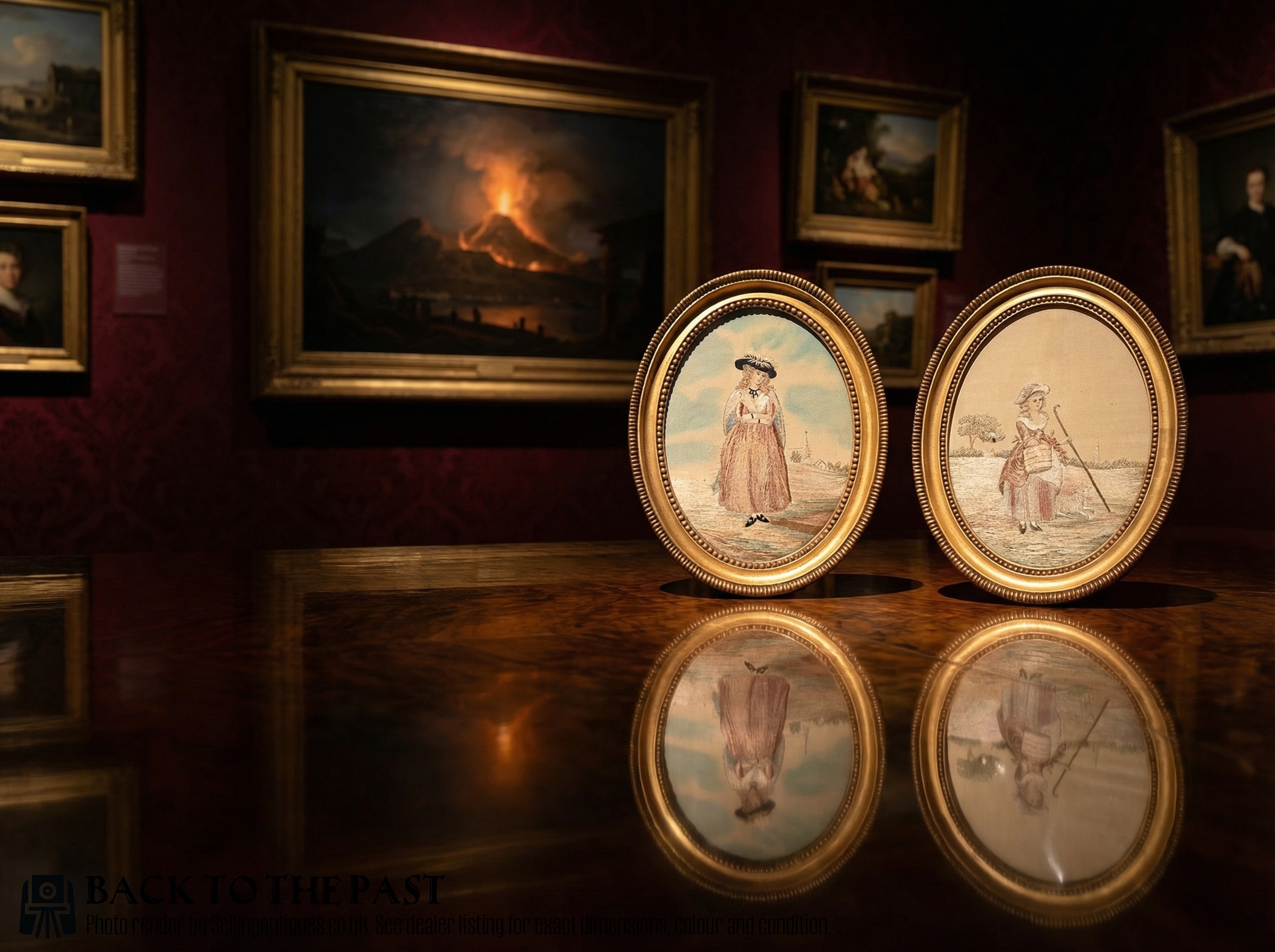
The objects take various forms including oval panels, rectangular embroidered pictures and pairs of theatrical silk works. Makers deployed diverse techniques such as long stitch, crewel work and silk floss embroidery to render intricate pictorial compositions.
Materials and construction
Finished textiles were housed in period enclosures, frequently featuring water gilded wood frames or specialised glass mounts such as verre églomisé and mezzotint black glass. The interplay between the delicate fabric surface and the heavy giltwood or glass frame defines the physical presence of the piece.
Georgian Needlework Picture Retail Price Guide 2026
Typical asking prices for georgian needlework picture among the pieces listed under this phrase on Sellingantiques today, from the lower quarter to the upper quarter. They describe what is for sale here now, not the wider market.
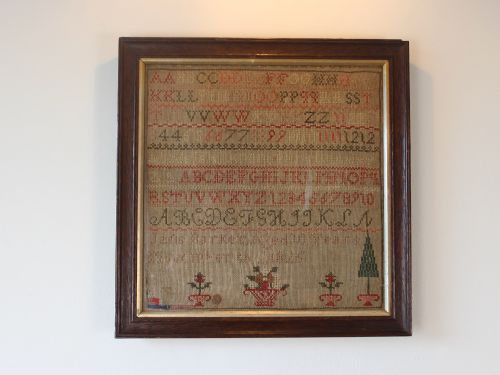
A young embroiderer named Mary Mason preserved her skill at age twelve in a sampler, forever fixing her childhood needlework into history.
Qualities of distinction
The distinction between ordinary and exceptional examples rests upon the precision of the needlework and the preservation of the delicate materials. Superior pieces display complex stitchery, such as finely controlled long stitch or detailed silk embroidery, which retains its original colour without excessive fading.
Original framing elevates a piece considerably, particularly when retaining water gilded wood or verre églomisé glass panels that complement the textile art within. The sophistication of the design, whether a literary narrative from Jack and the Beanstalk or a finely rendered portrait, determines the artistic merit.
The Georgian Needlework Picture Glossary
- Verre églomisé
- A process of applying cold painting and gold leaf to glass, frequently used for decorative borders on Regency frames. This technique provides a dark, reflective border that frames the central textile.
- Sampler
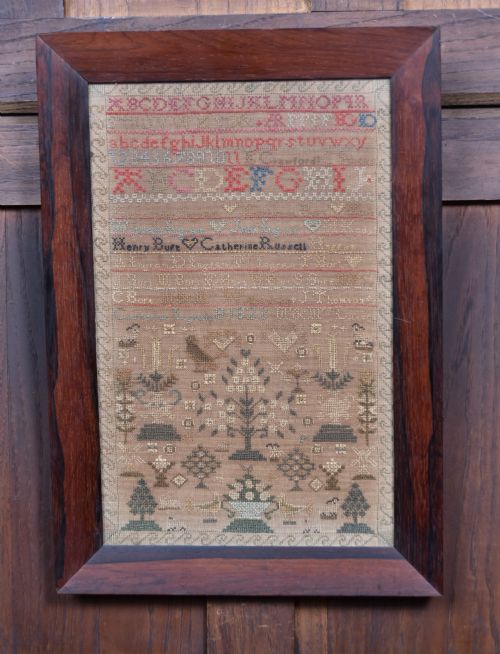
- A piece of cloth featuring alphabets, numerals or motifs worked by embroiderers to demonstrate needlework proficiency. These often record the maker's name and age.
- Crewel work
- Embroidery executed with wool yarn on a linen or cotton ground, originating in traditional decorative stitching. It creates a textured, robust surface ideal for pastoral and botanical subjects.
- Silk floss
- Unspun silk fibres utilised for smooth, glossy embroidery work. It allows for subtle shading and realistic rendering of hair and skin in portrait miniatures.
- Long stitch
- An embroidery technique where stitches are worked in parallel or varied lengths to fill pictorial areas. It produces a smooth, painterly surface suited for silk work pictures.
Georgian Needlework Picture: Frequently Asked Questions
How should I care for a georgian needlework picture?
Protect the textile from direct sunlight to prevent the silk and wool threads from fading or becoming brittle over time. Keep the piece in a stable environment away from high humidity to safeguard the historic fabric and backing.
Ensure the frame remains securely sealed to prevent dust and insects from damaging the delicate interior threads and painted paper elements.
Were these embroidered pictures made by professionals?
Many surviving examples were produced by young women in domestic settings or at educational establishments as part of their accomplished upbringing. Samplers and pictorial works often record the name and age of the maker, highlighting personal dedication.
Professional workshops also produced sophisticated silk work panels and religious scenes, catering to the demand for refined interior decoration during the Regency era.
How do I distinguish between an eighteenth century and a nineteenth century piece?
Eighteenth century examples frequently lean towards pastoral farming subjects, classical motifs and intricate silk embroideries in muted palettes. The introduction of bright silk floss, alphabet formats and specific framed styles helps identify nineteenth century execution.
Examining the backing materials, frame construction and any dated inscriptions or signatures provides reliable clues to the exact period of manufacture.
Can I hang these textiles in a bright room?
Natural light poses a significant risk to historic dyed silk and wool, causing rapid fading of the delicate pigments. It is best to position the framed artwork on an interior wall away from direct windows.
Using museum glass with UV filtration during framing offers additional protection against light damage while allowing clear visibility of the fine stitching.