





Georgian Textile Art
Georgian textile art brings together needlework pictures, maps and samplers stitched in silk, wool and thread during the eighteenth and nineteenth centuries.
Georgian Textile Art
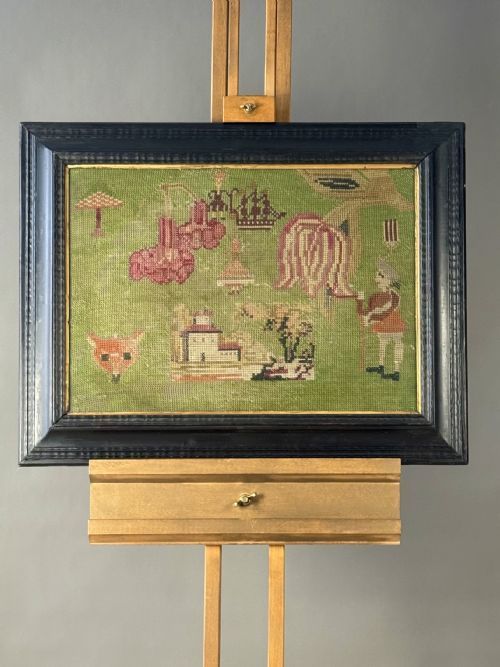
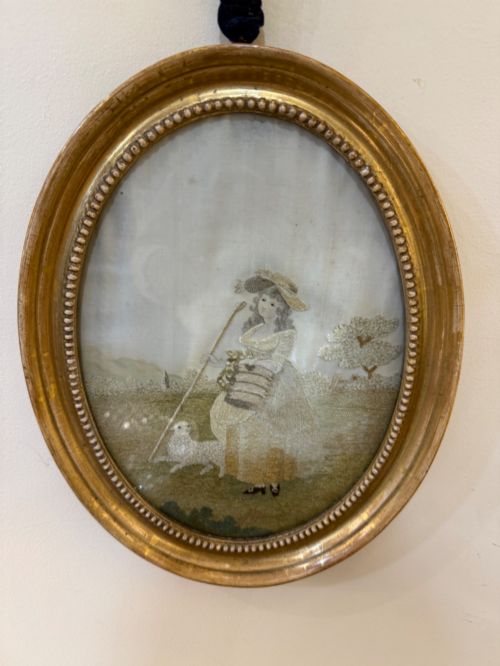
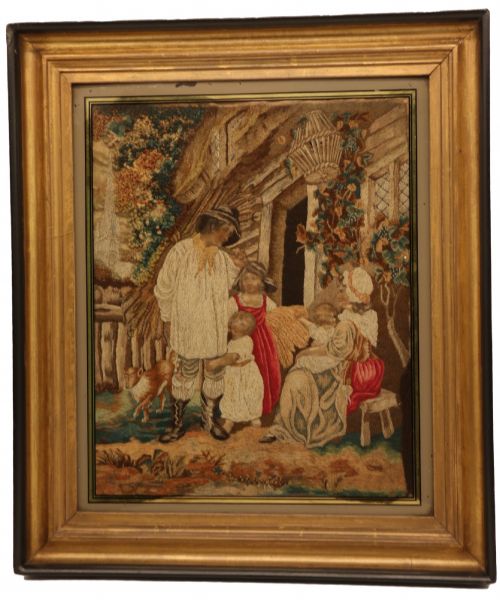
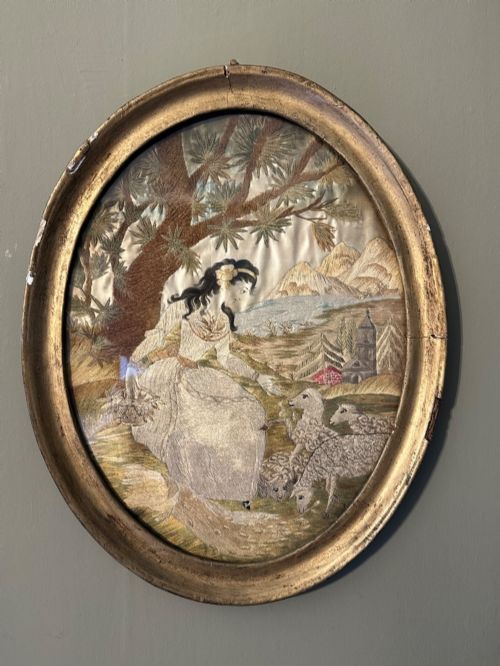
When you search for georgian textile art, you encounter needlework pictures, embroidered panels and maps created across the eighteenth and nineteenth centuries. These works include alphabet samplers, pastoral farming scenes and portraits stitched by hand.
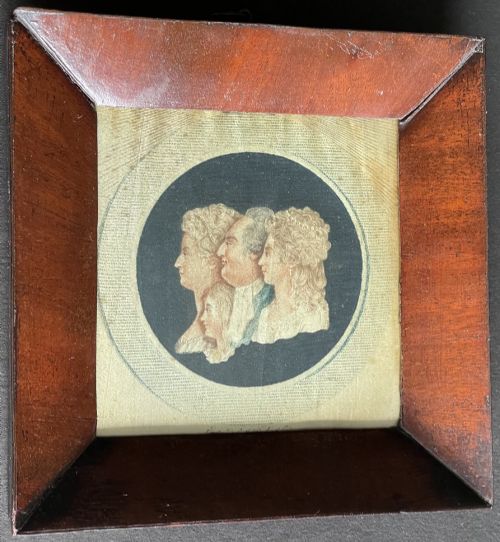
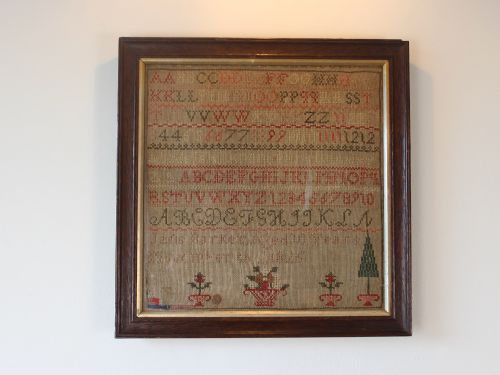
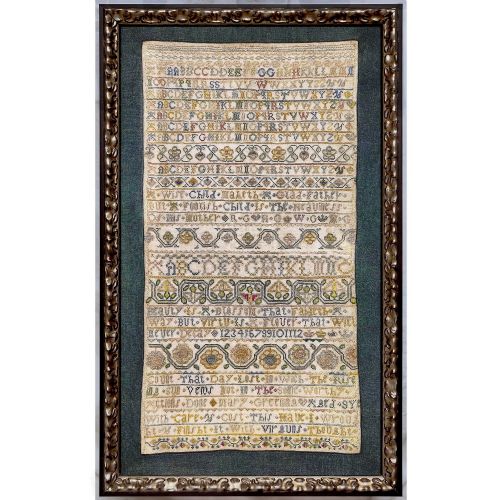
The pieces often bear the names and ages of young makers such as Mary Banion or Mary Greening. Alongside schoolroom samplers, you find framed silk embroideries and French tapestries displayed as wall art.
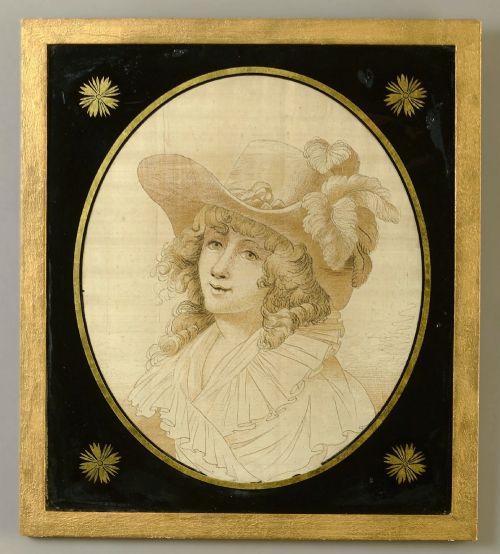
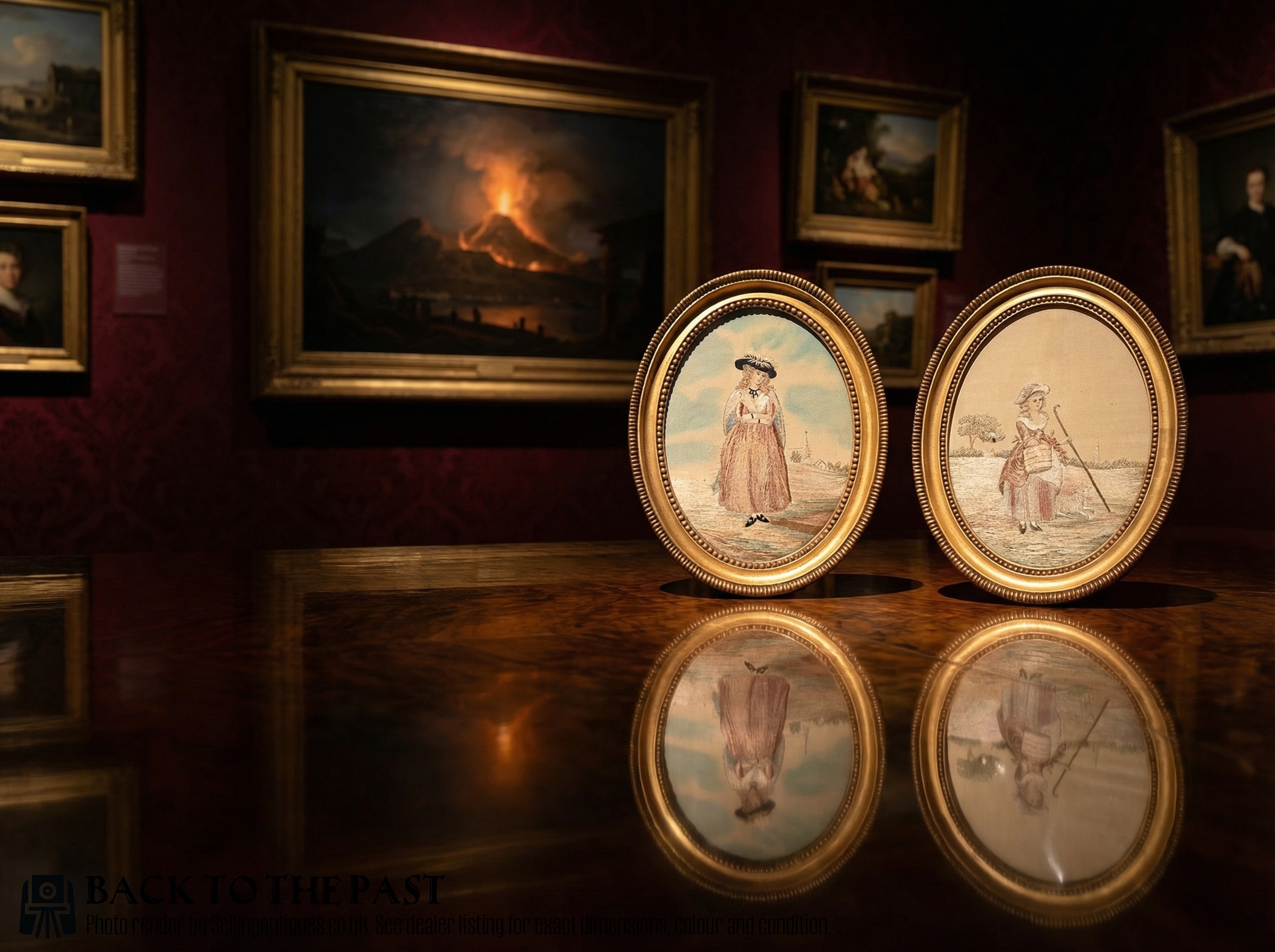
Most examples originate from English and French traditions spanning the Georgian, Regency and Victorian eras. They arrive mounted in period frames, occasionally utilising reverse-painted glass known as verre églomisé.
Materials and construction
Needlework pieces rely on grounds of linen, wool and silk, worked with silk thread, silk floss and crewel wool. Makers combined embroidery stitches with hand-painted silk details to render faces, landscapes and heraldry.
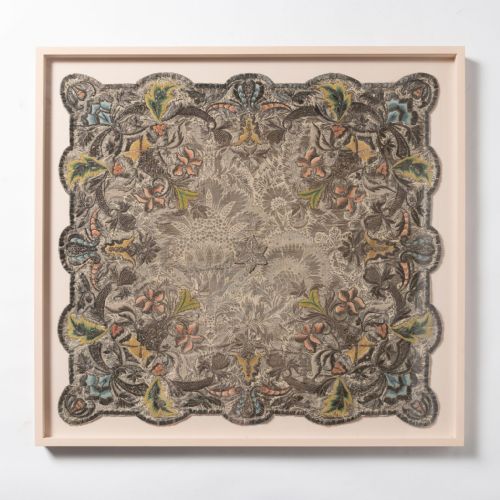
Textiles utilise woven silk, ciselé silk velvet and printed silk to achieve varied texture and depth. Frames fashioned from wood and giltwood house the panels, protecting fragile threads behind glass.
Several makers carefully stitched their exact ages into the linen, leaving permanent schoolroom confessions.
What defines quality
Quality rests upon the precision of the needlework and the complexity of the composition. Pictorial panels showing detailed figures, narrative scenes or cartographic accuracy display superior draughtsmanship by the maker.
Condition and originality separate exceptional survivors from standard examples. Intact silk threads, original mounting and period frames with verre églomisé glass elevate the status of a textile panel.
The Georgian Textile Art Glossary
- Sampler
- A piece of needlework produced to demonstrate proficiency in various stitches and alphabets. These often record the maker's name, age and date of completion.
- Verre églomisé
- A process of applying gold or silver leaf to glass along with painting, used to create decorative borders on picture frames.
- Crewel work
- Embroidery executed with fine wool yarn on a linen or cotton ground. This technique creates textured designs found on hangings and pastoral pictures.
- Ciséle velvet
- Velvet featuring a pattern created by cutting certain pile loops while leaving others uncut. This technique produces rich textural contrast on fabric panels.
- Silk floss
- Unspun silk fibres utilised for smooth, glossy embroidery work. It gives pictorial panels a painted appearance through careful shading.
Georgian Textile Art: Frequently Asked Questions
How do I date a sampler?
Many samplers include embroidered dates alongside the maker's name and age. Stylistic cues such as Neoclassical motifs or alphabetic layouts help narrow down pieces lacking explicit dates.
Examining the surrounding wooden frame and backing materials provides further chronological context for when the textile was mounted.
Were these pieces made by children?
A large proportion of needlework samplers and alphabet pieces were worked by young girls in schoolrooms as part of their education. Signatures often record ages between nine and twelve years.
More complex pictorial embroidery and silk paintings were executed by accomplished young women or professional artisans.
How should I hang textile art?
Needlework and silk pictures require protection from direct sunlight to prevent the fading of wool and silk threads. Displaying them in rooms with stable humidity preserves the integrity of the fabric and wooden frames.
Glass fronts shield the delicate embroidered surfaces from dust and atmospheric pollution over time.
What is a map sampler?
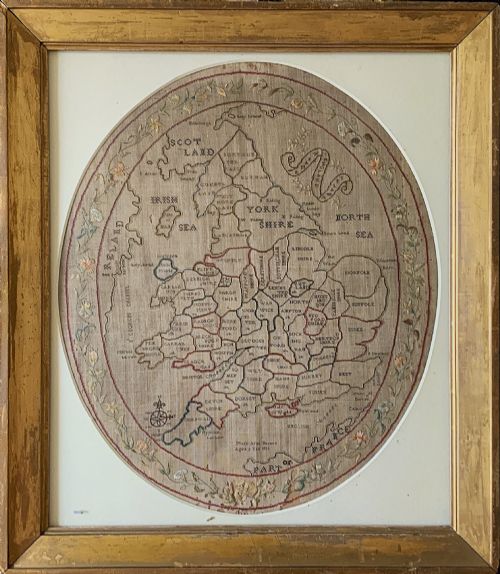
Map samplers depict geographical regions such as England and Wales, embroidered with counties, towns and borders. Young makers stitched these to combine needlework skills with lessons in geography.
Dated examples provide a record of regional boundaries and cartography from the period.