
Framed Needlework
Framed antique needlework brings centuries of hand-stitched craft and textile history straight to your wall.
What these pieces are
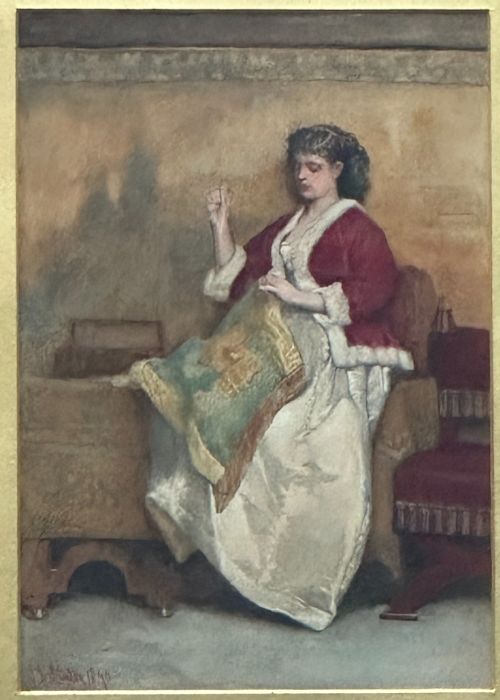
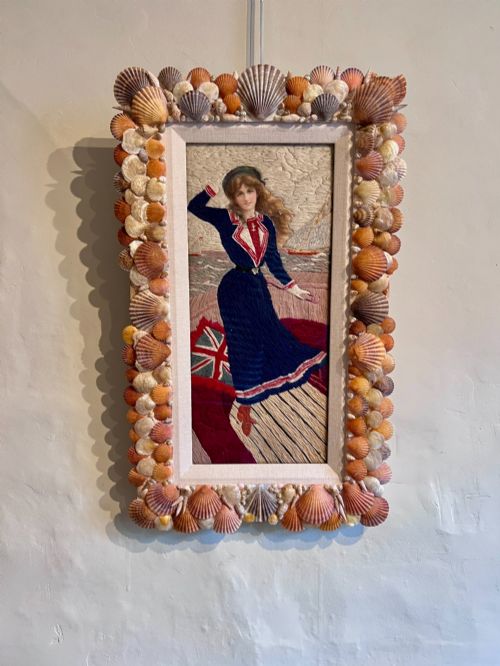
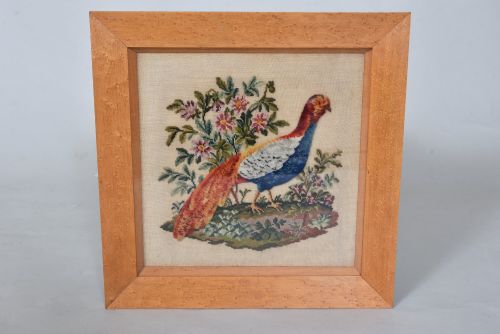
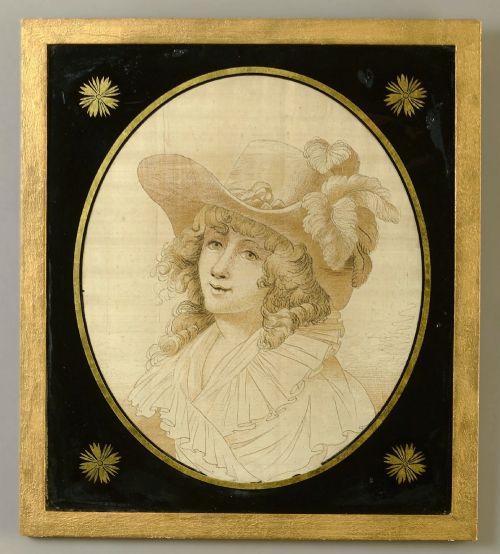
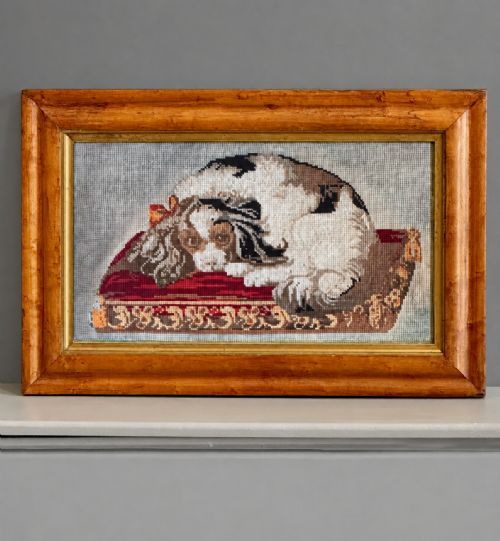
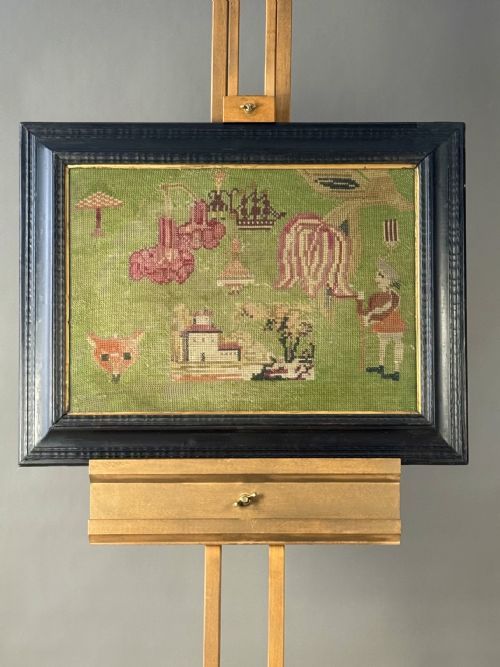
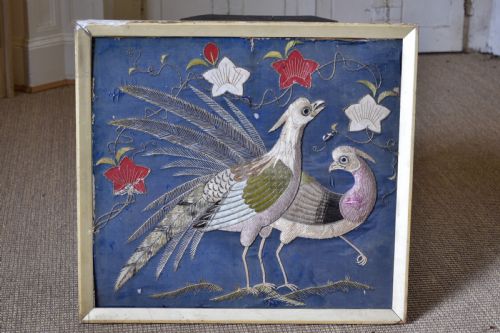
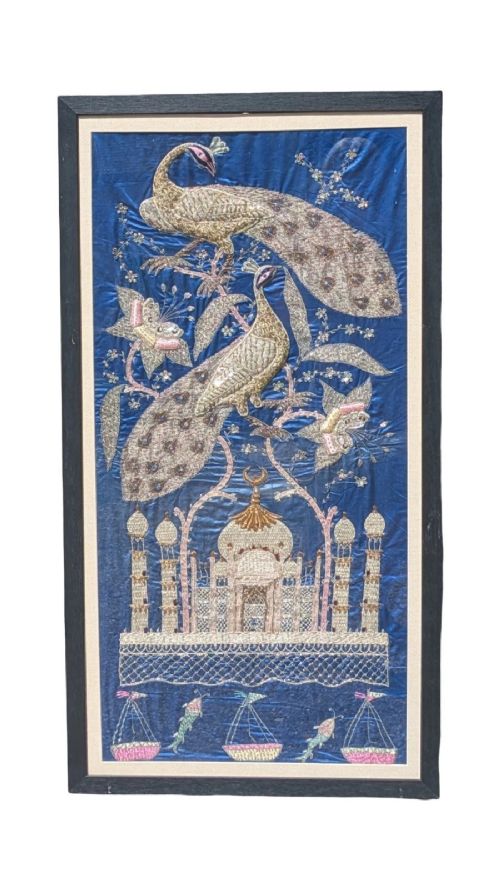
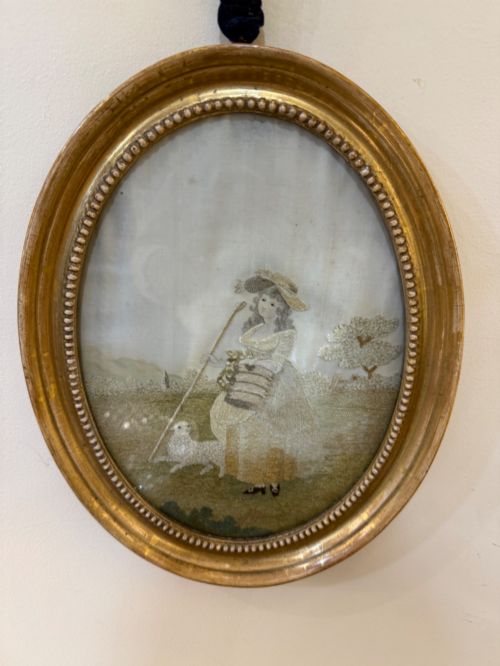
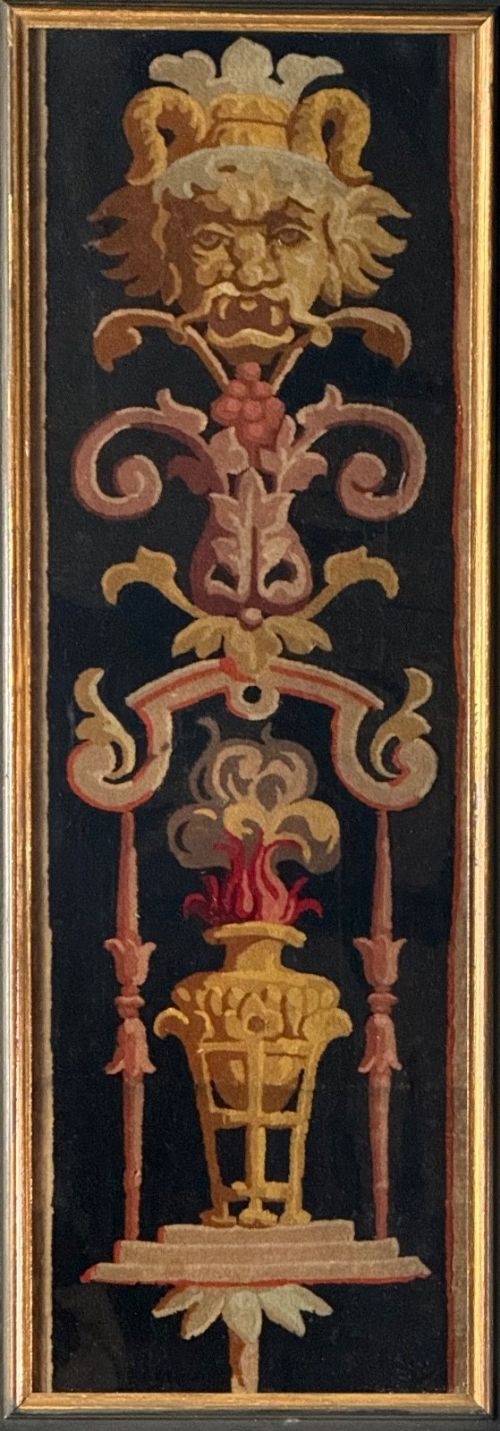
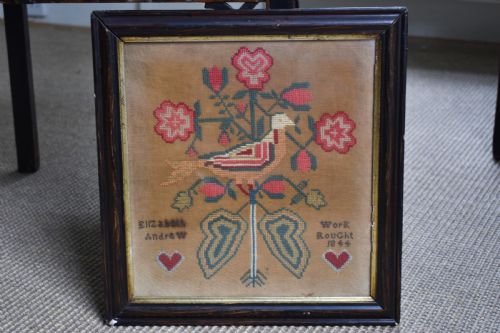
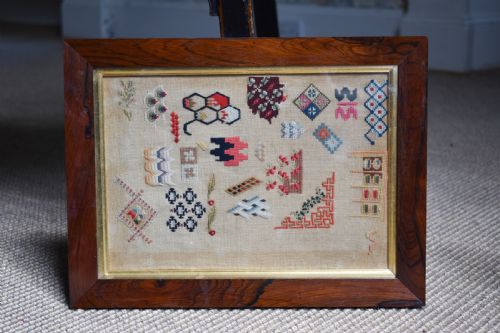
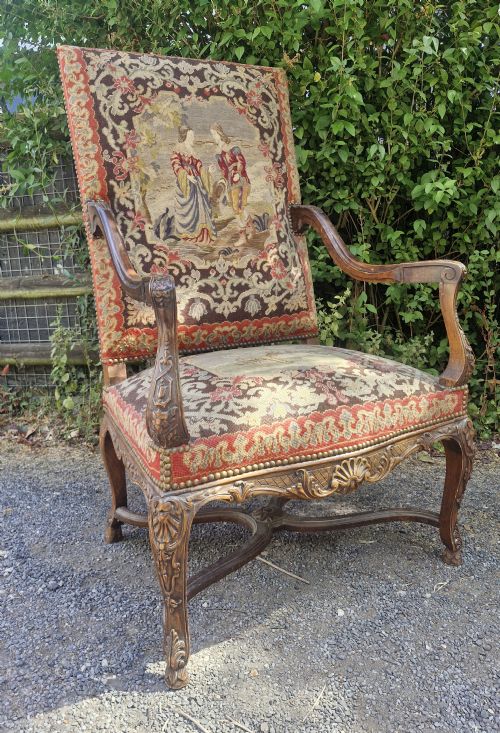
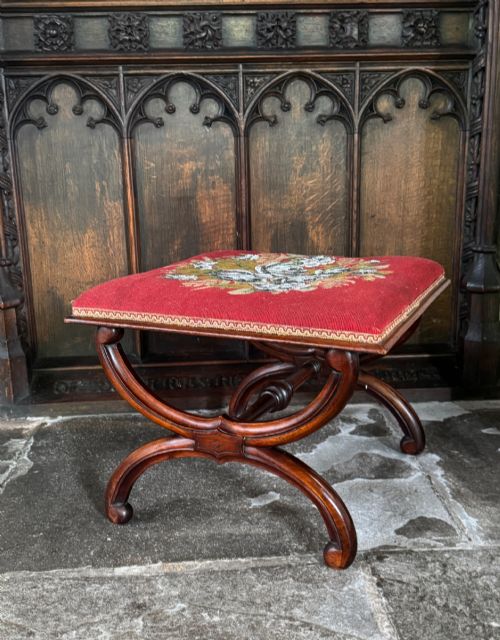
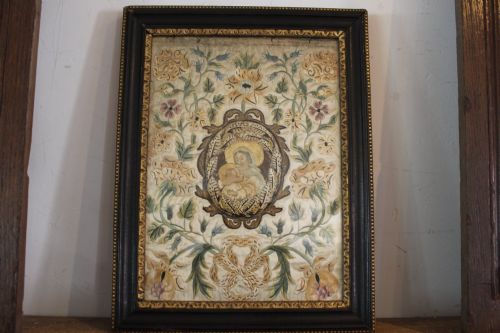
Framed antique needlework spans diverse textile forms, from embroidered borders and tapestry cushions to traditional samplers and textile panels. These works capture centuries of domestic handiwork and decorative skill across various European traditions.
The selection ranges from early seventeenth-century Italian embroidery and North German tapestry cushions to Georgian samplers and later nineteenth-century Greek Island work from Skyros. You will also encounter mixed compositions combining embroidery with watercolour, as seen in pieces depicting Oxfordshire.
These textiles arrive preserved behind glass within wooden or gilded frames, protecting the delicate threads while allowing the historical needlework to be displayed as wall art.
How they were made
Makers utilised natural materials such as linen grounds, silk thread, and silk floss to build intricate pictorial and geometric designs by hand. Stitchers worked with coloured threads to form samplers, tapestry cushions, and embroidered borders.
Some works incorporate additional artistic mediums, pairing detailed embroidery with watercolour on paper to create composite topographical scenes. Completed panels were subsequently mounted into protective wooden or gilded wood frames behind glass.
Retail Price Guide 2026
Typical UK retail prices for framed needlework, calculated from the Sellingantiques database of over a million retail prices indexed since 2003. This retail price guide relies exclusively on Sellingantiques data; no external sources or auction records are used, so the figures do not describe the wider market.
The listings span from seventeenth-century Baroque works to late nineteenth-century Greek Island embroidery and nineteen-twenty watercolours.
What varies in quality
The distinction between standard and superior pieces rests on the fineness of the stitch execution and the preservation of the original silk and linen materials. Early seventeenth-century works and documented Georgian samplers with clear maker inscriptions carry distinct historical weight.
Compositional complexity and the harmony between the textile and its period frame also shape the character of each piece. Superior examples retain vibrant thread colours and secure mounting beneath glass that protects the fragile fibres without flattening the texture.
The Framed Needlework Glossary
- Sampler
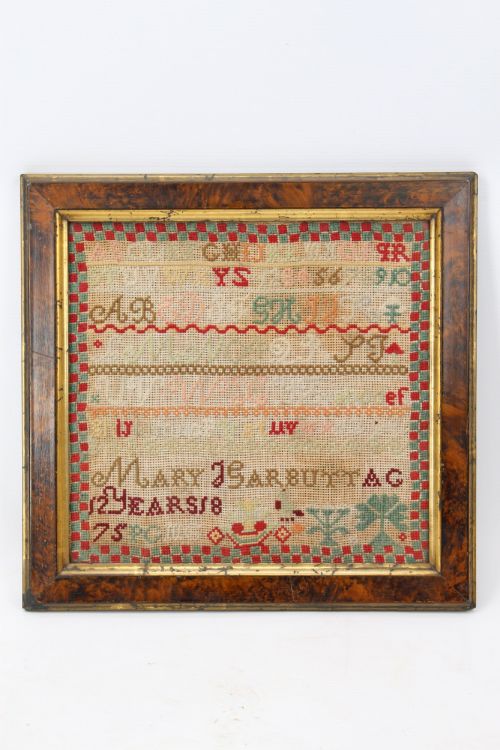
- A piece of needlework produced as a demonstration or test of skill in various stitches, often featuring alphabets, numbers, and motifs. Georgian examples frequently record the maker name and date.
- Embroidered border
- A decorative band of stitched textile created to adorn garments, furnishings, or walls, often originating from seventeenth-century European traditions.
- Tapestry cushion
- A thick, woven or embroidered textile panel constructed for furnishing use, commonly preserved from seventeenth-century German workshops.
- Silk floss
- Unspun silk fibres utilised in needlework to provide a smooth, glossy finish and brilliant colour reflection in historical embroidery.
- Gilded wood
- Timber frames treated with a thin layer of gold leaf or metallic gilt, frequently used to house fine historical artwork and textiles.
Frequently Asked Questions
How should I hang framed needlework?
Keep framed antique needlework away from direct sunlight to prevent the silk threads and watercolours from fading over time.
Ensure the room maintains stable humidity levels to protect the delicate linen grounds and wooden frames from environmental stress.
What periods do these textiles represent?
The available pieces span multiple centuries, ranging from seventeenth-century Italian borders and German tapestry cushions to Georgian samplers and nineteenth-century Greek Island embroidery.
Each period utilises distinct regional motifs, stitch types, and materials that reflect the domestic craft of their era.
Are these pieces cleaned or restored?
Historical textiles generally survive with their original patination and wear intact, reflecting their age and previous use as domestic items or furnishings.
Conservation efforts focus on stable framing behind glass rather than aggressive cleaning, which can damage delicate silk threads and linen.
Can I identify the maker of a sampler?
Certain Georgian samplers include stitched names, dates, and locations, such as the work by Elizabeth Horn dated eighteen thirty-one.
Other pieces remain anonymous, identified instead by their regional style, material composition, or specific island origin such as Skyros.