




Antique River Scene Painting
When you search for an antique river scene painting, you discover contemplative waterways, bustling towpaths, and pastoral banks captured by nineteenth and early twentieth-century artists.
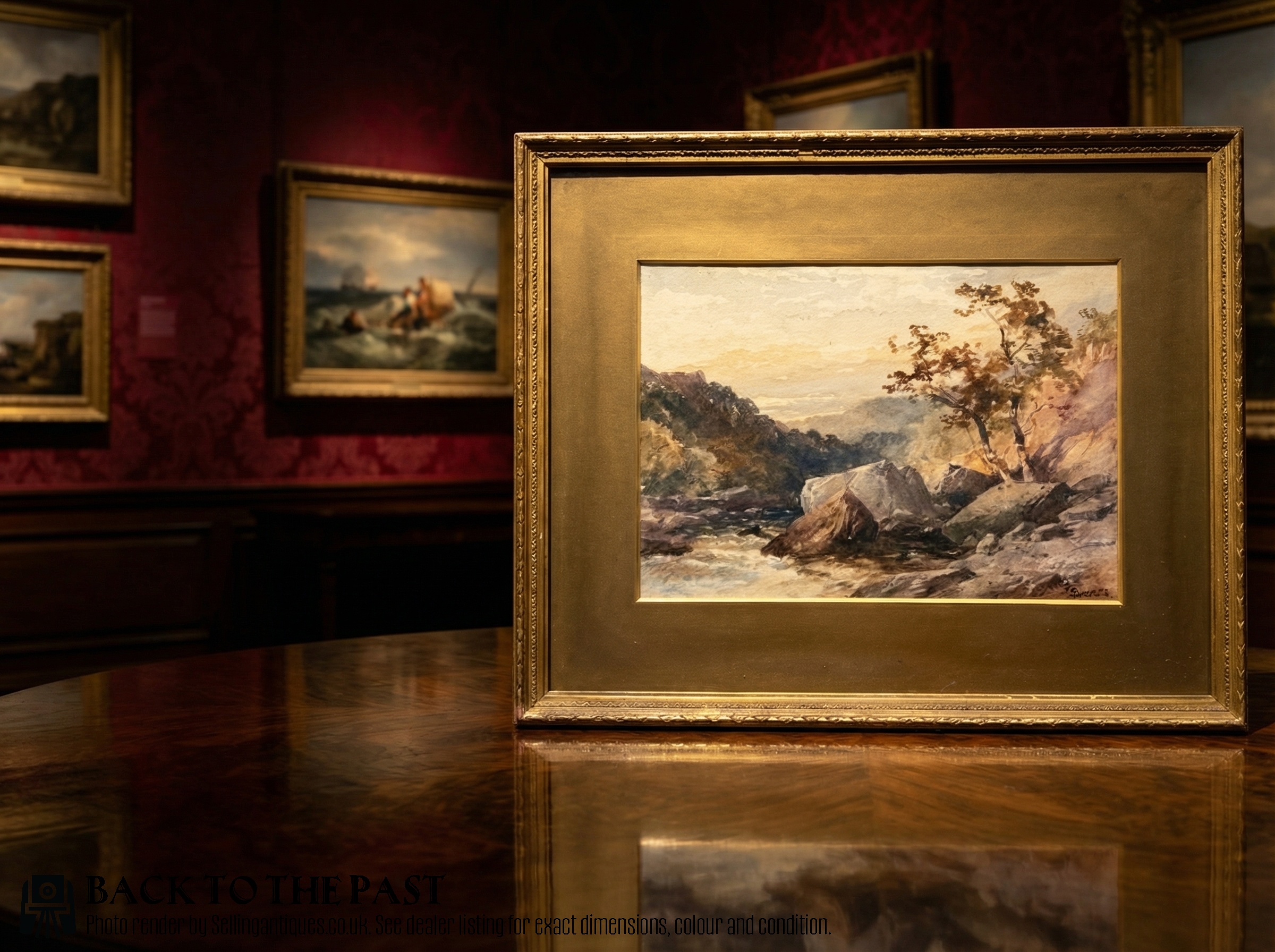
Antique River Scene Painting
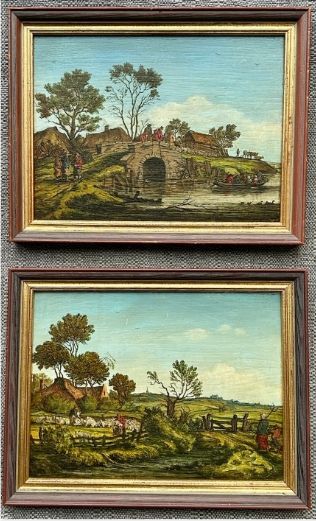
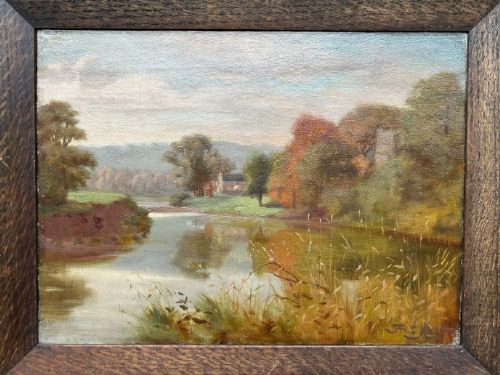
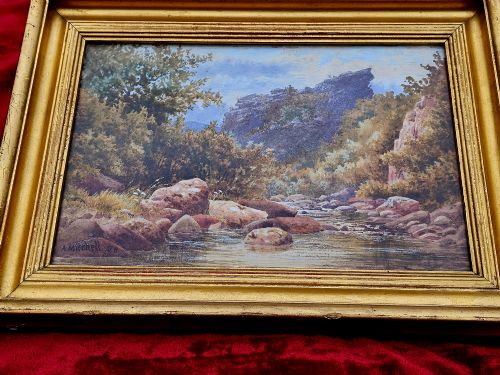
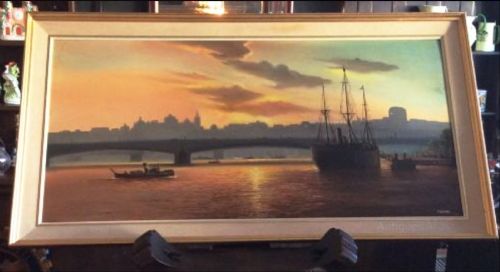
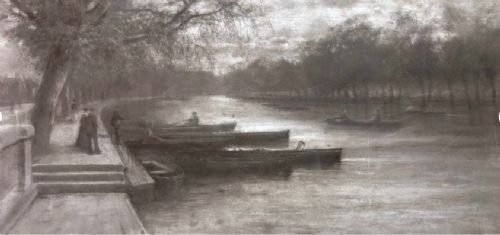
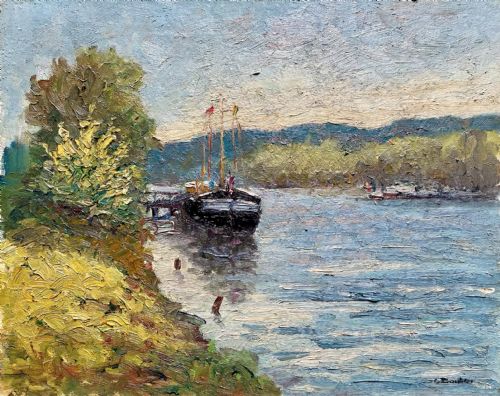
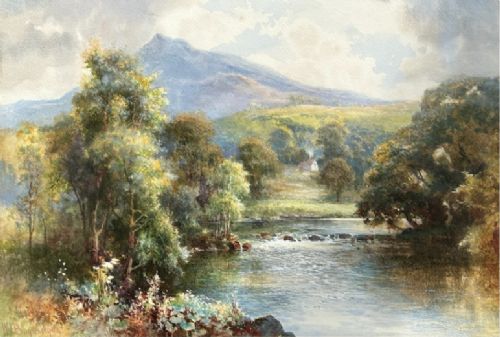
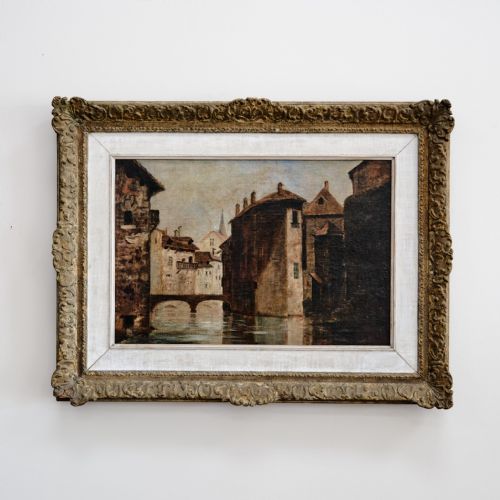
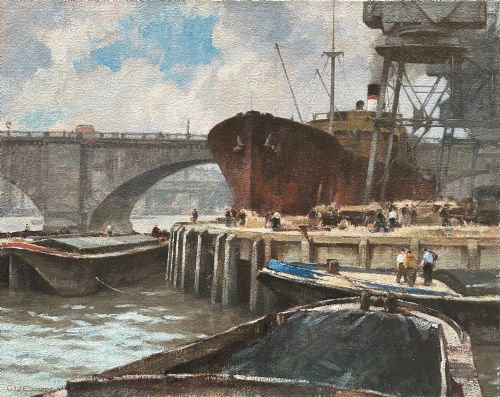
An antique river scene painting captures natural waterways, bridges, and human activity along riverbanks from historical periods. These works reflect both British pastoral traditions and continental European landscapes, ranging from quiet Welsh streams to bustling metropolitan stretches of the Thames.
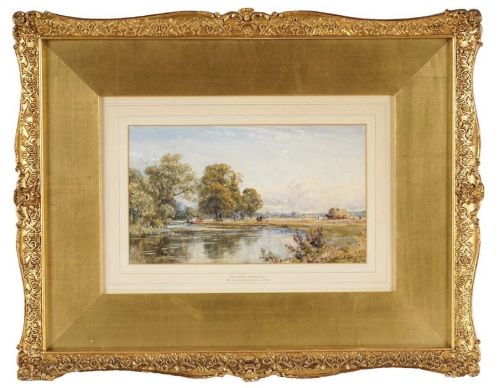
The versions most frequently encountered on this page originate in the nineteenth and early twentieth centuries, spanning Victorian, Edwardian, and impressionist movements. Painters documented these bodies of water using varied scales, from intimate framed watercolours on paper to large oil compositions on canvas.
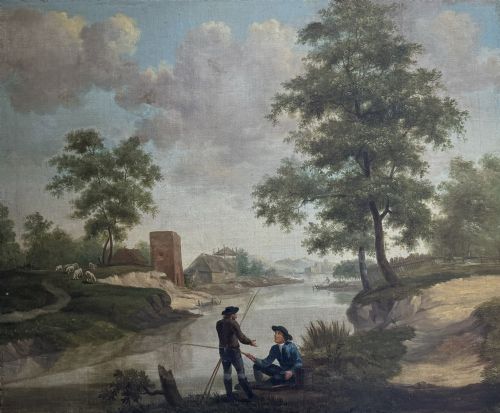
Subject matter often includes figures fishing, boats moored near mills, cattle watering at dusk, and architectural landmarks like bridges or distant chateaux. Such compositions reveal how artists of past eras engaged with the topography and changing light of rural and urban river settings.
Materials and construction methods
Makers predominantly utilised oil paint applied to stretched canvas or wooden panels, a combination providing durability and rich tonal depth. Alternatively, many artists worked in watercolour on paper, capturing translucent effects of light upon water.
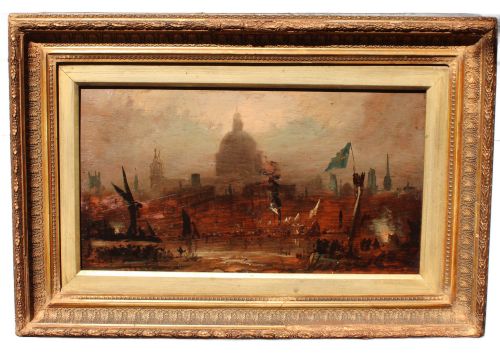
Framing frequently involved giltwood and gesso mouldings that complemented the palette of the artwork within. Wooden supports, canvas grounds, and paper sheets form the physical foundation of these surviving historical pieces.
Antique River Scene Painting Retail Price Guide 2026
Typical asking prices for river scene painting among the pieces listed under this phrase on Sellingantiques today, from the lower quarter to the upper quarter. They describe what is for sale here now, not the wider market.
Several artists hid tiny figures and stray dogs fishing quietly beside old mills.
Factors influencing quality and execution
Quality rests upon the artist's handling of atmospheric perspective, light reflection on water, and the naturalism of surrounding foliage and architecture. Stronger examples display confident brushwork and balanced compositional harmony rather than rigid, formulaic rendering.
The preservation of the original paint layer or watercolour pigment, alongside the condition of the support, dictates the integrity of the piece. Works that retain their original unblemished surfaces and period framing command greater distinction among collectors.
George Graham·Alfred Young Nutt·Frederick Marriott·William Joseph Boyes·Robert Thorne Waite·George Oyston·Herbert Royle·Florence Adelina Hess·Henry H Parker·Sydney Yates Johnson·Hubert Wellington·Honore Cavaroc·Archibald Kay·Henri Jaques Delpy
The Antique River Scene Painting Glossary
- Oil on Canvas
- Pigment mixed with drying oil applied to a woven fabric support stretched across a wooden frame. This method allowed painters to build rich textures and deep colour layers.
- Watercolour
- Paint consisting of water-soluble pigments suspended in a gum binder, traditionally applied to paper. It produces translucent washes ideal for rendering luminous skies and moving water.
- Giltwood
- Wood carved and coated with a thin layer of gold leaf or metallic gilt powder. This finish appears frequently on historical picture frames.
- Gesso
- A paint mixture consisting of a neutral binder mixed with chalk, gypsum, or pigment. It served as a prepared surface layer on wooden panels or frame mouldings before gilding or painting.
- Wood Panel
- A solid flat wooden board utilised as a rigid alternative to canvas. Artists frequently painted directly onto prepared wood during the nineteenth century and earlier.
Antique River Scene Painting: Frequently Asked Questions
How were these river paintings originally displayed?
Landscapes from the nineteenth and twentieth centuries hung primarily in domestic parlours, galleries, and country houses. Owners mounted them within prominent giltwood or wooden frames to complement interior reception rooms.
Today, collectors place them in similar domestic settings, pairing traditional frames with period or contemporary interiors to highlight the atmospheric qualities of the water and landscape.
What subjects appear most often in these scenes?
Common motifs include fishermen on riverbanks, working barges, windmills, bridges, and cattle grazing near water. Artists drew inspiration from both British waterways like the Thames and continental European rivers.
These depictions range from quiet rural tributaries to industrial shipping ports, illustrating how communities relied upon rivers for commerce and leisure.
How can I identify the period of a painting?
Dating relies upon stylistic clues such as brushwork techniques, clothing styles of any figures depicted, and framing materials. Victorian and Edwardian works often exhibit specific tonal palettes associated with impressionism or romanticism.
Signatures, dates inscribed on the reverse, or artist exhibition records further clarify the exact decade or historical movement of execution.
How should I care for an antique oil or watercolour?
Paintings require stable indoor environments away from direct sunlight, high humidity, and extreme temperature fluctuations. Ultraviolet light can fade watercolours on paper and discolour older varnishes on canvas.
Glazed watercolours benefit from acid-free backing materials, while oil paintings on canvas should be kept free of dust using a soft, dry brush.