





Baroque Textile Art
Baroque textile art brings grand narrative scenes and lush verdure landscapes into interiors through historic woven panels and needlework.
Baroque Textile Art
Baroque textile art encompasses historic tapestries, embroidered panels, and wall hangings originating predominantly from the seventeenth and eighteenth centuries. These works reflect the theatrical and ornamental character of the period through mythological, biblical, and verdure compositions.
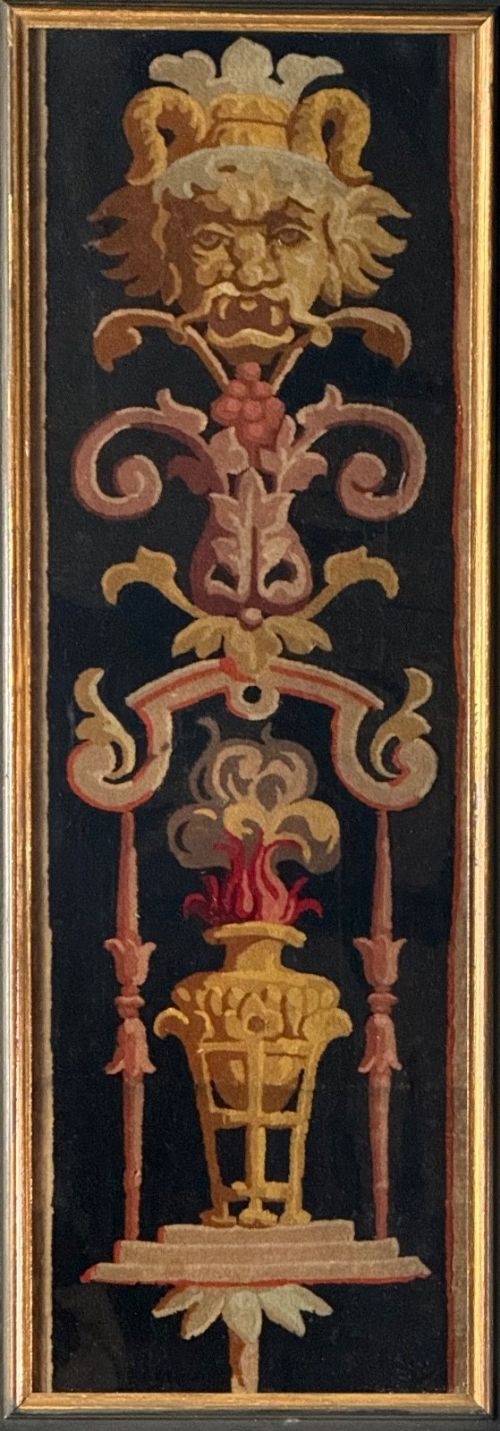
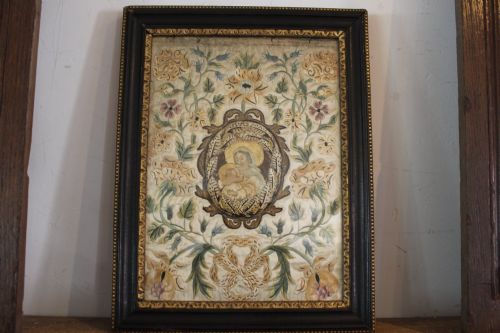
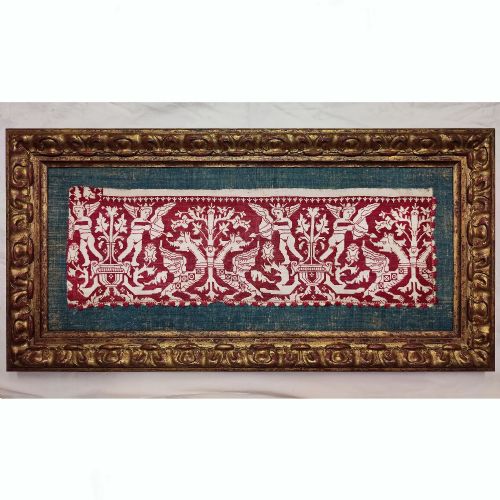
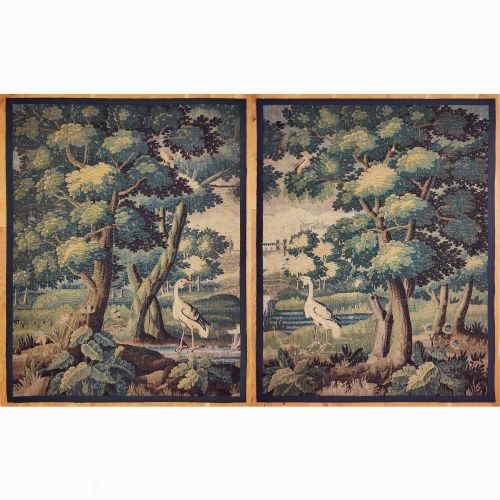
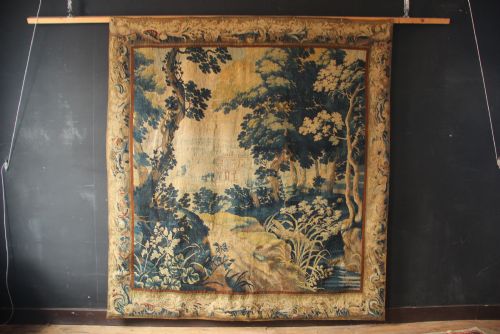
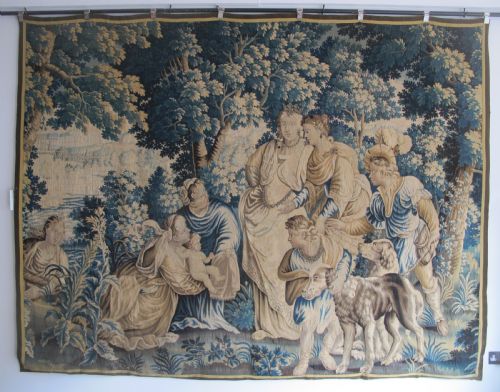
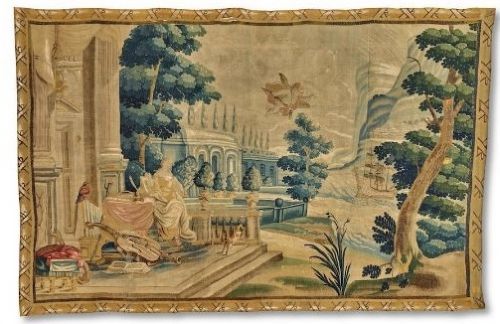
Tapestries form a significant part of the selection, often featuring Flemish, French, or Brussels origins depicting wooded landscapes, game parks, and classical figures. Smaller needlework panels, framed silkwork, and cushion covers also appear, demonstrating detailed threadwork from Italian and English makers.
The most common formats on this page are large wall hangings and verdure tapestry panels dating from the late seventeenth century. These textiles utilise wool, silk, and metallic thread to create layered textures suited for interior display.
Materials and construction
Weavers and embroiderers constructed these pieces using combinations of wool, silk, and linen yarns, frequently enhanced with metallic thread. Workshops employed manual looms and needlework techniques to build complex pictorial scenes.
Many surviving panels incorporate wooden frames or glass for protection, while others retain their original textile structure as hanging panels or cushion covers. Ciselé silk velvet and embroidered borders demonstrate the specialised fabric manipulation of the period.
Baroque Textile Art Retail Price Guide 2026
Typical asking prices for baroque textile art among the pieces listed under this phrase on Sellingantiques today, from the lower quarter to the upper quarter. They describe what is for sale here now, not the wider market.
Several game park tapestries secretly conceal tiny embroidered hares hiding among the verdant seventeenth-century foliage.
Distinctions in craftsmanship
Quality rests upon the intricacy of the pictorial design, the depth of the palette achieved with wool and silk threads, and the survival of the original textile integrity. Works with complex mythological or figurative narratives from established regional centres demonstrate superior execution.
The preservation of the metallic threads and the subtlety of the verdure foliage shading separate finer examples from simpler provincial pieces. Scale also plays a part, with grand format tapestries requiring greater technical ambition during weaving.
The Baroque Textile Art Glossary
- Verdure tapestry
- A woven wall hanging dominated by lush foliage, trees, and often animals or birds. These landscapes were popular in seventeenth-century Flemish workshops.
- Ciselé velvet
- A velvet fabric featuring a pattern created by contrasting cut and uncut pile loops. This technique produces textured relief designs on silk textiles.
- Silkwork
- Embroidery executed primarily in silk threads upon a linen or canvas ground. Framed examples often reflect later revivals of earlier seventeenth-century styles.
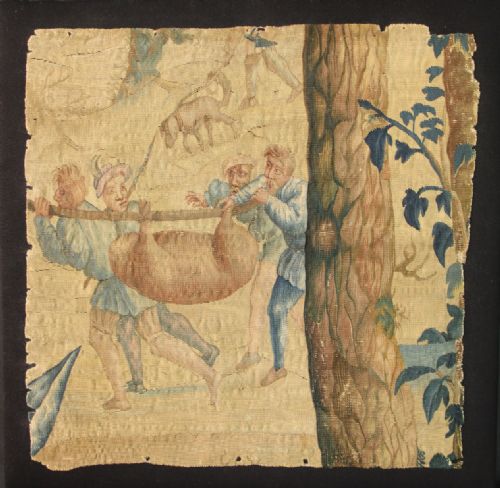
- Tapestry fragment
- A surviving section of a larger woven wall hanging, preserved and mounted for display. These pieces retain portions of the original pictorial design.
Baroque Textile Art: Frequently Asked Questions
Where should I place these textiles at home?
Display these works on interior walls away from direct sunlight and heat sources to protect delicate wool and silk fibres from fading and drying out.
Large verdure panels suit principal reception rooms, while smaller framed embroidery pieces work well in studies and hallways.
How do I distinguish seventeenth-century styles?
Seventeenth-century pieces often display robust Flemish verdure landscapes or classical mythological scenes with deep tonal palettes utilising wool and silk.
Later Victorian revival works imitate these aesthetics but typically employ distinct framing methods and modern linen backings.
Can tapestry cushion covers be used daily?
Historic cushion covers require careful handling and are best reserved for decorative display rather than heavy everyday seating use.
Friction can wear away aged silk and wool threads over time.