

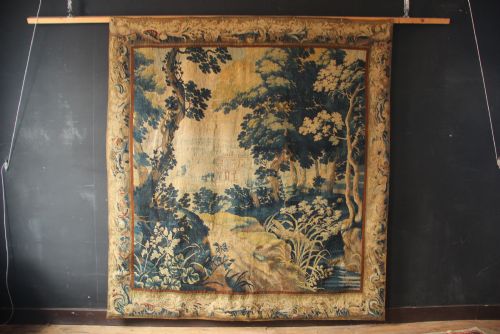


Antique Forest Tapestry
An antique forest tapestry brings deep woodland greens, shadowed foliage and quiet foliage into a room.
Antique Forest Tapestry
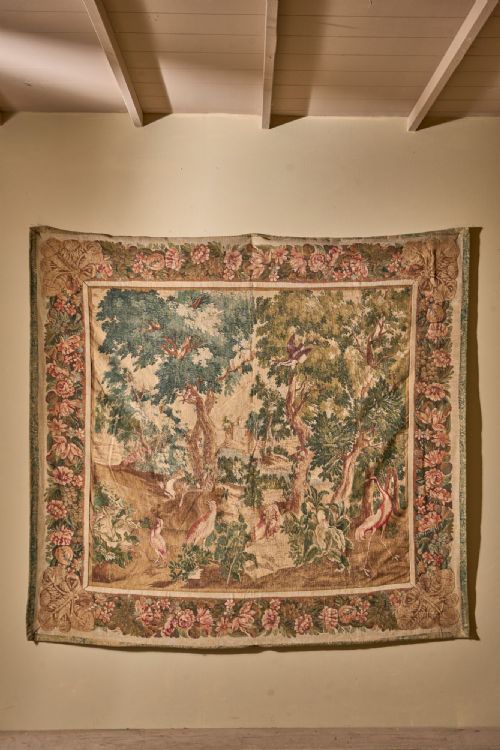
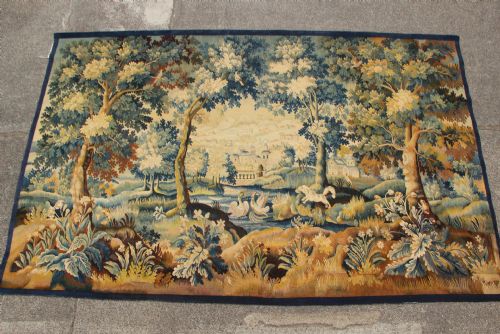
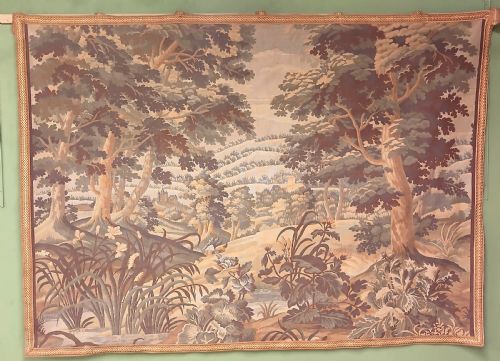
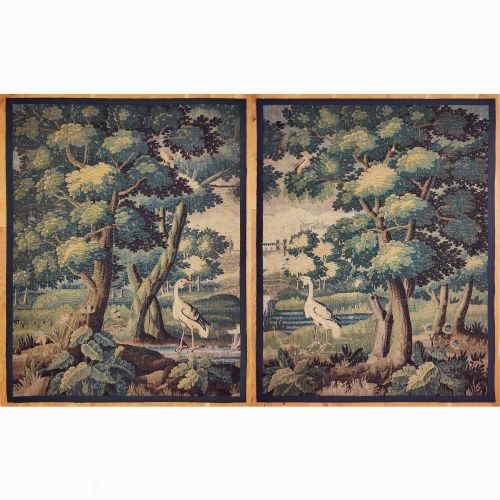
When you search for an antique forest tapestry, you encounter large woven wall panels and verdure scenes that depict dense woodlands, foliage and trees. The examples on this page span the seventeenth, eighteenth and nineteenth centuries, originating from Flemish and French workshops including Aubusson and Audenarde.
Beyond wall hangings, the selection includes related forms that incorporate textile upholstery and carved wood. You will find Victorian armchairs upholstered in tapestry, fireplace screens, and settees featuring carved oak alongside woven scenes.
The verdure design tradition focuses on trees, leaves, and sometimes birds or distant chateaux rather than human figures. These textile panels served historically to insulate stone walls while visually opening rooms to wooded landscapes.
How they were made
Weavers constructed these textiles on looms using wool, silk, cotton, and linen threads to build up complex pictorial depth. The interplay of wool and silk gave certain foliage highlights a subtle sheen against heavier woollen darks.
Structural framing for the upholstered forms relies on timber such as oak, with brass details appearing on hardware. Wall tapestries required robust weaving techniques to sustain their own weight across large spans.
Materials in this selection include wool, silk, cotton, linen, wood, brass, and oak, spanning Flemish Baroque and Victorian styles.
What varies in quality
The richness of the dye palette dictates much of the visual success in these textiles, particularly how well the greens and browns hold their gradation over centuries. Finer weaves allow for intricate rendering of leaf veins, feathered birds and distant architectural motifs.
The integrity of the structural support, whether the warp threads of a wall hanging or the carved oak frame of a Victorian armchair, determines the piece's ability to endure. Early Flemish and Aubusson pieces demonstrate varied density in the weave, affecting both drape and durability.
The Antique Forest Tapestry Glossary
- Verdure tapestry
- A textile design dominated by plant forms, trees, foliage and woodland landscapes, typically executed in greens and earthy tones. These scenes often include stylized trees and distant glimpses of chateaux.
- Aubusson
- A town in France renowned for its tapestry production, particularly for verdure designs and floral motifs. Pieces from this region often date from the seventeenth and nineteenth centuries.
- Flemish
- Pertaining to Flanders, a historical region celebrated for weaving detailed wall tapestries during the seventeenth and eighteenth centuries. Flemish weavers set high standards for pictorial depth in textile art.
- Warp
- The vertical threads stretched on a loom that form the structural foundation of a tapestry. Weavers pass horizontal weft threads through these warp lines to create the image.
- Wingback armchair
- A seat with side panels designed to shield the sitter from drafts, frequently upholstered in heavy woven textiles. Victorian interpretations often combine carved oak frames with antique tapestry panels.
Antique Forest Tapestry: Frequently Asked Questions
How do I hang a large antique wall tapestry?
Large textile panels require even weight distribution across the top edge to prevent distortion of the weave. Dealers typically recommend a concealed wooden batten or a heavy-duty fabric sleeve stitched to the reverse.
Avoid hanging tapestries in direct sunlight or against damp exterior walls to protect the wool and silk fibres from degradation.
Where were these forest tapestries originally made?
The primary centres of production represented here are Flanders and France, particularly towns like Aubusson and Audenarde. Workshops in these regions specialised in verdure landscapes during the seventeenth and eighteenth centuries.
Later nineteenth-century interpretations also emerged in Britain and France, adapting earlier woodland motifs for domestic furniture and firescreens.
What is a verdure tapestry?
A verdure tapestry is a specific genre of textile art focusing on plants, trees, and woodland rather than human historical narratives. The palette relies heavily on greens, blues, and browns to create dense forest canopy effects.
These panels were designed to bring the outside landscape into interior spaces, serving both decorative and insulating purposes in large rooms.
How do I care for antique tapestry upholstery?
Furniture upholstered in antique tapestry requires gentle maintenance, including regular light vacuuming through a mesh screen to remove dust. Keep upholstered pieces away from direct heat sources to prevent the dry rot of natural fibres like wool and silk.
Professional textile conservators should handle any deep cleaning or structural repairs to the weave.