

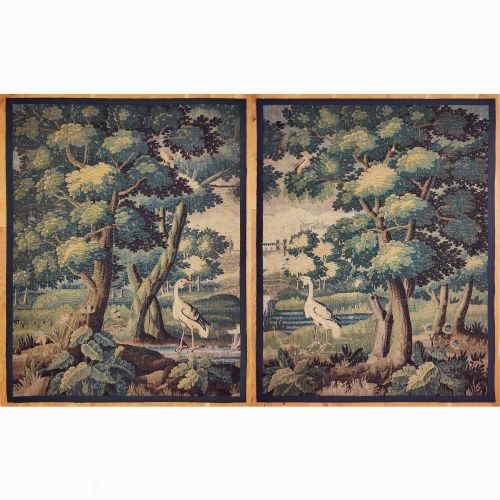



Aubusson Verdure Tapestry
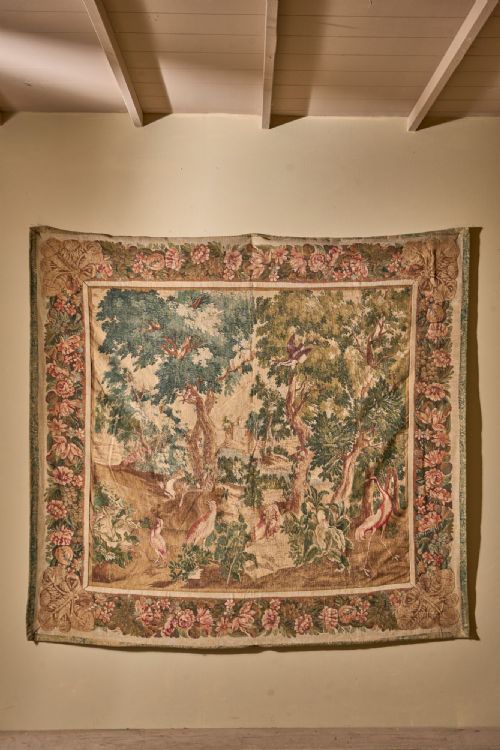
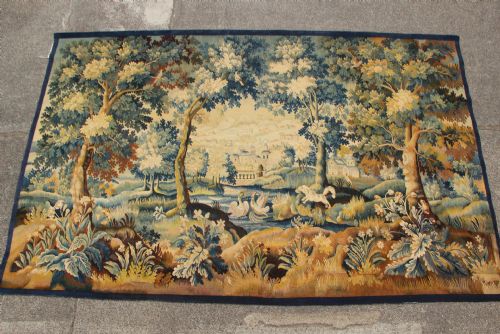
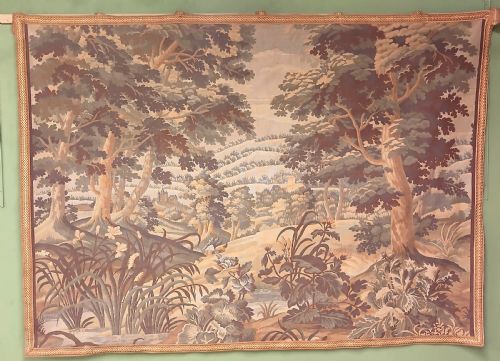
An aubusson verdure tapestry brings woodland foliage and quiet French pastoral scenes directly onto the wall.
Aubusson Verdure Tapestry
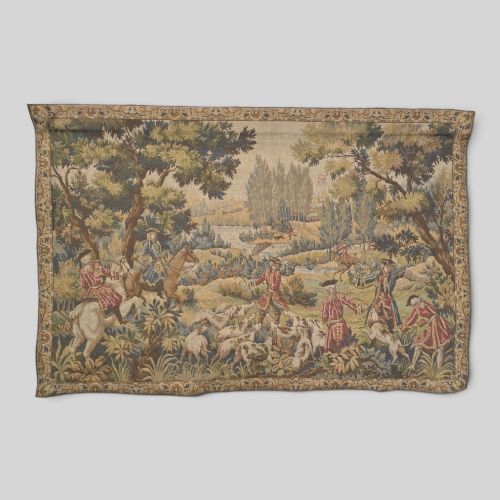
When searching for an aubusson verdure tapestry, you encounter woven wall hangings and panels dominated by verdant foliage, trees, and landscapes. The selection spans centuries, featuring examples from the late seventeenth century through the nineteenth century.
Most pieces display classic French pastoral or woodland motifs, occasionally incorporating birds within the foliage. Forms range from large wall tapestries and framed woven panels down to smaller cushions fashioned from tapestry fragments.
Origins trace firmly to France, particularly the Aubusson workshops that defined this distinct genre of textile art. Buyers select these works to introduce historic texture and deep botanical greens into an interior space.
How they were made
These textiles rely principally on wool and silk, sometimes supported by cotton or linen for structural stability in larger formats. Weavers utilised loom techniques to interlace dyed threads, building up complex arboreal scenes without subsequent painting.
Survival often depends on the original borders remaining intact around the central landscape panel. Certain pieces retain wooden frames or feather fillings when adapted into functional home items like cushions.
Listings feature textiles spanning from the late seventeenth century through the twentieth century, created using wool, silk, cotton, linen, and wood.
What varies in quality
Finer examples demonstrate greater subtlety in the dye palette, using varied shades of green and brown to create depth within the woodland canopy. The complexity of the foliage and the inclusion of detailed elements like birds elevate a textile.
Preservation of the woven surface dictates distinction at the upper end of the range. Retaining original borders and uncut dimensions separates exceptional archival pieces from fragment adaptations.
The Aubusson Verdure Tapestry Glossary
- Verdure
- A tapestry design dominated by lush foliage, trees, and landscape elements. These scenes typically focus on natural greenery rather than human figures.
- Aubusson
- A town in France renowned for its historic carpet and tapestry weaving traditions. Workshops there produced distinctively styled textile panels over several centuries.
- Fragment
- A portion of a larger historic textile that has been salvaged and repurposed. These pieces frequently reappear fashioned into smaller decorative items such as cushions.
- Hanging
- A textile designed to be suspended vertically against a wall for decoration and insulation. Large formats often require specific wooden or rod supports.
- Panel
- A distinct section or standalone piece of woven artwork. Framed versions protect the textile under glass or present the woven surface directly.
Aubusson Verdure Tapestry: Frequently Asked Questions
How do I hang a large tapestry?
Heavy textile panels need even weight distribution across the top edge. Using a concealed wooden batten or specialised sleeve prevents the fabric from stretching over time.
Keep woven works away from direct sunlight and damp walls to preserve the natural fibres. Professional framing is another option for smaller or more fragile panels.
Are seventeenth century pieces very fragile?
Early textiles require gentle handling due to the age of the wool and silk threads. Careful placement out of high-traffic areas protects the weave from physical friction and wear.
Properly mounted examples stabilize well in domestic environments. Regular light dusting with a soft brush maintains the surface without stressing the material.
What is the difference between a panel and a cushion?
Panels are flat woven sections meant for wall display, preserving the original pictorial composition of the landscape. Cushions are smaller decorative objects constructed by repurposing textile fragments.
Both items utilise the same historic weaving techniques but serve entirely different functions in interior styling.
Can I clean an antique tapestry myself?
Water and standard detergents damage historic dyed fibres permanently. Surface dust should only be removed very gently using low suction through a mesh screen.
Professional textile conservators handle deeper cleaning requirements. Attempting home washing risks shrinking or distorting the wool and silk structure.