




French Verdure Tapestry
These french verdure tapestry pieces bring lush woodland scenes and leafy garden landscapes directly into your interior.
French Verdure Tapestry
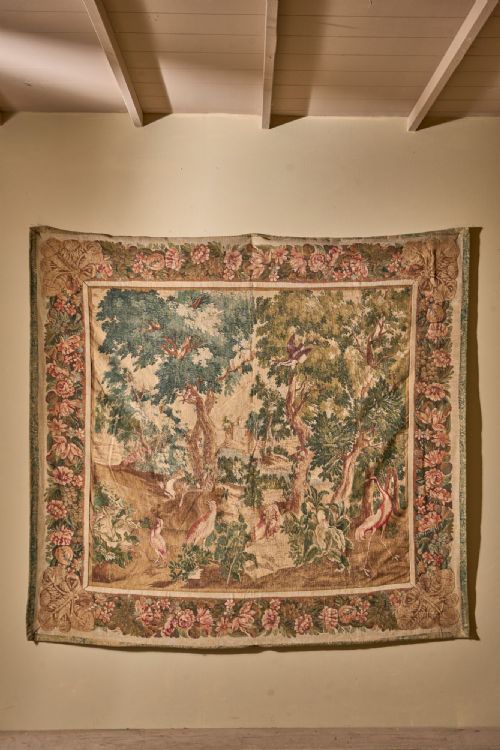
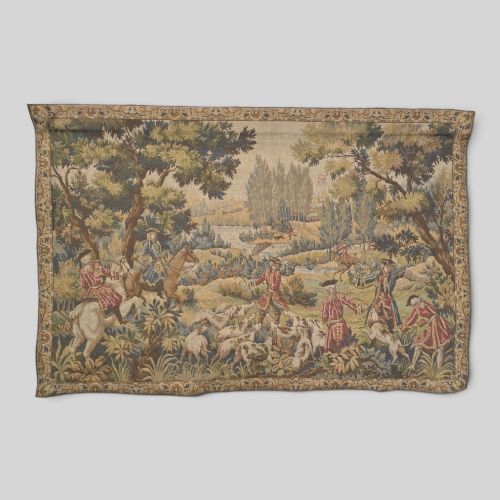
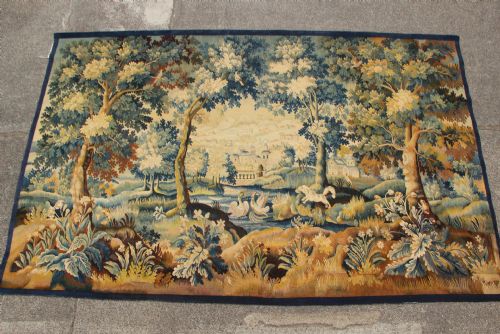
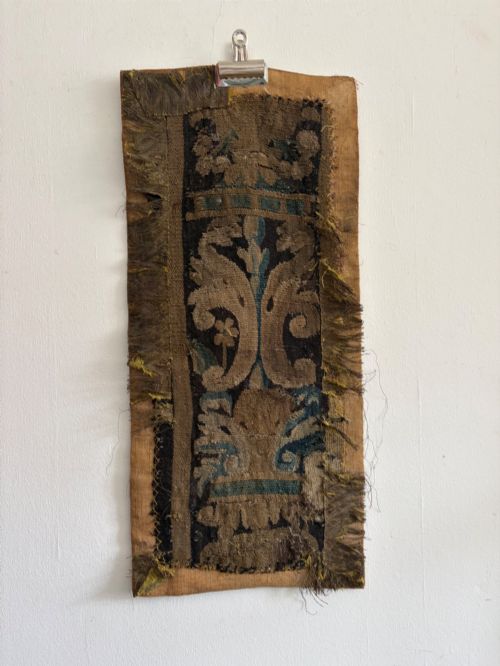
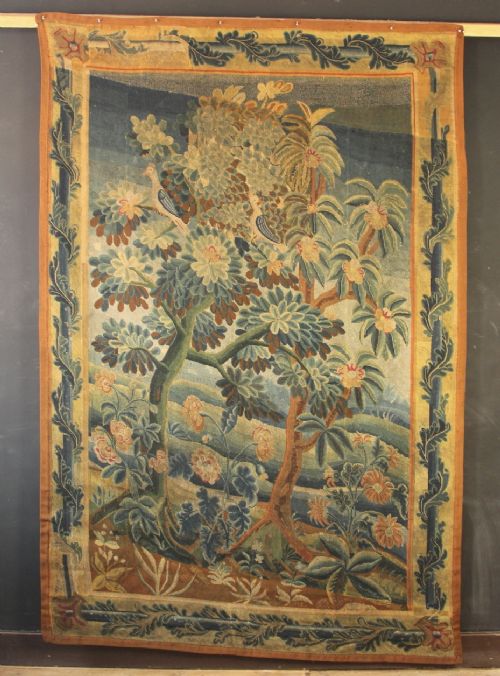
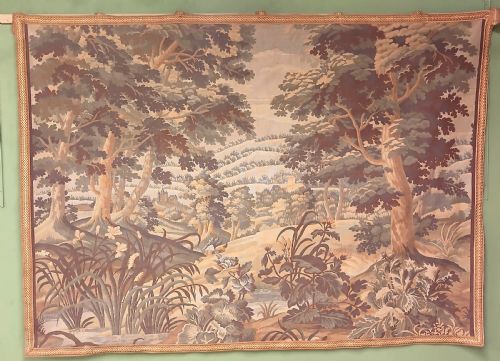
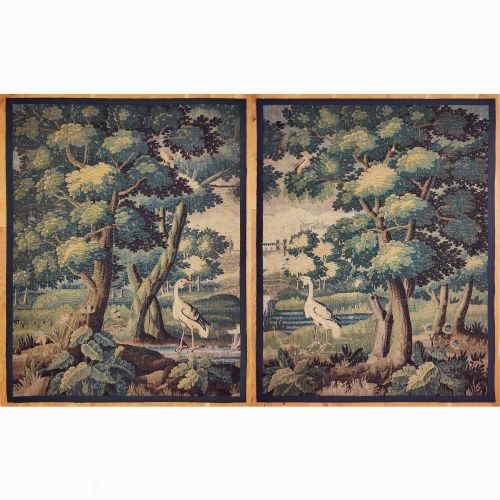
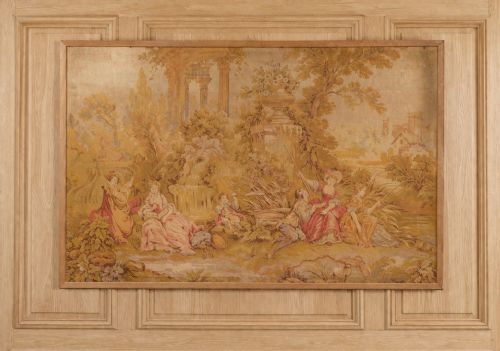
A french verdure tapestry depicts dense foliage, trees, and often distant chateaus or birds within a woven landscape setting. Buyers searching this term encounter large wall hangings, framed panels, long vertical strips, and occasional fragments mounted to linen or utilised in armchairs.
The pieces span multiple centuries, ranging from late seventeenth century and eighteenth century examples through to nineteenth century revivals and early twentieth century works. Aubusson workshops feature strongly among the origins recorded in the inventory.
Formats vary from expansive wall coverings measuring several metres across down to small border fragments and cushion covers. While full scale landscape wall hangings dominate, smaller decorative panels and upholstered seating appear frequently.
Distinctions in quality
Quality rests in the complexity of the landscape design, the depth of the woven perspective, and the subtlety of the colour palette used for the foliage. Earlier seventeenth and eighteenth century pieces display finer pictorial depth than later nineteenth century revivals.
The condition of the textile fibres and the survival of the original borders dictate the desirability of a panel. Intact large scale wall tapestries command greater presence than fragmented pieces or smaller cushion conversions.
The inventory spans four centuries of weaving, encompassing wool, silk, linen, and walnut furniture frames.
The French Verdure Tapestry Glossary
- Verdure
- A type of tapestry featuring a predominant landscape design of trees, plants, and foliage. These scenes frequently incorporate small birds or distant chateau architecture.
- Aubusson
- A town in France renowned for its historic carpet and tapestry weaving traditions. Pieces from these workshops are particularly sought after by collectors.
- Fragment
- A surviving portion of a larger textile work, often mounted to linen or repurposed into a smaller item like a cushion. These pieces offer an entry point to older periods.
- Tapestry panel
- A distinct section or narrow strip of woven fabric designed to be displayed as a wall hanging or decorative inset. They range from square formats to long vertical panels.
- Needlework
- Hand-stitched textile work that differs from loom-woven tapestry but shares decorative wall hanging applications. It appears across eighteenth century European examples.
French Verdure Tapestry: Frequently Asked Questions
How are these large tapestries hung on walls?
Large wall hangings typically utilise a discreet fabric sleeve sewn along the reverse top edge. A flat metal rod or wooden baton slips through this sleeve to distribute the weight evenly across the wall.
Heavier panels are sometimes mounted onto padded wooden stretchers or supported by linen backings to prevent sagging over time.
What is the difference between seventeenth and nineteenth century pieces?
Seventeenth and eighteenth century examples generally exhibit more muted, aged dye palettes and highly detailed pastoral depth. Their foliage tends to feature rich earthy tones developed from natural vegetable dyes.
Nineteenth century revivals often employ bolder coloration and heavier wool construction while mimicking earlier French Baroque or Rococo styles.
Can these textiles be placed in direct sunlight?
Direct sunlight accelerates the fading of historic wool and silk yarns. Hanging these pieces away from south facing windows preserves the subtle greens and browns of the woodland foliage.
Rotating panels periodically helps ensure even exposure if ambient light reaches the display area.
Where were these pastoral scenes originally woven?
Many of these works originate from historic French weaving centres, particularly Aubusson. Workshops in these regions produced expansive wall coverings for chateaus and manor houses.
Production methods passed down through generations enabled artisans to create complex botanical and arboreal compositions.